
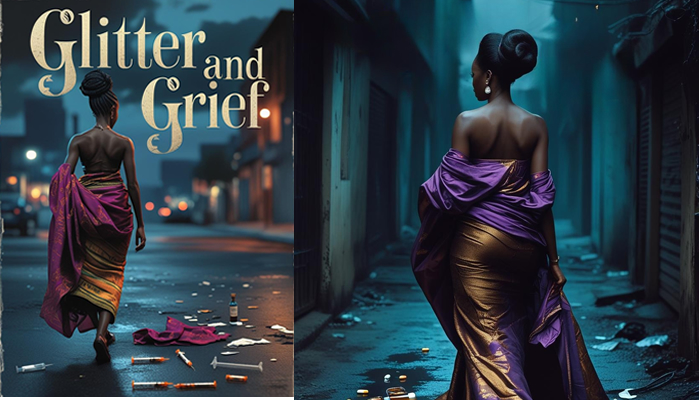
Chapter 1: The Perfect Cage
If you told me back then – in the days of infinity pools, Friday spa appointments, and chauffeur-driven school runs – that I’d one day be eating noodles cooked on a stolen camp stove behind a mechanic’s shed in Obalende, I would’ve laughed and asked you what you were smoking.
But here we are.
My name is Tomilola Adebayo. Most people call me Tomi, some call me Lola. My daddy used to call me Pumpkin, like I was some porcelain princess he could protect from the rot of the world. Well, jokes on him. I was the rot. I just wore diamonds while I decayed.
I grew up in Lekki Phase 1, in a house so big it had two staircases, five bedrooms, and a kitchen no one really cooked in – except the chef, of course. His name was Marcel. He made the best jollof rice in the entire universe. Don’t argue with me.
My dad, Chief Adebayo, made his money in oil and politics – a deadly combo. My mum was a “lifestyle entrepreneur,” which is just Lekki language for I go to parties and post pictures on Instagram for a living. She looked like a goddess in heels but had the emotional range of a teaspoon.
Our family wasn’t normal. We didn’t talk. We performed. At dinner, we spoke in polished British accents we’d acquired from summer schools in Kent. We smiled like politicians. We nodded like bobbleheads. But God forbid you said anything real.
I was sixteen when I tasted my first pill. Pink, heart-shaped, handed to me by a girl named Serena at a house party in Banana Island. She said it would “help me float.” Float? Babe, I didn’t even know I was drowning. I just swallowed it – like I swallowed expectations, loneliness, and silence every damn day.
That night, everything slowed down. The music pulsed like a heartbeat. My body felt like silk dipped in champagne. I remember lying on the marble floor of that mansion and laughing until my throat hurt. That was the first time I felt okay in years.
But let me not get ahead of myself.
Back then, I was still the golden girl. Head girl of my secondary school. Best grades. Most stylish. The one they all envied but none of them truly knew. I had a closet full of Zara and a heart full of bruises. You see, when your life is too perfect, people assume you’re too soft. They don’t realize it’s the perfect ones who learn to lie best.
At home, things were… tense. My parents fought like boxers in designer robes. No shouting – that would be razz. No, their fights were quiet, deadly. Doors would slam. Eyes would burn. Whole rooms would freeze. And in between, I’d sit in my giant room, listening to Jhene Aiko and wondering why I felt like I was made of glass.
One night, I tried to talk to my mum.
“Mum,” I said, “do you ever feel… empty?”
She blinked at me over her glass of red wine. “Empty? Like you haven’t eaten?”
I laughed – a dry, broken sound. “No, like… inside. Like something’s missing.”
She stared at me, her lashes long, her lips red, her expression unreadable. “Tomi,” she said finally, “you have everything a girl your age could want. Try gratitude for once.”
I didn’t say anything else.
That was the night I took two pills instead of one.
I became a master of hiding. Not just my pills, but my pain. I smiled for school pictures. I aced my WAEC. I even gave a speech during our graduation, talking about “discipline and character” while high on a cocktail of Adderall and whatever-it-was I took from my mum’s medicine cabinet that morning. Something for “stress management” – hers or mine, I’ll never know.
People clapped. My dad even cried. I remember looking at him from the podium and thinking, You’re crying for the wrong reasons, sir. He was crying because his daughter had made him proud, not knowing his daughter hadn’t felt proud – or anything real – in a long time.
My addiction didn’t start in a gutter. It started on Persian rugs. In air-conditioned parlours with imported furniture. It started in the corners of silence, in the absence of love wrapped in the presence of things. I wasn’t looking for a high. I was looking for a hug. Something to hold me.
By the time I entered university – a private one in Ogun State (you can probably guess which) – I was a functioning addict. No, scratch that. I was flourishing. Top of my class. Social media goddess. Boys wanted me, girls wanted to be me. I had over 30k followers and a skincare routine that involved a N30,000 serum. But I never slept. I never rested. I just performed.
There was this one lecturer, Mr. Onifade. He always said I reminded him of his daughter. He’d call me “future minister of education” whenever I answered a question in class. One day after a particularly brilliant presentation, he looked me dead in the eyes and said, “Tomi, you’re carrying something heavy. I hope you have people to help you carry it.”
I smiled. “Of course, sir.”
But the truth? The only thing I was carrying was guilt, and the only people around me were either fake or high.
I had a small circle. Serena – the one who gave me my first pill – was still my plug. She knew how to get things. Pills, weed, coke. You name it. And she always had this scary, comforting logic: “At least we’re not sniffing gutter glue like those Ajegunle rats.”
Classist, I know. But when you’re addicted, you find logic in the darkest places.
Then there was Seyi. My on-again, off-again boyfriend. He was sweet when he wasn’t stoned, which was rare. We once lay on the floor of his room staring at the ceiling fan and he said, “You know, you’re too pretty to be this sad.”
I laughed. “You’re too stoned to be this wise.”
We kissed after that. But the kiss didn’t taste like love. It tasted like escape.
One night, I overdosed. Nothing dramatic. No convulsions or ambulances. I just blacked out in the toilet of a club in Victoria Island. Some random guy found me, called the bouncer, who called Serena, who dragged me back to my parents’ house like I was a bag of laundry.
I remember waking up to the blinding lights in my room. My mum was crying. Not real tears. The kind that trickle politely down her cheek without ruining her makeup. My dad stood beside her, hands on his hips like he was inspecting a building project that went wrong.
“Tomi,” he said in that cold, clipped voice. “What is this?”
I blinked. My tongue felt like paper. “What is what?”
He turned to my mum. “You see? She’s gone. She’s mad.”
I wasn’t mad. I was exhausted.
That was the beginning of the interventions.
Therapy. Family meetings. Pastor visits. One prophet even came to pour oil on my head and started speaking in tongues. I laughed. They thought I was manifesting. I was just amused.
Eventually, my father shipped me off to a rehabilitation center in Ikeja. They called it Peace Haven. A lovely name for a place that felt like a prison with scented candles.
The staff were kind – too kind. Like people who smiled too much because they were afraid you might snap. I met people like me. Worse than me. One girl, Zainab, was sixteen and already had track marks on her arms. Another guy, Femi, was forty and looked like he hadn’t seen joy since Obasanjo’s presidency.
We had sessions. We sat in circles and said things like, “Hi, I’m Tomi and I’m an addict,” like it was some secret club. They tried. Lord knows they tried. But I wasn’t ready.
See, addiction isn’t just a bad habit. It’s a language. It’s how your pain talks when you’ve run out of words. I still needed my language. I wasn’t done speaking yet.
So I ran.
It wasn’t dramatic.
One rainy Thursday afternoon, while everyone was distracted by a fight in the common room, I slipped out through the side gate. Wore a nurse’s uniform I found in the laundry room. Nobody looked twice. Lagos is too mad for anyone to mind a pretty girl in scrubs walking in the rain.
I took a bus to Obalende. Don’t ask me why. Something about the chaos there felt like home. The noise, the smells, the sharp tongues – it was the opposite of the sterile quiet I’d grown up in. I felt alive there. Or at least, I felt something.
I stayed with a guy named Charles for a while. He sold second-hand electronics and lived in a one-room apartment with walls that sweated. He wasn’t kind, but he wasn’t cruel either. He let me sleep on his mattress and didn’t ask questions.
In exchange, I cooked Indomie. That’s what survival looked like now – seasoning packets and borrowed gas cylinders.
It’s funny, isn’t it?
How someone can go from ordering Thai food at a restaurant in Eko Hotel to begging for change to buy gala and lacasera under the bridge.
But it wasn’t all bad.
I met people who didn’t pretend. Who were broken and didn’t hide it. There was Mama Tunde, who sold puff-puff and gave me extra because she said I had “a sad face like her daughter’s.” There was Bayo, a former banker turned conductor, who told me stories that made me laugh until my ribs hurt.
That’s where the comic relief lived – in the mouths of people society forgot.
“Lola Baby,” Bayo would call me, “You fine pass all these Lekki girls wey no sabi cook. But e clear say your eye don see shege.”
He wasn’t lying.
One night, Charles brought home something new. It wasn’t a pill. It was a powder. He called it “premium escape.” Said it would make the world soft again.
I said no.
He laughed. “Lekki girl don dey form now?”
I didn’t laugh. I took my pillow and walked out. That was the last night I stayed with him.
I slept behind a church that night, curled up in a hoodie that used to cost N45,000. Funny how labels don’t matter when your ribs are touching.
The next morning, I walked to the beach.
Not Elegushi. Not Tarkwa Bay. The dirty, chaotic shoreline near Bar Beach that nobody visits unless they’re trying to cry or die.
I stood there, barefoot, salt water licking my ankles. I thought about walking into the sea. Just walking, no drama, no noise. Just water swallowing me, the way the silence always did.
But then I saw a little boy chasing a kite.
He couldn’t have been more than six. His shorts were torn, his face was dusty, but the joy on his face – God – it was like sunshine after five years of rain.
And in that moment, something broke in me.
Or maybe something un-broke.
I don’t know.
But I walked away from that beach. Slowly. With blistered feet and no plan. But I walked. And that, I think, was the beginning of my return.
Chapter 2: Sweet Poison
You know what they don’t tell you about addiction?
It’s sweet at first.
Delicious, even.
Like honey dripping on your wounds. You think it’s healing you, soothing you. But really, it’s rotting you from the inside, nice and slow – like sugar on bad teeth.
That’s what drugs felt like to me: sweet poison.
After I left Charles’ place and turned down his “premium escape,” I tried to stay clean. I really, really tried. I even convinced myself that just walking away from the sea that morning meant I was done. Like I had defeated addiction with sheer willpower and poetic beachfront moments.
But the streets don’t care about your epiphanies. Hunger doesn’t wait for healing. And trauma? Trauma is like an itch inside your brain – it’ll find new places to hide if you don’t dig it out properly.
I ended up crashing at a shelter run by a woman named Aunty B. God bless that woman. She had hands like iron and a heart like melted butter. Her shelter was really just a two-bedroom flat in Surulere with bunk beds, peeling paint, and more mosquitoes than a swamp. But it was safe.
Kind of.
There were rules – no drugs, no men, no disappearing at night. I broke all three in the first two weeks.
There was this girl in the shelter, Teni.
Short, sharp-tongued, and addicted to Tramadol like it was soda. She was the type of girl who called you “babe” even while insulting you.
“Tomi babe, this ya fake bougie accent dey vex me. Na so you go dey talk like oyinbo while you dey share bed with cockroach?”
I liked her instantly.
We’d sit outside the shelter in the evenings, trading stories, smoking Benson and Hedges like old women in a village. She told me about her uncle who started abusing her at twelve. I told her about my emotionally bankrupt parents and my overdose in a Banana Island toilet. We laughed about things that should’ve made us cry.
I asked her once if she believed in God.
She shrugged. “I believe say if God dey, Him dey too busy to find us. Maybe e go find me when I die.”
Her words stayed with me.
I wasn’t sure if I believed either. I used to pray when I was younger. I even used to tithe from my allowance. But when you’ve seen what I’ve seen – when you’ve done what I’ve done – you start to wonder if maybe God crossed your name off His list and just didn’t bother to tell you.
The cravings came back slowly. Not loud. Not screaming. Just… whispers.
First, it was the smell of someone smoking skunk in the alley that made my heart race.
Then, it was watching Teni pop two pills and giggle like a child – and my body remembered. The euphoria. The float. The sweet poison.
I told myself I could just take a little. One tab. Just to cope. Just to get through the week. The day. The next five minutes.
One tab became two.
Two became five.
And then I was back – mouth dry, eyes wild, heart broken in four different places, chasing shadows in Oshodi.
The worst thing about relapse isn’t the drugs. It’s the shame.
The way your chest tightens when you see someone who believed in you. The way your hands shake when you lie – again – and they know. Oh God, they know.
Aunty B found me curled up in the backyard one morning, shivering like a soaked dog.
“Tomi,” she said softly, “you took again.”
I couldn’t even lie. I just nodded. I expected a slap. Or a lecture. Or worse – eviction.
But she didn’t yell.
She sat beside me and put her hand on my back.
“You’re not evil,” she said. “You’re just sick.”
That broke me.
I cried like a baby. The kind of tears that come from deep places. I cried for my past, my future, the girl I used to be before pills made her a stranger.
That was the last morning I saw Teni.
She left that afternoon, high and smiling, said she was going to “cash out” from one Yahoo boyfriend in Lekki. She winked at me and said, “Tomi babe, no dey cry. Na we dey run this town.”
They found her body two days later. Overdose. In a guest house in Ilupeju.
She was seventeen.
After Teni died, something inside me snapped.
Not like a twig. Like a tree falling.
The kind of crack you hear and know: nothing will ever be the same again.
I stopped using. Cold turkey. No tapering, no excuses. Just pain. Raw, ugly pain.
The first few days were a nightmare.
I threw up everything I ate. My bones ached. My skin felt too tight. I’d scream in the middle of the night, soaked in sweat, biting my blanket so I wouldn’t wake the others. Aunty B held me sometimes. Other times, she just prayed.
Once, I asked her, “Why do you even bother with people like me?”
She smiled. “Because someone once bothered with me too.”
That stuck with me.
Three weeks clean.
Then one month.
Then two.
I started to feel things again. Joy. Regret. Hunger. Sunlight.
I’d forgotten how beautiful sunlight could be when you weren’t high. It felt like a warm hand on my face – not something to hide from.
I started volunteering at a small youth center in Yaba, telling girls my story. Some listened. Some laughed. One girl, Blessing, hugged me and said, “I thought only poor people became addicts.”
I laughed. “Addiction doesn’t check bank accounts, sweetie. It just knocks, and if the door opens…”
She nodded, eyes wide.
I wish I could say that was it.
Happy ending. Cue piano music and a book deal.
But life isn’t a Nollywood movie.
Because even after all that progress – after staying clean for almost five months – I relapsed again.
One night, walking home, I saw a familiar face at the junction.
Seyi.
Yeah. That Seyi.
He looked… older. Rougher. But still had that smirk that made me feel seventeen again. He hugged me like I was treasure. Said he missed me. Said he was clean too. We went for drinks. Talked about old times. Laughed like nothing had changed.
Then he pulled out a tab. Just one.
“Let’s fly,” he said.
I looked at it.
I looked at him.
And I said, “No.”
My voice shook. My hands shook. But I said it.
Seyi stared at me like I’d just cursed his ancestors.
Then he walked away.
I watched him disappear into the dark. My heart broke – not for him, but for the version of me that would’ve said yes.
I went back to Aunty B’s that night and cried.
Not because I wanted the pill.
But because I’d finally chosen myself.
Chapter 3: Rehab and Revolt
The day I checked myself into rehab, it wasn’t dramatic. No tears. No long speeches. No family carrying suitcase and shame. Just me, a half-charged phone, one backpack, and the quietest courage I’ve ever known.
It was my decision this time.
Not Daddy’s. Not Mummy’s. Not one pastor with white handkerchief and two-hour deliverance sessions. Mine.
I walked into the gates of House of Olive with shaking hands but a steady heart.
Unlike the first rehab center, this place didn’t smell like lavender-scented captivity. It smelled like Dettol and burnt toast. Real. Gritty. Almost… welcoming.
The receptionist, a middle-aged woman with tribal marks and tired eyes, looked up from her desk. “Name?”
I swallowed. “Tomilola Adebayo.”
She raised an eyebrow. “As in, that Adebayo?”
I nodded. She didn’t say more. Just handed me a form.
“Fill this. Don’t lie. We’ve seen it all.”
They assigned me to Block C, Room 4. Two bunk beds. Peeling walls. A rusted ceiling fan that hummed like it was meditating.
My roommate was a girl named Angel. Tall, dark-skinned, with eyes like fire and an attitude that screamed, Try me and die. She was in for meth, but she talked like a TEDx speaker.
On my first night, I introduced myself with the usual, “Hi, I’m Tomi.”
She just said, “Cool,” and went back to reading The 48 Laws of Power.
I knew then: I had entered a different league.
Rehab is not Instagram therapy.
There are no fuzzy socks and bubble baths. No inspirational quotes on pastel walls. No therapists who speak in movie dialogue.
There’s pain.
Real, ugly, body-wracking pain.
The first week, I broke like wet chalk. Nightmares. Cold sweats. My brain started remembering things I thought I’d buried — the parties, the pills, Teni’s face in that damn guest house.
During group therapy, I finally opened up.
“My name is Tomi,” I said, voice low. “And… I don’t know who I am without drugs.”
The room was silent.
Then Angel, from across the circle, said, “Good. That’s step one. You admit you’re lost. Next step? You fight.”
She always had a way of sounding like an army general in yoga pants.
Some of the staff were amazing.
Like Dr. Ibrahim – our clinical psychologist who wore sneakers with his kaftans and made everyone feel seen. He once told me during a one-on-one:
“Tomi, healing isn’t peace. It’s war first. You’re fighting the you that wants to die.”
I wrote that down and taped it to my bunk wall.
But not everyone there was helpful.
There was Nurse Kemi – the matron. She treated us like we were criminals, not patients.
“If una no behave,” she’d snap, “we go tie you down o. No be only rehab, na spiritual warfare you dey!”
I wanted to slap her sometimes.
Actually, I almost did one day – during a random drug test when she accused me of switching my urine sample. Angel had to hold me back.
“Save your rage,” she whispered. “Use it to get better.”
By my second month, I started to feel… lighter.
Not fixed.
Not cured.
Just less broken.
I began helping new intakes settle in. Taught one girl how to make oat pap without burning it. Helped a boy named Fisayo write a letter to his mother after three years of silence. Started journaling every day. Even led a small poetry group.
One afternoon, Dr. Ibrahim asked me to share my story at the monthly recovery meeting. I almost said no. But then I remembered Teni. I remembered that little boy on the beach chasing his kite.
I stood before the group and said, “My name is Tomi. I grew up in Lekki. My house had chandeliers. My soul had cracks. I took pills because no one ever taught me how to scream…”
Afterward, people clapped. A girl hugged me and said I made her feel less alone. That night, I cried – not from pain, but from relief.
Like something heavy had finally dropped off my back.
And just when I started believing this was my turning point…
I relapsed.
Yeah.
Again.
It wasn’t a pill this time. It was something worse: control.
I started feeling powerful. Like, Look at me – I survived. I’m winning.
I got cocky.
Stopped going to group therapy.
Started mocking new intakes.
Started thinking I was better than everyone else.
One morning, Angel pulled me aside.
“You’re not healing anymore, babe,” she said. “You’re performing.”
It hit me like a slap.
Because she was right.
My addiction wasn’t just to drugs. It was to control. Image. Perfection. Performance.
That was the real devil.
So I revolted.
Not against the center – but against my own delusion.
I started fresh.
Again.
This time without telling anyone.
No drama. No speeches.
I woke up one morning, made my bed, brushed my teeth, sat through a full group session – no eye-rolling, no sarcasm. Just presence.
I wrote a letter to my dad. Not because he deserved it. But because I needed to write it.
Daddy,
You taught me how to win, but not how to lose.
You taught me how to shine, but not how to hurt.
I am learning both now. I forgive you.
I’m trying to forgive myself too.
Tomi.
I didn’t send it.
I just folded it and placed it in my Bible.
Yes – I’d started reading the Bible again. Not for salvation. Just for sense. Psalms helped on bad days. Proverbs helped on foolish ones.
My last week at House of Olive, I got a surprise.
Angel handed me a necklace – a simple silver chain with a tiny olive branch charm.
“What’s this?” I asked.
She shrugged. “A reminder. That peace is still possible. Even for girls like us.”
I hugged her.
And for the first time in a long, long time, I didn’t feel like I was hugging a fellow patient.
I was hugging a friend.
Chapter 4: Lekki Nights
If you’ve never slept under the Lekki-Ikoyi bridge, you probably think Lagos nights are romantic.
I used to.
Back when I watched the city lights from my room on Admiralty Road, sipping herbal tea from a ceramic cup worth more than some people’s rent.
Now? I know the truth.
Lagos nights are loud. Gritty. Wet. Alive in the worst ways. The kind of alive that hums beneath your skin like a mosquito you can’t swat.
And that’s where I ended up – again. Not because of drugs, but because of something worse.
Family.
It started with a phone call.
I was two weeks out of rehab, living with Aunty B again, volunteering at the youth center, and doing all the “right” things. I was hopeful. Grateful. Even started wearing makeup again – just powder and gloss. Nothing too heavy. Healing doesn’t look like perfection; it looks like effort.
Then my mum called.
Her voice was as soft as ever, dipped in honey and guilt.
“Tomi,” she said, “your father is hosting a fundraiser next weekend. Come home.”
I froze.
Home.
That house in Lekki had always felt more like a hotel lobby – clean, expensive, and emotionally vacant. But part of me still wanted to go. Maybe I was craving closure. Or drama. Or just proof that I could be in that house and not fall apart.
Big mistake.
The fundraiser was ridiculous.
Champagne fountains. Security everywhere. Ladies in gele taller than my self-esteem. I wore a modest gown – simple, silk, emerald green – something Aunty B helped me pick. I looked like healing. I felt like a grenade.
Daddy didn’t speak to me at first.
He floated through the room, shaking hands, laughing, making promises. The same man who once told me I had “a gift for ruining everything.”
Mummy hugged me like I was a brand collaboration.
“My beautiful baby,” she whispered. “You look… healthier.”
Not “You look happy.” Not “I’m proud of you.”
Just healthier. Like a plant.
Then it happened.
A guest – some senator’s wife with too much perfume and zero filters – pulled me aside and said, “Ah, you’re the one that ran mad and did drugs, abi? Hmmm. Wahala no dey finish. You look fine now sha. Well done.”
I laughed.
Then I walked into the bathroom and vomited into a gold-plated toilet.
Later that night, I overheard my dad talking to someone.
“She’s fine now,” he said, “but we don’t trust her around anything sensitive. You know how these things embarrass families.”
That sentence cracked something in me.
Not because it was cruel – I’d heard worse.
But because it was final. Like he had filed me under shameful, and no matter how many days I stayed clean, that file would never close.
I left the house at midnight.
No goodbye. No suitcase.
Just rage in my chest and tears in my throat.
That’s how I found myself back on the street.
This time, it wasn’t desperation that led me there. It was defiance.
I wasn’t running to drugs. I was running from shame.
And let me tell you, there’s no lonelier feeling than choosing the street over your own family and realizing – painfully – that it’s the better option.
I slept in a bus park the first night.
Under a rusty BRT sign. Head on my bag. Dreams full of static.
I woke up to the voice of a conductor screaming, “Eko o ni baje!”
I almost laughed.
Because Eko had already baje’d me.
That week was a blur.
I met a guy named Smallie – real name Godwin – who sold pirated DVDs and always had one AirPod in his ear like he was listening to the voice of destiny.
“Na you be Lekki babe wey enter street?” he asked on day two.
I nodded.
He whistled. “Omo, na downfall dey humble everybody o.”
Smallie was funny. Loud. Annoying. But real. He showed me where to charge my phone for N50. Where to get rice and beans for N300 if you beg well. He even gave me a t-shirt that said GOD IS NOT A MAN.
“I don’t believe that anymore,” I told him.
He shrugged. “No wahala. God go still believe in you small small.”
I kept myself clean.
Barely.
The cravings came like mosquitoes at night – buzz, sting, disappear, return.
I bit my nails. I chewed bitter kola. I drank sachet water like it was holy.
But I didn’t use.
Even when some guy offered me “pure bliss” for just N1,000, I said no.
Because I remembered Angel.
I remembered Teni.
I remembered me.
One night, it rained.
Not drizzle.
War.
The kind of rain that soaks your soul. I stood under a shop’s veranda, teeth chattering, arms wrapped around my waist. My hoodie was soaked. My shoes – plastic sandals from CMS – floated briefly before sinking into a puddle.
Smallie was beside me, grumbling.
“Na rich people dey cause this rain. All their sin dey disturb heaven.”
I burst out laughing.
For the first time in days.
That laugh saved me.
Because I remembered something: even in my darkest, wettest, most miserable moments, I still had the ability to laugh.
Which meant I was still alive.
Which meant I still had a chance.
I stayed on the street for eleven days.
Then Aunty B found me.
She showed up in a borrowed keke, hair wrapped in a scarf, eyes full of thunder.
“Get in,” she said. No hello. No lecture.
I obeyed.
As we bumped along the road, she finally looked at me.
“Did you use?” she asked.
“No.”
“Swear.”
“I swear.”
She sighed.
Then she said something I’ll never forget:
“Tomi… you are not a problem to be solved. You’re a person to be loved.”
Chapter 5: Rock Bottom
The day I got arrested, the sky was blue and the sun was bright – just to mock me, I think.
You’d expect the weather to match your mood on the worst day of your life, right? Maybe thunder. Maybe rain. Maybe at least a gentle breeze to comfort your pain.
But no. Lagos sun was shining like it had no empathy.
I was just trying to get pure water when it happened.
That’s it.
I was standing outside a small shop near the roundabout in Lekki Phase 1 – same area I once rode past in a black G-Wagon with a driver named Uncle Sege. I had N150 in my pocket. I just wanted to buy water and maybe a boiled egg. That’s all.
Then two policemen showed up.
One of them had tired eyes and a potbelly that stretched his uniform. The other one had a swagger in his walk and an itch in his trigger finger. You know the type.
“You!” Swagger-Trigger said. “You dey loiter here since. Who you be?”
I smiled. “Good afternoon, sir.”
Wrong move.
“Wetin be good afternoon? You dey do ashawo abi you dey sell drugs? Open your bag!”
I opened it. One hoodie. One toothbrush. A copy of Psalms and a sachet of cabin biscuits. Nothing else.
But it didn’t matter.
They were looking for someone to fill a van. A girl like me – dusty, skinny, and out of place – was the perfect candidate.
They handcuffed me.
Right there.
In front of three street hawkers and one woman buying akara who gasped like she’d seen a snake.
“Na Chief Adebayo pikin be that?” the woman whispered. “Ehn? The one wey mad?”
I wanted to disappear.
Just vanish from the face of the earth. Dissolve into dust and blow into the lagoon.
Instead, I was thrown into the back of a police van like dirty laundry.
The cell in Maroko Police Station was the size of a boutique dressing room – except no mirrors, no lights, and definitely no Zara.
It smelled like fear. And pee. And anger.
There were five of us in there. Two girls and three guys. One of them – a boy named Kolapo – had a bleeding lip and kept muttering the Lord’s Prayer like a broken record.
No one asked me what I did. That’s the thing about Nigerian cells. No one really cares what you did. They just care how long you’ll last.
I lasted three days.
Three days of hell.
No food except garri soaked in spit and pity.
No water unless you begged the officers.
No phone call. No lawyer. No miracle.
No Daddy to come and save me.
That broke me.
Because somewhere in my heart – even after all the rehab, rejection, relapse, everything – I still believed my father would show up.
That maybe, just maybe, he would pull strings and say, “That’s my daughter. She’s been through enough.”
But all I got was silence.
On the second night, I heard my name.
Not out loud. In my chest.
Tomi.
And then, You’re not done yet.
I thought I was going mad.
I laughed in the dark. A full, bitter laugh. The other girl in the cell looked at me and shifted away like I was contagious.
Maybe I was.
Or maybe I was finally shedding all the masks I’d worn my whole life.
On the third morning, the gates creaked open.
An officer came in with a file.
“Adebayo?”
I stood up.
“You’re free.”
Just like that.
I stared at him. “How?”
“Some woman say make we release you. She come pay fine. Carry ya load and get out.”
I knew who it was before he even said it.
Aunty B.
She didn’t hug me when I stepped outside.
She just handed me a bottle of water and said, “Let’s go home.”
And I cried.
Hot, embarrassed, soul-tired tears.
Not because of what had happened – but because someone came for me.
And it wasn’t the people who had my blood.
It was the one who had my back.
That evening, Aunty B sat me down.
She didn’t ask what happened.
She just said, “Tomi, when you’ve lost everything – pride, family, even your name – what you have left is choice.”
“Choice?” I asked.
“Yes,” she said. “You can either become your pain or transform it.”
I didn’t reply.
I just nodded.
Because I was too tired for words.
But something inside me whispered again:
Tomi. You’re not done yet.
Later that night, I lay on the mattress in Aunty B’s sitting room, staring at the ceiling fan.
And I prayed.
For the first time in a long time, I didn’t ask for a car. Or a miracle. Or for people to love me again.
I just said:
“God, I don’t know if You’re real. But if You are… please don’t give up on me yet.”
And somehow, that felt like enough.
Chapter 6: Light Beneath the Ruins
Healing doesn’t happen all at once.
It’s not a fireworks show.
It’s more like… watching grass grow after a wildfire.
You don’t see it at first. You just wake up one morning and realize: I haven’t cried in three days. Or I said no to a pill and didn’t break into sweat. Or I looked in the mirror and didn’t hate the girl staring back.
That’s what the days after my arrest felt like.
Slow.
Uneventful.
And, oddly, full of grace.
Aunty B didn’t make me talk about the cell.
She didn’t treat me like I was fragile or cursed.
She just handed me a mop and said, “The compound won’t clean itself.”
That woman had her own therapy style – one that involved house chores and jollof rice.
So I swept. I cooked. I washed buckets. And each time I rinsed a plate or peeled onions, something in me felt… useful again.
One morning, I followed her to the youth center in Yaba where I used to volunteer.
I wasn’t planning to stay.
But I did.
I met a new group of girls – 16, 17, 18. Girls with wigs too big and eyes too tired. Girls who had already seen more betrayal than some people see in a lifetime.
One of them, a short firecracker named Gloria, stared at me suspiciously and said:
“You sef be like us before?”
I nodded. “Still am. Just trying every day not to fall again.”
She rolled her eyes. “You talk like pastor. You no dey smoke again?”
I smiled. “Not anymore.”
She squinted. “You sure?”
“Not really,” I said. “But I’m trying.”
That’s when she smiled back – just a little. And I knew I’d passed her test.
I started leading group sessions again.
Not as a savior. Just a survivor.
We’d sit in a circle – ten, sometimes fifteen girls – and we’d talk about everything. Pills. Parents. Sex. Shame. Sometimes we cried. Sometimes we laughed so hard someone would fart and we’d scream with joy like schoolchildren.
One day, a girl named Mariam told us how she sold her phone to buy drugs after her cousin raped her and nobody believed her.
There was silence.
Then she looked at me and asked, “How did you forgive the people who broke you?”
I paused.
“I didn’t,” I said. “But I’m learning to live without waiting for their apology.”
Aunty B said healing is a circle, not a straight line.
And she was right.
Because even in those good days, there were triggers.
The smell of Dettol still made me gag.
The sound of police sirens made me freeze.
Once, someone on Twitter posted a picture of me from the fundraiser – I don’t know who took it – with the caption:
“Madam Rehab still dey drip. Na money wey remain.”
I logged off for two days.
But I didn’t spiral.
That was progress.
Then came Chuka.
Sigh.
Chuka was one of the new volunteers – tall, too cheerful, with that I want to fix the world energy that both annoyed and intrigued me.
He wore glasses. He made banana bread. He said things like, “Healing is gangster.”
I tried to ignore him.
But the boy was persistent.
“You act tough,” he said once, “but I see how you look after the girls when they talk.”
“And you talk too much,” I replied.
He grinned. “Talking heals. You should try it.”
He was annoying.
But he was… kind.
No pressure. No pity.
Just kindness.
One day, after a long session where one of the girls fainted from hunger, I sat outside the center – exhausted, overwhelmed – and he brought me cold zobo in a reused Pepsi bottle.
“Don’t worry,” he said. “I washed the bottle well. No STD inside.”
I laughed – really laughed – for the first time that week.
He became a friend.
No romance.
Not yet.
I wasn’t ready for that kind of closeness again.
But he’d walk me to the bus stop. Ask how my dreams were going. Text me Yoruba proverbs at 2 a.m. like some spiritual aunty.
One day, he said:
“You don’t have to be perfect to be whole.”
That stuck.
I scribbled it on my wall beside Dr. Ibrahim’s old quote.
A month later, I got invited to speak at a small event hosted by a local NGO.
The theme?
“Survival Isn’t Shame.”
At first, I wanted to say no.
I wasn’t sure I was ready to stand in front of a microphone again. My last time on stage was in secondary school – high on pills and wearing a lie.
But Aunty B said, “This time, you’ll be telling the truth.”
So I agreed.
The night before the event, I couldn’t sleep.
I stood in front of the mirror, holding my hair in a bun, practicing lines like I was going for an audition.
“Hi, my name is Tomi, and I’m not a miracle. I’m a mess with a mop. I’m a girl who broke and decided to still be kind…”
I laughed at myself.
Then cried.
Then laughed again.
Because that’s what healing looks like.
Laughter in between the sobs.
Hope hiding beneath the ruins.
Chapter 7: The Girl on Stage
They say public speaking is one of the top five fears in the world.
Me? I’d rather face a microphone than a mirror. But that day… standing backstage, knees weak and palms sweaty, I wasn’t sure I could even breathe.
The room wasn’t even that big – maybe forty, fifty people tops. But it felt like the whole of Lagos was watching me.
Every seat was filled. Cheap plastic chairs. Fluorescent lighting. Fan turning lazily like it was too tired to be bothered. The hall smelled like powder, puff-puff, and anxiety.
Someone handed me a bottle of water.
I didn’t drink it.
If I drank, I’d throw up.
My name was the next on the list.
“Up next, we have Tomilola Adebayo – writer, youth advocate, and survivor.”
The words hung in the air like judgment.
Survivor.
That’s what they called me now.
As if surviving didn’t come with scars that still itched at midnight.
I stepped out slowly, holding my piece of paper like a security blanket.
There was a small podium. A mic. A loudspeaker that crackled every time someone said “good afternoon.” I stood behind it.
My legs trembled.
My heart felt like it was beating in my throat.
Then I looked up…
…and saw my mother.
She was sitting on the third row.
Headscarf tied like a politician’s wife. Sunglasses indoors, as usual. Back straight, eyes locked on me.
I blinked.
She didn’t.
My knees buckled a little.
She hadn’t called. Hadn’t texted. The last time we spoke, she told me not to embarrass the family again.
Now she was here?
I wanted to run.
But I didn’t.
Instead, I breathed in deeply – the kind of breath you take when you know you’re walking into fire… and you choose to burn anyway.
Then I spoke.
“Good afternoon.
My name is Tomi.
Once upon a time, I was a straight-A student who wanted to be a poet, a photographer, a psychologist. I lived in Lekki. My house had more bedrooms than people. My parents were respected. Our gate was taller than our trust.
But I… was broken.
Not in a way that you could see on Instagram. I smiled in pictures. I wore designer shoes. I hosted birthday parties that made blogs. But inside, I was screaming.
I started using pills at fifteen. At seventeen, I overdosed in a guest bathroom at a house party in Victoria Garden City.
At nineteen, I was homeless.
I’ve relapsed. I’ve lied. I’ve stolen money from my mother’s bag to buy codeine. I’ve slept in police cells. I’ve begged strangers for N200 to buy water. I’ve wanted to die – more than once.
But somehow…
I’m still here.
Not perfect. Not cured. Just… here.
And maybe that’s enough.
Because survival isn’t shame.
It’s resistance.”
The room was silent.
Then someone clapped.
Then another.
Then… the whole room rose.
It wasn’t a roar. It wasn’t standing ovation like on TV. But it was real.
I saw people nodding. I saw girls wiping their eyes. I saw one boy – maybe fourteen – mouth the word “thank you.”
And then I saw her again.
My mother.
Still sitting.
Still stiff.
Still in sunglasses.
But her lips trembled – slightly.
And she stood.
Not quickly.
Not dramatically.
But she stood.
And clapped once.
Twice.
Then folded her arms and sat back down.
After the speech, people came to greet me.
Some hugged me. Some asked for my number. One girl said, “I want to be like you,” and I laughed so hard I almost choked.
“You mean the now me, right?” I said. “Not the sniffing-pills-behind-Club-57 me?”
She giggled. “Yes now. You’re strong.”
I didn’t feel strong.
I felt… hollow.
But maybe that’s what strength looks like sometimes.
Outside the venue, as I waited for Chuka (he was late, as usual), my mum approached me.
I froze.
She was quiet for a moment.
Then she took off her glasses.
Her eyes were red.
“I didn’t come to judge you,” she said.
I said nothing.
“I came to see you.”
My lips tightened.
She looked down. “You said… you stole money from my bag.”
I swallowed. “Yes.”
She nodded slowly. “I knew. I just… didn’t know what to do. I thought ignoring it would make it go away.”
“It didn’t.”
“I see that now.”
Another silence.
Then she reached into her purse and handed me an envelope.
Inside was a photo.
Me, age 9.
Smiling with missing teeth, holding a poetry competition certificate.
“I found this last week,” she said. “You were always meant to be a voice, not a statistic.”
I choked back a sob.
“Why now?” I asked.
She looked me in the eye.
“Because now, you see yourself too.”
That night, I sat in my room staring at the photo.
The girl in it had no idea what storms were waiting.
But she had light in her eyes.
And maybe, just maybe, that light didn’t fully die.
Maybe it just… dimmed.
But now?
Now it was flickering again.
Disclaimer
Glitter and Grief is a work of fiction. While the story explores sensitive themes such as addiction, mental health struggles, homelessness, and family dysfunction, all characters, names, places, and incidents portrayed are either the product of the author’s imagination or used fictitiously. Any resemblance to actual persons, living or dead, events, or locations is purely coincidental.
This story is intended for mature audiences. It may contain emotional triggers related to trauma, substance abuse, and mental health. Reader discretion is advised.
The content shared is not intended to serve as professional advice or a substitute for mental health or addiction treatment. If you or someone you know is struggling with addiction or emotional distress, please seek support from a qualified health professional or contact a local helpline or crisis center.
The author and publisher do not condone or glorify drug use, violence, or any harmful behavior depicted in the story. Rather, the story seeks to shed light on real-world struggles, resilience, and the possibility of personal transformation.