
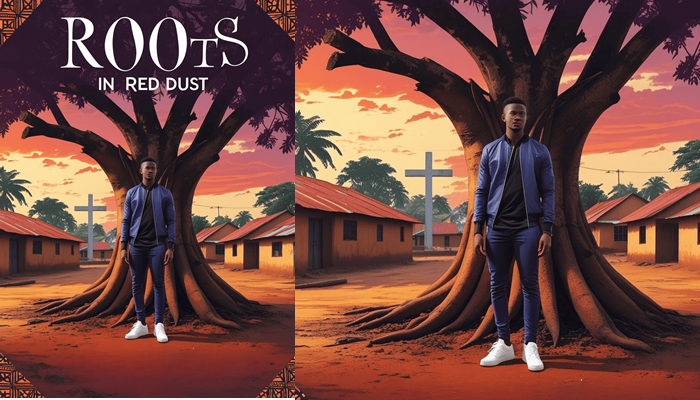
Chapter One: The Last Name I Never Knew
The moment Jordan Ayotunde Brown stepped off the plane at Murtala Muhammed International Airport, the Lagos heat hit him like a slap. It wasn’t just hot—it was humid, sticky, like walking into someone’s breath. He pulled off his Ray-Bans, blinking against the brightness. The air smelled of jet fuel, roasted corn, and a chaos he couldn’t name. Welcome to Nigeria.
He hadn’t even reached the terminal when two men approached him.
“Oga! Welcome o. Do you need taxi? Airport taxi, I go carry you go anywhere!”
“I dey here o. Na me first talk to am! Oga, come make we go. Fine boy like you no suppose dey waka anyhow.”
Jordan chuckled awkwardly, clutching the handle of his Louis Vuitton suitcase. This was already more attention than he was used to.
“Uh, I have a ride,” he mumbled.
It was a lie.
He was stalling. Truth was, he didn’t know what he was doing—not really. He had arrived in a country he’d never stepped foot in, with only a name, a photograph, and a mother’s broken memories to guide him.
Three weeks earlier, back in Atlanta, Georgia, his mother had finally broken.
“Your father’s name… was Fisayo,” she had said through tears. “Adebayo Fisayo. From Ibadan. We were in love, but… things fell apart. I left because I had to. I was scared. And I was pregnant.”
Jordan had stared at her. “You’ve kept his name from me for twenty-five years. Why now?”
Omotola couldn’t meet his eyes. “Because you asked me to invite him to your wedding. And I couldn’t lie anymore.”
He had felt something shift inside him that day – an ache that no amount of success could suppress. His fiancée, Janelle, encouraged him. “Go find him,” she had said. “Even if it ends in disappointment, at least you’ll know.”
And so, Jordan went.
A week into Nigeria, Jordan had made it to Ibadan. He took a room at BON Hotel behind Cocoa Mall. The hotel was clean, quiet, and most importantly, air-conditioned. He spent his first day trying to recover from jetlag and Lagos. Ibadan was less aggressive than Lagos, but it came with its own rhythm – laid-back but loud, sprawling but deeply rooted in history.
He had only one photo: a faded Polaroid of a man in his twenties standing next to Omotola, both smiling shyly in front of a Peugeot 504. Fisayo had a strong jawline, a wide nose, and deep-set eyes that reminded Jordan uncomfortably of his own.
He scanned it into his phone and showed it to the hotel receptionist.
“Excuse me… do you recognize this man? Maybe from back in the day?”
The girl leaned in, squinting. She had pink braids and long eyelashes that fluttered like butterfly wings.
“Oga, dis one don tay o. This picture na before GSM. Hmmm… him face be like Ibadan boy sha. Maybe Dugbe side. You fit ask for Dugbe.”
“Dugbe side? What’s that – like a neighborhood?”
She giggled. “Na big market and mechanic place. Plenty old people still dey there. You go fit see person wey sabi am.”
Jordan nodded. That was something.
He took a cab to Dugbe the next morning, wearing jeans, a white polo shirt, and sneakers that drew too much attention. A hawker tried to sell him fufu through the car window. Two kids chased after the cab, shouting, “Oyibo! Oyibo!” despite his brown skin. Apparently, his accent, cologne, and confusion gave him away.
The mechanic shops in Dugbe lined the road like rusting skeletons. Jordan stopped at a stall where three men sat under a faded Coca-Cola umbrella, sipping orijin and arguing about Arsenal.
He greeted politely. “Good afternoon sirs. Please, I’m looking for someone. His name is Adebayo Fisayo. He would be in his fifties now. Used to live around here in the ’90s. Maybe worked as a mechanic?”
One of them raised an eyebrow. “Fisayo… Fisayo Mechanic? You mean Fisayo wey dey fight anyhow?”
“Ah! That one wey im girlfriend run go abroad?” another chimed in.
Jordan’s heart jumped. “Yes! Yes, that’s him. Do you know where he is now?”
The third man spat. “That one? Nobody don see am since. Dem say e run mad small. Or travel. Nobody sabi. You go fit ask Mama Shade. She sabi everybody for here.”
Jordan took down directions. Hope sparked.
Mama Shade lived a few streets down in a one-room shack with a sewing machine by the window. She looked like she hadn’t aged a day since 1975.
“Come inside, my pikin,” she said, waving him in. “You say you be who? Jordan? From America? Omotola pikin? Chineke! She don born fine boy like you?”
He nodded.
Tears welled up in her eyes. “Omotola… that girl suffer o. Your papa nearly finish am. But she loved him. Too much. Maybe na why she run. I beg, sit down. Make I tell you wetin I know.”
Jordan listened. Every word felt like a stitch pulling his heart tighter.
That night, back in the hotel, he stood by the window looking out at the red dust of Ibadan settling on roofs and roadside trees. His journey had just begun, and already, the truth was proving heavier than he had imagined.
He whispered into the silence, “I will find you, Fisayo. Even if I have to search every corner of this city. You will walk me down that aisle.”
The red dust swirled beneath a full moon.
The roots were beginning to stir.
Chapter Two: The Chronicles of Dugbe and Dug-Don’t
Ibadan had a strange way of making time stretch. The mornings began early with the cries of roosters and the cackling of women at the communal tap. By noon, the heat sat heavy on everything. And by evening, the sky turned a tired grey as if the city itself had given up trying to keep up.
Jordan was learning to adjust.
He returned to Dugbe the next morning, retracing his steps toward the mechanic shops. The air smelled of petrol, metal, sweat, and old grudges. It was loud, disorderly, and wildly alive. Laughter echoed beside the clang of spanners. Men lay under cars like mechanics and prophets, emerging oily and grinning like they’d just repaired a broken future.
He heard a familiar voice. “Oga America! You don come back?”
It was one of the men from yesterday – short, round-bellied, with teeth stained red from chewing kolanut.
“Yes, sir. I’m still looking for Mr. Fisayo. You mentioned a woman – Mama Shade?”
“Yes now. You go see her?”
Jordan nodded. “She told me some things… but she didn’t know where he went.”
The man scratched his belly. “Na so that man take vanish. But I go carry you go meet one baba. Him dey sell car battery, but na correct informant. If anything happen for Ibadan, e go sabi. Make we go.”
They arrived at a kiosk stuffed with batteries, wires, and the smell of overheated rubber. A small radio played Fuji music in the background.
The man inside had tribal marks running down both cheeks like railway tracks.
“Ah, Baba Sefiu,” Jordan’s guide greeted. “This oyibo boy dey find one man – Fisayo. Him papa.”
Baba Sefiu’s eyes narrowed. “Fisayo mechanic? With the loud girlfriend wey run go obodo oyibo?”
Jordan winced. That seemed to be the defining story.
“Yes, sir. That’s my mother. I’m their son.”
There was a moment of silence. Then Baba Sefiu sighed. “That boy… life no treat am well. After Omotola disappear, dem say craze catch am small. He no even go shop again. He just vanish. Some people say cultists carry am. Some say he enter church wey no be church. I no know. But if anybody sabi, na Alhaji Segun. Him dey sell scrap near Oke Bola.”
Jordan took down the address and left, feeling both drained and determined. On his way back, a boy of about eleven tried to sell him chewing sticks. Jordan declined, but the boy followed him.
“Uncle, you get dollar?”
Jordan laughed. “I’m not carrying cash.”
“Okay. You wan change? I fit help you. I sabi where dem dey do am. No be fake o. Original dollar to naira.”
“My guy, how old are you?”
“Eleven and half. But I sabi life.”
Jordan grinned and handed him a packet of Skittles. The boy opened it like he had just received communion.
Back at the hotel, Jordan called Janelle.
“Hey babe. You okay?”
“Yeah… kind of. Ibadan is… an experience.”
“Did you find him?”
“Not yet. I’ve heard five different versions of the same story. My father was either kidnapped by cultists, ran mad, became a pastor, or turned into a goat.”
Janelle laughed. “Maybe all of the above. I mean… it’s Nigeria. Anything is possible.”
“You’re not helping.”
“I’m trying to keep you sane. When’s the last time you slept more than three hours?”
“I don’t even know.”
“Baby… just remember what you told me. Even if you find a dead end, the journey matters.”
Jordan exhaled deeply. “I’m not giving up. I want him to see me. I want him to know I became something. That I’m not just a scar he left behind.”
“Then keep going. Even if he’s nothing like what you imagined.”
The next day, he made his way to Oke Bola.
Segun’s scrap yard was a fortress of old iron. Car doors, tyres, broken radios, and engine blocks rose like pyramids around the compound. Jordan felt like he was walking into a museum curated by a madman.
A tall man in a kaftan emerged.
“You dey find person?”
“Yes. Fisayo Adebayo. I was told you might know something.”
The man stared at him. Then his eyes widened.
“Wait. You be him pikin? The one wey Omotola carry run go abroad? Omo t’omo. Come inside.”
They sat under a corrugated roof beside a burning brazier.
Segun lit a cigarette.
“Fisayo and me… we dey same gang for secondary school. Na street boy but him get sense. Na love wey finish am. After Omotola waka, him enter something like white garment church. Den him mind start to shake. E no too dey talk again. Last I hear, he dey Bodija side. But e no stable. Some people call am Pastor Fisayo now.”
Jordan was stunned. “He’s alive?”
“Yes. But different. You fit go look am. Just… no expect say him go hug you like film. Life don change the man.”
Jordan left with shaking hands. He had a lead. A real one.
Bodija. A church. Pastor Fisayo.
Somewhere in the red dust, the roots dug deeper.
Chapter Three: The Man under The Tree
Bodija felt like a different Ibadan entirely.
Gone was the mechanical chaos of Dugbe. In its place stood a leafy suburb with tall fences, old colonial bungalows, and the occasional call to prayer humming over rustling trees. The roads here weren’t perfect, but they were less angry. Jordan rolled down the window of the cab slightly, letting the smell of roasted corn and distant rain filter in.
He gripped the slip of paper in his palm. Holy Mountain of the Broken Olive Branch -Opposite Bodija Market, beside Femi’s Barber Shop.
The driver pointed. “Oga, na there be the church. But dem no dey use microphone like normal church o. Na only handbell and drum dem dey knock. You go hear dem soon.”
Jordan paid him, stepped out, and stared.
The building barely qualified as a church. A faded signboard leaned against a mango tree, its lettering half-eaten by sun and time. The structure behind it was little more than a wide zinc roof supported by wooden pillars, open on all sides like a makeshift barn. A woman in white danced barefoot in the red dust, shaking a tambourine and singing something indecipherable.
A small crowd clapped along.
Jordan hesitated. He felt like a shadow trespassing in someone else’s dream.
Then, he heard the name.
“Pastor Fisayo!”
A wiry man emerged from behind a curtain made of old curtains.
He was barefoot, draped in a white robe. His hair was longer than Jordan expected, his beard wild. His eyes scanned the small crowd like someone constantly measuring spirits.
Jordan’s throat closed. He took a step forward, then another, then froze.
That face.
It was older, thinner, and worn by years, but it was the face in the only photograph he had of his father – the one his mother had once angrily torn in half and tossed into the fire before Jordan rescued a charred piece.
It was him.
“Pastor Fisayo!” someone repeated.
The man lifted both hands and began to pray in tongues, his voice rising, shaking. A drumbeat started. People swayed.
Jordan stood outside the perimeter like a ghost at the edge of his own story.
Then the pastor’s eyes met his.
It lasted maybe three seconds.
But in that moment, something flickered.
Recognition? Confusion? Memory? None of it?
Fisayo blinked, then turned back to the crowd. He started preaching – loud, rhythmic, almost feverish. His voice cracked with conviction, quoting scripture after scripture about redemption, brokenness, and a new name.
Jordan stood frozen.
He waited until the service ended.
By then, most people had left. The air was thick with dust and sweat. Jordan approached slowly, afraid the man would vanish if he moved too fast.
“Sir…”
The pastor turned. His expression was guarded, eyes slightly clouded.
“I… my name is Jordan Omotayo.”
The name hung there like a quiet explosion.
Silence.
Then a strange smile crossed the pastor’s lips. “Omotayo… That name is long gone.”
“I’m her son. Your son.”
The smile disappeared.
Pastor Fisayo stared at him. Not with anger. Not with love. But like he was staring at something not fully real.
“No,” he said. “No, no. That life has died. I buried it. I’m born again. That man – Fisayo – he no dey again. He died in the fire.”
Jordan’s jaw clenched. “Then let me mourn him.”
A gust of wind blew dust into their faces. Fisayo turned and walked toward a nearby mango tree and sat under it.
Jordan followed.
For minutes, neither spoke.
Finally, Fisayo said, “Your mother… she no tell you the full story.”
Jordan sat beside him, knees brushing red sand. “She told me enough. She said she left you when things got dangerous.”
“She ran. With another man. Not just to save you. To save herself.”
Jordan flinched. “So you let her go.”
“I was broken. I drank. I fought. I saw visions in my sleep. People laughed at me. My friends turned to ghosts. The police searched for me once. Cult boys threatened me. And one day, I walked into a church and never left. They gave me a new name. A new cloth. A new cross to carry.”
“But I came back,” Jordan whispered. “I came to find you.”
Fisayo nodded slowly. “Then maybe… maybe this is my punishment. Or my reward. Or both.”
They sat in silence.
Somewhere nearby, a woman sang softly as she washed clothes in a basin. A goat bleated. A baby cried. Life continued.
Jordan turned to him again. “Do you want to know me?”
Fisayo didn’t answer immediately.
Then, very softly: “I don’t know how.”
Jordan wiped his face. “Then let’s start small. Do you like mangoes?”
Fisayo chuckled – a dry, unfamiliar sound. “Too many flies.”
Jordan laughed.
And just like that, the ice cracked.
Not melted. But cracked.
He left the church that evening not with a father, but with something more precious: a possibility.
Back at the hotel, he called Janelle.
“You’re not going to believe this…”
Chapter Four: Mangoes and Ministries
Jordan returned to the makeshift church the next morning, carrying a small bag of gifts: a can of powdered milk, some digestive biscuits, a packet of Lipton, and a pair of simple leather slippers he bought at the market. It felt absurd, like bringing peace offerings to a stranger who should’ve known what his baby laugh sounded like.
Fisayo was sweeping the church compound when he arrived.
“Good morning, sir,” Jordan said, setting the bag down quietly.
Fisayo looked up, mildly surprised. His eyes scanned the items, then Jordan. “You come early.”
“I wanted to help clean.”
The older man hesitated. Then he handed Jordan a battered broom with missing bristles. “Start from that corner.”
For the next thirty minutes, they swept in silence. Occasionally, a gust of wind would send dust back into their eyes, and Fisayo would mutter, “Ibadan weather no dey fear anybody.”
Jordan smiled.
There was something quietly healing about the simplicity of the task – father and son, sweeping out dirt. If God was poetic, this had to be one of His verses.
When they finished, Fisayo brought out two plastic chairs and they sat under the mango tree again. No one else was around yet.
“I used to sweep like this for my uncle when I was small,” Fisayo said.
“Your uncle raised you?”
“After my papa die. My mama too sick. The man was wicked, sha, but at least him teach me work.”
Jordan nodded. “I can relate. My mom worked three jobs in Houston. She’s tough. Always said ‘don’t wait for a miracle—become one.’”
Fisayo’s mouth twitched. “Sounds like something she’d say.”
Jordan reached into his pocket and pulled out a small, faded photograph. The one he had salvaged years ago from the fire. Half-burned, the picture showed Fisayo cradling a baby, smiling wide, back when life was still generous.
Fisayo took it with trembling fingers. His thumb brushed across his younger face.
“I forgot this smile,” he said softly.
“That’s me in your arms,” Jordan said. “You were there… even if just for a moment.”
Fisayo stared at it for a long time. Then he said, “I used to dream about you. A boy running in tall grass, always out of reach.”
Jordan blinked back something stinging in his eyes.
“I used to dream of you too,” he whispered. “But mine was different. You were always facing away. Like a man walking into fog.”
A deep silence followed.
Then Fisayo stood. “You hungry?”
Jordan smiled. “Always.”
They walked to a nearby buka. The place had no name but boasted the best amala and gbegiri this side of Bodija, according to Fisayo. The owner, Mama Ronke, was a loud woman with a voice like a broken speaker and arms strong enough to crush pepper with her elbow.
“Pastor! You don carry person come?” she grinned. “This one fine like correct Lagos boy. Na your choir master?”
Fisayo chuckled. “Na my son.”
Mama Ronke froze.
“Your what?”
“My son. From America.”
She blinked, then sized Jordan up like he was an exotic goat. “Eh hen? Pastor! You no tell us say you born oyibo pikin before!”
Jordan smiled politely, wishing the earth would swallow him.
They ate in awkward silence at first. Fisayo devoured his food like a man who had mastered the art of hunger. Jordan watched, fascinated.
“So… what’s your real job?” Fisayo asked between mouthfuls.
“I’m a software engineer. Built a few things. Some startups.”
“You build apps?”
Jordan nodded. “And systems. Code. Interfaces. I manage a team now. We just launched a healthcare tracking platform last quarter.”
Fisayo whistled. “Na big grammar be that. But you dey try.”
Jordan chuckled. “I guess. I just wanted to be better than what people expected.”
“That’s the same thing I wanted too,” Fisayo said. “To be more than a street boy with oil-stained hands. But my engine knock.”
“Maybe it’s not too late to fix it.”
They both laughed. And for a moment, the years between them shrank.
Back at the hotel later that evening, Jordan sat by the window, phone pressed to his ear.
Janelle answered immediately. “Tell me everything.”
He smiled. “We swept a church compound together, ate amala, and discussed destiny under a mango tree.”
“That’s either a horror story or a Nollywood romantic comedy.”
“He’s… human. Broken. A bit weird. But real.”
“I’m proud of you, Jay.”
“I don’t know what comes next,” Jordan said quietly. “He didn’t hug me. Didn’t cry. But he looked at me like I mattered. I think that’s a start.”
“It is,” Janelle said. “You don’t need a perfect father. Just a real one.”
Jordan stared into the Ibadan night. The city shimmered in the distance – distant horns, distant hopes.
He whispered, “I think I’m going to stay a little longer.”
Chapter Five: The Things We Never Say
By the fourth day, Jordan knew where to find him.
Under the mango tree. Always under that mango tree.
It was where the neighborhood came alive – where women stopped to gossip, barefoot kids came to snack on fallen fruit, and tired men paused long enough to tell a lie or two about their past. The tree didn’t just provide shade; it was memory made tangible.
Fisayo sat cross-legged this time, reading from a tattered Bible, his lips moving without sound. His robe was whiter today, freshly washed and stiff with starch. Jordan approached, carrying two cold bottles of malt.
“You again,” Fisayo muttered, not looking up.
“I’m persistent,” Jordan said, handing him a bottle.
Fisayo took it. “Or stubborn.”
“Same difference.”
They sat in silence, the only sound being the soft clink of glass and the far-off call of a hawker screaming, “Guguru! Epa! Original groundnut o!”
Fisayo suddenly asked, “Your mother… is she well?”
Jordan nodded. “She’s strong. She’s always been strong. But she’s tired too. I think leaving you broke something in her she never really fixed.”
Fisayo rubbed his beard. “She did what she had to. I was drowning. She just swam away first.”
“That’s generous.”
“No. Just true.”
Jordan sighed. “You know, I used to imagine finding you would fix everything. That somehow, if I stared hard enough at your face, I’d understand all the reasons I felt… like something was missing.”
“And now that you’ve found me?”
“I’ve realized some holes don’t get filled. You just learn to live around them.”
Fisayo nodded slowly. “That’s wisdom. Painful kind.”
They watched a boy climb the mango tree, nimble like a lizard.
“You ever climb trees as a boy?” Jordan asked.
“Always,” Fisayo said with a smile. “Until I fell from one and landed on Mama Bisola’s cassava plant. She beat me like I stole the sun.”
Jordan laughed. “You’ve got stories.”
“Too many. But who wants to hear them?”
“I do.”
Fisayo looked at him carefully. “Why? You don’t owe me anything. Not presence. Not kindness.”
“I’m not doing it for you,” Jordan said softly. “I’m doing it for the boy I used to be -the one who always wished his father would show up to just… say something.”
A stillness settled between them.
Then Fisayo whispered, “I’m sorry.”
Jordan looked up.
“I’m sorry I wasn’t there. Sorry for the birthdays I missed. For the scraped knees. For the graduation. For your first heartbreak. For every single second I wasn’t your father.”
Jordan nodded. His throat tightened. “I needed to hear that.”
They sat quietly, the weight of the apology stretching across years.
A woman passed by and greeted Fisayo. He responded warmly, slipping back into Pastor mode – his tone shifting, posture straightening. Jordan watched him transform, like a man with two lives packed into one body.
“You’re loved here,” Jordan said.
“They respect me. Sometimes that’s enough.”
“What about you? Do you love anyone now?”
Fisayo hesitated. “No. I’m married to the ministry.”
Jordan smiled wryly. “That’s a lonely wife.”
“Lonely keeps me honest.”
Later that evening, they walked toward a nearby stream. Fisayo said he often went there to pray. The place was serene – low trees hung over clear water, and birds called to one another like gossiping grandmothers.
“Sometimes I talk to God here,” Fisayo said. “Sometimes I yell at Him.”
Jordan nodded. “Do you ever hear back?”
“Not always. But sometimes the silence feels like a hug.”
They sat by the edge of the stream.
“You know,” Fisayo began, “there was a time I thought I was cursed. Nothing I touched stayed. My business failed. Friends betrayed me. I buried two siblings. Then Omotola left. I felt like I was a walking bad omen.”
“Maybe that’s why you became a pastor,” Jordan said gently. “You needed someone to tell you the curse wasn’t real.”
Fisayo looked at him, surprised. “Maybe so.”
They stared at the water.
Then Jordan said, “When I get married, I want you there.”
Fisayo blinked. “Me?”
“I don’t care if you wear your white robe or your slippers or even if you speak in tongues. I want you to sit in the front row. No one else needs to know you’re my father. But I need to know you’re watching.”
Fisayo swallowed hard. “When?”
“Next year. In Houston. Janelle wants a small wedding.”
“And you want a complicated father.”
Jordan laughed. “We make it work.”
The old man chuckled, then extended a hand.
“I’ll try.”
Jordan shook it. Firm. Honest. A promise made under trees and beside running water.
When Jordan got back to the hotel that night, Janelle was already on a video call.
“Hey,” she beamed. “You look different. Peaceful.”
He smiled. “I think I met the version of my father I was meant to find. Not perfect. Not whole. But still… mine.”
She grinned. “I told you. Nigeria may break your heart, but it gives you poetry in return.”
Jordan exhaled, nodding. “Yeah. Ibadan gave me a poem written in sweat, mangoes, and broken prayers.”
Chapter Six: Roots and Riddles
The morning of his last full day in Ibadan was unusually quiet. No roosters, no hawkers yelling “Agege bread!” from the roadside, no keke horns blaring insults at danfo drivers. Just stillness – as if the city itself was holding its breath.
Jordan stood by the window of his hotel room, coffee in hand, staring at the rusted rooftops and the gentle haze that hung over the distant brown hills.
He had come to Nigeria expecting drama, confrontation, maybe even rejection. Instead, he had found quiet redemption wrapped in dust and silence, under a mango tree.
He checked his phone:
One new voice note.
From his mom.
He tapped it.
“Jordan, I’ve been thinking about you all day. I know you’re leaving soon. I just want you to know… I’m proud of you. Not for finding your father, but for finding yourself in all of this. When I left Nigeria with you, I was scared – more scared than I’ve ever been in my life. I didn’t leave just because of Fisayo. I left because I didn’t trust myself to survive another year here.
But now, hearing what you’ve done, how you’ve gone back and walked into my past like it was yours… I feel lighter. Thank you. I love you.”
Jordan sat on the edge of the bed, the words echoing in the quiet room.
He replied with a short voice note of his own:
“Mom… I understand more now than I ever did. I’m coming home soon. With peace. I love you too.”
Then he got up, put on a clean linen shirt, and left for one final visit.
The road to the church was busier than usual. Someone had passed away in the neighborhood and a crowd had gathered for what Fisayo called a “homegoing.” There were plastic chairs under canopies, women pounding yam under trees, and old men playing draughts and lying through their teeth about how handsome they used to be.
Jordan found Fisayo near the side of the church, talking to a group of young boys—teaching them how to patch a hole in a wooden drum.
He looked… younger.
Like time had been rewinding slowly, one good conversation at a time.
“Jordan,” he greeted, rising. “You dey go today?”
“Tomorrow morning. But I wanted to see you before I leave.”
They walked to their now-familiar spot under the mango tree. A goat chewed a discarded sachet of pure water nearby.
“I bought something for you,” Jordan said, unzipping his backpack. He pulled out a small hardback notebook.
Fisayo raised an eyebrow.
“It’s a journal,” Jordan said. “Blank pages. I thought maybe… you could start writing your story. Not for the church. Not for anyone. Just for you.”
Fisayo turned the notebook over in his hands. “What if my story is too messy?”
“Then make it poetry. You’re allowed to.”
They sat for a while, watching the church kids sweep the compound with brooms twice their height.
Then Fisayo said, “You know, when I was young, I wanted to be a teacher. I liked books. Language. Words. But life had other plans.”
“Maybe life just paused,” Jordan said. “Maybe now it’s pressing play.”
Fisayo laughed. “Optimist.”
Jordan smiled. “Engineer.”
They stood and hugged for the first time.
It wasn’t long. It wasn’t perfect. But it was warm, real, and unscripted.
As they pulled apart, Jordan reached into his backpack again.
“There’s something else,” he said, handing Fisayo a small brown envelope.
Fisayo opened it and stared at the neat bundle of naira inside – clean notes, crisp and stacked.
“Jordan…”
“It’s not charity,” Jordan said quickly. “It’s honor. It’s what a son does when he sees his father has carried pain long enough. You’ve given me peace, Baba. Please let me give you rest.”
Fisayo held the envelope like it was something sacred.
“I don’t know what to say.”
“Then don’t say anything. Just eat well. Fix your roof. Maybe even get that proper microphone you’ve been avoiding.”
Fisayo laughed, a little brokenly. His voice thickened. “Thank you, my son.”
Jordan’s heart tightened at the phrase – my son. It landed soft and heavy, like rain on old earth.
They stood quietly as the wind stirred dry leaves into spirals around their feet.
“I’ll see you again,” Jordan said.
“You better,” Fisayo replied, gripping his shoulder. “Or I’ll send church members to America to come and fast in front of your office.”
Jordan chuckled. “Fair warning.”
As he walked away, he didn’t feel like he was leaving someone behind.
He felt like he had restored something – something lost not in time, but in silence.
At the airport the next day, as he sat waiting to board, Jordan opened his notes app and began typing.
Lessons from Ibadan:
- Don’t expect your father to be the hero in your movie. Just pray he doesn’t turn out to be the villain.
- Redemption looks boring. But it’s the quiet that saves you.
- Some answers live under mango trees.
- Forgiveness isn’t a performance. It’s a process.
- The people we look for outside ourselves are sometimes buried deep inside us, waiting to be listened to.
He looked out at the runway.
A flock of birds lifted from the tarmac, scattered like commas in the sky—pausing the sentence of morning just long enough to make room for flight.
He smiled.
“I’m ready.”
Chapter Seven: The Flight Home
Houston greeted him with cold air conditioning, the familiar hum of immigration queues, and the flat accent of American airport announcements.
Jordan wheeled his suitcase through the arrivals hall with a calm he hadn’t felt in years. There was no rush in his steps, no tightness in his chest. His mind wasn’t spinning. It was still.
Janelle was waiting outside in a blue Honda, engine running, oversized sunglasses on, and a Starbucks iced latte balanced between her knees.
The moment he opened the door, she leaned over and kissed him on the cheek. “Welcome back, Mr. Mango Tree.”
He laughed. “God, I missed this car. And you.”
“Missed you too. You look… different. Softer.”
“I left something in Nigeria.”
“Your sarcasm?”
“My anger.”
She smiled and squeezed his hand as he settled into the passenger seat. “Tell me everything.”
And he did – on the drive back to their apartment, over dinner, and again while brushing his teeth that night. He told her about the dust, the boys selling chewing sticks, Mama Ronke’s spicy amala, the quiet stream, and the old man in white who looked like a prophet and a ghost all at once.
He showed her the journal he left behind with Fisayo, and the photo he carried back – an updated one, this time with both of them in it, under the mango tree. Jordan was smiling wide. His father, only slightly.
But he was present.
A few weeks later, Jordan got a voice note from Nigeria.
It was short. Crackly. Full of background noise.
“My son… I used the money you gave me to repair the church roof. Rain no dey soak the choir again. I also buy books for the boys. I even wear new slippers now – people dey yab me say I be pastor wey dey form fresh.
I started writing. First page only. But it’s a start. I no too sabi big grammar like you, but I go try.
May God bless your journey. Greet that your fine fiancée for me. Tell her say make she prepare for white soup when she come. We dey wait you.”
Jordan played the voice note twice.
Then he forwarded it to Janelle, who replied with a string of heart emojis and:
“We’re definitely going for that wedding in Ibadan.”
Six Months Later.
The wedding was small, elegant, and filled with sunlight.
Janelle looked like something painted in gold. Jordan wore a soft agbada over his usual confident grin. They had chosen to blend traditions – white dress, Yoruba drums, exchange of vows, and a live band that knew when to shift from Ave Maria to Ojuelegba without warning.
Fisayo sat in the second row, hands folded, white robe pristine. He cried only once -quietly – during the father-son dance. No one saw it, except Jordan, who turned and met his gaze just in time.
Later, during the toast, Jordan raised a glass and said:
“To the people we come from. To the ones who broke us and still taught us to stand. And to the ones we find – under trees, beside rivers, in the middle of life – when we finally go looking.”
Fisayo clapped the loudest.
Epilogue
Somewhere in Bodija, under that same mango tree, a new wooden bench had been carved. The words The Boy Came Back were etched in small letters on the side.
Fisayo now kept two journals. One for sermons. The other for stories.
He had filled seven pages so far.
And every Saturday, after sweeping the compound, he would sit under the tree, look up at the sky, and smile.
Because he knew – some roots, though buried for years, still bloom when the season is right.