Chapter One: Born on Rough Grounds
Somolu no be for the faint-hearted.
The air smelled of burnt akara oil, old newspaper ink, wet cement, and something else – something you couldn’t name but knew lived in the corners of Lagos’ underbelly. In the middle of this chaos, inside a narrow face-me-I-face-you compound on Bajulaiye Street, Kola was born at 3:47 am on a rainy Tuesday in June. The kind of rain that slapped zinc roofs with thunderous anger, the kind that flooded dreams and compounds alike.
“Mama Tinu don born o!” one of the neighbours shouted, knocking on doors in excitement and relief.
She had gone into labour under candlelight, with one elderly midwife, Mama Salewa, shouting “Push! Push!” like she was announcing the second coming of Christ. The baby came out screaming, fist clenched like he knew the battle had just begun. Mama Tinu looked at her boy and whispered, “You go fight for this life, Kola. But you go survive. You must.”
There were four other children to come after that, but Kola was the first. And from the very beginning, it seemed like life had a personal vendetta against him.
Their home was a single room – ten by ten feet – barely enough to fit the six of them when everyone eventually arrived. A small mattress lay on the floor, pushed against the wall. The only furniture was a stool, one battered wardrobe with a broken hinge, and a table fan that hadn’t worked since NEPA last showed mercy during Yar’Adua’s time.
His father, Baba Kola, used to work at a printing press in Mushin. Back when his hands were still steady and his breath didn’t stink of burukutu. But the day the machines crushed his fingers, the press let him go like expired ink. No compensation. No pension. Just, “Go house. Make your wife dey cook better pepper soup for you.”
That’s when the drinking began.
At first, it was one or two sachets of Chelsea dry gin every evening. Then it turned to seven. By the time Kola was ten, Baba Kola had become a fixture at the beer parlour near Fola Agoro. And every night, he came home with spirits in his belly and thunder in his fists.
“Mummy, e don come again o!” Titi, the youngest, would scream as their father staggered into the room.
“Wetin una cook? Abi I no dey live for this house again?” he would roar, the stench of alcohol entering the room before he did.
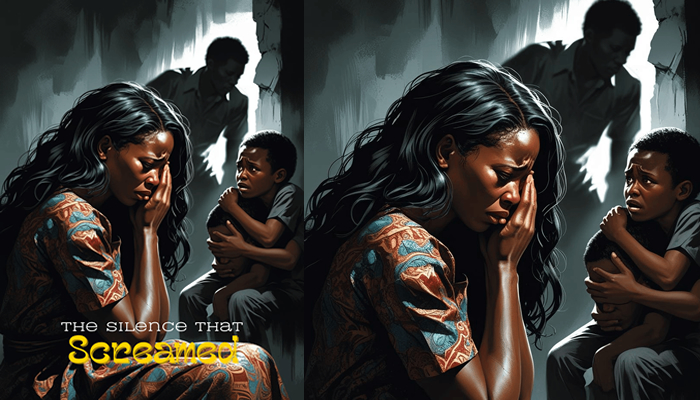
Kola learnt early not to cry. Boys no dey cry for Somolu. Tears were expensive, and in this city, they never solved anything. He’d hold his siblings in a corner, whispering Igbo gospel songs his mother used to sing while they waited out the storm that was their father.
Sometimes he would fight back. At thirteen, he blocked a slap meant for Titi and earned a scar just below his left eye. “You wan dey form man abi?” Baba Kola barked, belt in hand. “You go soon reach street, make dem teach you wetin be real life.”
And the streets did teach him.
Kola’s first hustle came at age twelve. He started as a pure water hawker, carrying his basin from Bajulaiye to Bariga. “Ice water, cold pure wata!” he’d chant, his voice hoarse by afternoon. He learned how to dodge LASTMA, avoid street boys demanding ‘tax,’ and run from Alaye extortionists who didn’t care if you were feeding your family or your habit.
By fourteen, he graduated to newspaper hawking. He’d collect the day’s papers from the distributor under the Somolu bridge and hustle for spots near traffic at Onipanu.
“Oga, buy Vanguard now! Buhari don talk again!”
“Punch dey hot today, buy am before e finish!”
People ignored him mostly. Or treated him like the dust Lagos never ran out of. But he didn’t mind. Every N50 note added up. He’d rush home before dusk, hand over his daily earnings to Mama Tinu, who always whispered, “Oluwa a fi e wehin rere,” and kissed his dusty forehead.
His siblings looked up to him – especially Mide, who was always coughing and whose legs looked like they could break with one wrong step. There was no money for a proper hospital, so they fed him bitter leaf and prayers.
School became a luxury.
By JSS3, Kola had dropped out. The principal had called Mama Tinu to his office.
“Madam, your son is brilliant. But if he can’t pay PTA dues or wear proper sandals, I can’t let him continue. It’s not a charity.”
And that was it.
That night, Kola cried quietly into his pillow – the same one he shared with Dayo. “God, make I no waste. Abeg,” he whispered.
Then came the first death.
His uncle, Uncle Razaq – the only man who used to sneak them small foodstuffs from Mushin – got hit by a danfo while crossing at Palmgrove. Just like that, gone. And with him, the last link to any form of help. Mama Tinu wept for days, singing old Yoruba dirges into the night. Baba Kola didn’t say a word. Just drank more.
Kola began working at a printing press in Somolu. Same kind his father had lost his fingers to. He’d fold newspapers, align pages, sometimes carry loads for the oga who always shouted, “No go spoil my machine o, I no go pay for dead body!”
He worked twelve-hour shifts. No health insurance. No food allowance. Just ₦1,500 daily. But he held on, because in this part of the world, holding on was the only thing anyone could afford.
One Sunday morning, something happened.
He was walking home from night shift, clothes soaked in ink, when he saw a boy his age snatch a woman’s handbag near Fadeyi. The woman screamed. Kola watched as the thief bolted into a danfo and disappeared. Two policemen nearby came rushing and grabbed the nearest boy standing beside Gala hawkers.
“Na him?” one asked the woman.
She hesitated.
The boy was trembling.
“Yes… I think so,” she finally said.
That was enough.
They beat the boy mercilessly before dragging him into their patrol van. Kola stood frozen, rage boiling inside. But what could he do? This was Lagos. And Lagos no get conscience.
One night, Mama Tinu fell in the bathroom.
She had been coughing blood for two days, hiding it behind her wrapper. When she hit the floor, it sounded like thunder.
Kola and Seyi rushed her to a local chemist. The man gave her one drip and paracetamol. “Na stress,” he said.
She died three days later.
That night, the rain returned.
Not the kind that blessed farmers or cooled the air – but the kind that beat down on the roof like it was mourning too. Kola sat outside, soaked, eyes empty, while Titi sobbed in Dayo’s arms.
He had no words. Just silence. And rain.
By the time he turned eighteen, Kola had seen more suffering than most men twice his age. The compound now looked like a prison. His father barely spoke anymore. His siblings were fading – Dayo was joining a gang, Seyi was always lost in music, Mide had stopped smiling altogether, and Titi… sweet Titi… she still called him “broda mi,” her eyes full of hope.
But hope was scarce.
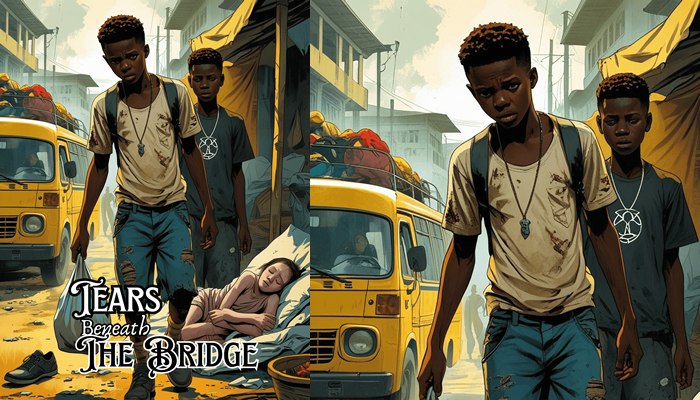
One night, Kola walked toward the bridge at CMS, intending to sleep there for the first time. As he lay down on a cardboard beside a sleeping madman, he looked up at the sky and whispered, “If I survive this Lagos… I go make am, I swear.”
Chapter Two: Streets Know My Name
In Lagos, once the street knows your name, e no dey ever forget am.
By the time Kola turned nineteen, his name had echoed through most corners of Somolu like wind blowing through zinc rooftops. Not because he was a thief or cultist – but because, somehow, he just kept surviving. And that na him crime.
“Na that boy wey dey hawk Punch for Onipanu junction?”
“Ehn now. Dem say him mama don kpai, and him papa don turn ogogoro drum.”
“Omo! That boy stubborn like Lagos traffic.”
Kola didn’t set out to become a street legend. All he wanted was a better life, but Lagos no dey carry last—so he learnt how to chase buses, chase dreams, and still dodge the madness chasing him in return.
After Mama Tinu’s burial – if you could even call it that – everything changed.
She was laid to rest in a brown plywood coffin that barely stayed shut. The whole compound contributed small money. Her church sent two women and one aging pastor with halitosis. Kola gave a short, shaky speech. Baba Kola didn’t attend. Said his leg was paining him. He was at the beer parlour down the road, drinking his memory dry.
From that day, Kola made a vow:
“I no go die for this place like say I no try.”
He doubled his hustle.
In the mornings, he’d collect unsold newspapers from the press and hawk them around Palmgrove. In the afternoon, he helped Alhaji Kareem, an old man who ran a storage shed beside the Somolu under-bridge. The job was simple: watch over cartons of goods. But the stress? E no get rival.
“Aboki! Where my order now?”
“Oga, you go wait o. Na only me dey here,” Kola would retort, dragging heavy cartons while dodging insults like bullets.
At night, he became a bus conductor for the Palmgrove–Ojuelegba–Yaba axis. Dirty work. Dangerous too. But na wetin dey pay.
“Owa o! Owa o!” he’d shout at top of his lungs, hanging on the edge of the rickety danfo like his life depended on it. And it did.
He learned how to fight passengers who wanted change, run from VIO raids, and even flirt with pepper-sellers at bus stops. He was becoming hardened. Too hardened.
But inside? A boy still dey cry.
One night, something happened.
The danfo he was working on got stopped by SARS near Anthony. They dragged the driver out, demanded money. The driver resisted.
“Una no get right to dey harass us,” the man said.
Kola could feel the tension rise. One of the officers cocked his rifle.
“Na you go teach us law?”
Bang.
Just like that. Shot fired.
People screamed. Kola froze. His hands trembled as blood splattered across the windscreen. The driver slumped forward. Dead.
Kola ran.
He ran without looking back, his slippers flying into the night. He didn’t stop till he reached Gbagada.
That night, under the pedestrian bridge, he vomited. The image of the driver’s lifeless eyes haunted him for weeks. That was the moment Kola truly understood: “This city no get love. If you wan survive, you go need heart wey no dey break.”
At home, things were worse.
Dayo was now fully into street life. Wore black bandanas. Walked around with a new confidence. Or madness. Maybe both.
“Guy, join us now,” Dayo once told Kola in hushed tones. “Na small initiation. After that, na flex life.”
Kola shook his head. “I get dream, Dayo. I no fit waste am.”
Dayo laughed. “Dream for where? You think say dream dey survive for Somolu? You go dream finish, wake up inside gutter.”
They didn’t speak for weeks after that.
Seyi had started frequenting a studio in Bariga. He wanted to be the next Olamide. But his lyrics sounded more like nursery rhymes. Still, he believed. Kola never mocked him. In fact, he gave him transport fare whenever he could.
Mide… was fading.
He had started coughing blood too, like Mama. The chemist said it might be TB. But where was the money for a test, let alone treatment?
Kola would watch him sleep, count his ribs, and feel his chest rise like it was begging God for one more day.
And Titi… little Titi… was becoming a woman. At twelve, she had grown breasts, and area boys were noticing.
Then came the biggest scare.
One evening, Titi didn’t come home.
Kola panicked. He ran around the compound, asking neighbours, checking kiosks, shouting her name like mad.
He found her two hours later behind a container near Fola Agoro, shaking, crying.
One of the compound boys – Yusuf – had tried to touch her.
“I push am,” she sobbed, “but him press me for ground…”
Kola didn’t wait.
He stormed into Yusuf’s family room, kicked the door open, and beat him till the boy’s mother screamed. Neighbours separated them. Blood everywhere. Kola’s fists were raw.
Police came.
“Assault,” they said. “You go follow us go Panti.”
Even when Titi tried to explain, they didn’t listen.
Kola spent two nights in the cell. Dark, stinking, and filled with men who looked like they had already died but didn’t know it.
A miracle came on the third day.
One woman—tall, fair, glasses perched on her nose – walked into the station.
“I’m Barrister Jumoke. I’m here for Kola Akinyele.”
Kola had never seen her in his life.
She smiled. “Your sister told me everything. I volunteer for an NGO that protects abused kids. You’re a good brother, Kola. But you almost lost everything.”
The DPO frowned. “This one, e be like e get street anger.”
Jumoke nodded. “That same anger saved a girl from rape. Let’s try channeling it right.”
She bailed him out.
Outside the station, Kola asked, “Why you help me, ma?”
She looked him dead in the eye.
“Because I see light in you. You no suppose dey waste for Somolu.”
That night, Kola sat on the bridge again. Rain drizzled on his face like soft blessings.
He thought of his life – the violence, the loss, the police, the hustle.
He looked out across the city’s glowing skyline and said aloud:
“If street know my name, then street go remember say I try.”
Chapter Three: Mama’s Tears No Dey Dry
The morning after Kola came back from Panti, the compound was quiet. Not peaceful – just tired. Like everyone inside had lived too many lives in one night.
Titi hadn’t stopped crying since. She sat in a corner, hugging her knees, her school uniform balled up on her lap. Her small eyes, swollen like soaked eba, stared into space.
Kola sat beside her and placed his hand on her shoulder. “You no dey safe again for this place, Titi,” he said softly. “I go find another way.”
But wetin be the way, sef?
Money? Zero.
Family? Broken.
Options? Fading fast.
Yet one thing still remained – Kola’s vow to never give up. Even if it meant dying for it.
That same week, Barrister Jumoke came again.
She wore a brown Ankara gown this time, with gele tied like a queen. She stood at the front of the compound, unbothered by flies or the smell of kerosene smoke.
“Where’s Kola?” she asked a woman frying puff-puff by the gate.
“I dey here, ma,” Kola replied, coming out shirtless with a bucket of clothes.
“Put the bucket down. You and I need to talk.”
They walked to the edge of Bajulaiye Road, past a suya spot where flies were dancing ballet.
“I’ve been thinking,” she said, “you need to go back to school.”
Kola laughed. It was short, bitter.
“School? I no even sabi when last I see chalk.”
“Then it’s time. You can’t keep hawking papers and dodging police. You’re smart, Kola. You deserve a shot.”
“But how I go pay fees? Even Titi never chop this morning.”
She handed him a small brown envelope.
“This is for registration and small upkeep. Start with GCE. We’ll see how far we can push from there.”
Kola looked at the envelope like it might disappear.
“You sure say you no be angel?”
She chuckled. “I’m not. I’m just someone who believes you’re worth it.”
That evening, Kola called his siblings into the room.
He dropped the envelope on the table.
“Seyi, Mide, Titi… I wan go back to school.”
Titi looked up slowly. “But who go take care of us?”
“I still go hustle,” he replied. “But I go read too. Maybe this time, something go change.”
Seyi nodded slowly. “Me too… I wan go studio again. I dey feel my sound now. I no wan dull.”
Even Mide managed a weak smile. “Make I… make I dey help you arrange newspaper. If I no too cough.”
Dayo wasn’t there. He hadn’t been home in days. Rumour had it that he had been initiated fully into the “Black Souls” – a street cult that operated between Pedro and Bariga.
Kola feared the worst.
Weeks passed.
Kola began attending a night coaching class near Fola Agoro. It was run by one elderly retired teacher known as Mr. Taiwo, who taught with cane and compassion in equal measure.
“Young man, this is not just GCE,” Mr. Taiwo often said, slamming a ruler on the table. “This is your future exam!”
Kola would read till 2am, sleep for three hours, hustle till evening, return for class. Over and over.
His body started to shrink from hunger, but his mind grew sharper.
He started dreaming again. Small, shy dreams. Like owning a pen that wasn’t borrowed. Or writing an article in The Guardian. Or even just sleeping in a room with fan.
One afternoon, something shook the entire compound.
A corpse was dumped by the gutter.
Flies buzzed. People gathered. Some screamed.
Kola pushed through the crowd and froze.
It was Dayo.
His face had been battered. A bullet hole in his thigh. His black bandana was still wrapped around his wrist like a cursed bracelet.
Someone whispered, “Dem say na rival cult for Bariga finish am. E no even reach six months since dem initiate am.”
Kola didn’t cry. His eyes burned, but no tears came. Only rage.
That night, he dug a shallow grave with his bare hands. No coffin. No pastor. Just him, his brothers, and a rusted shovel under moonlight.
He wrapped Dayo in an old curtain. Mide helped. Seyi brought the lamp. Titi refused to come.
They buried him behind the church fence at midnight.
As Kola dropped the last handful of sand, he whispered,
“Rest, bro. You too try fight this life.”
Days after the burial, Baba Kola disappeared.
One day he was shouting at Titi over indomie, the next, his slippers were still outside but his body was nowhere to be found. No note. No farewell. Just gone.
Some said he had joined area boys in Oyingbo. Others said he drank himself into a hospital. Kola didn’t care anymore.
All he knew was: the man who gave him life had also taken much from it.
Two weeks before the GCE exam, disaster struck again.
Mide collapsed at the printing press.
He had been helping Kola arrange stacked bundles when he suddenly slumped, foaming at the mouth.
Kola screamed for help. They rushed him to a government hospital in Gbagada.
The nurses didn’t even lift him off the wheelbarrow until Kola begged and swore.
After a long delay, a young doctor finally arrived. His face was blank like the pages of a forgotten novel.
“Your brother has tuberculosis. Severe. He needs urgent treatment. Admission. X-rays. Medication. It’ll cost money.”
Kola’s heart sank.
“How much, doctor?”
“Roughly ₦78,000 for now.”
That was more than he’d seen in five years.
He ran everywhere.
Churches, NGOs, neighbours, even begged in front of Tantalizers in Yaba with a cardboard sign that read:
“My brother is dying. Please help us.”
Some gave ₦50. Some insulted him. One woman spat near his feet. “Go work!” she said.
Jumoke sent ₦20,000. A pastor gave ₦5,000. The rest? Kola begged and borrowed.
After one week, he raised enough.
But by then, Mide’s lungs had collapsed.
He died before sunrise.
This time, Kola cried.
In front of everyone. In front of nurses, doctors, strangers.
He held Mide’s small cold hand and screamed till his voice cracked.
“I try o! I try! I try everything!”
Nobody answered.
Lagos kept moving like nothing happened.
They buried Mide beside Dayo.
The graveyard keeper didn’t even look up. He just pointed. “Dig there.”
Kola did it again. With his hands. Just like before.
Seyi sang a slow verse from a gospel song. Titi wept beside a gravestone marked “Here Lies Hope.”
That night, Kola didn’t return home.
He wandered to CMS bridge and lay on his back, staring at the stars.
His body was bruised. His mind, tired. His soul, crushed.
But still… something inside whispered:
“You still get people to protect. You still get light.”
Chapter Four: Dreams No Get Address
Lagos no dey care who you be.
Whether your name be Kola or Kennedy, rich or broke, born in banana island or born inside face-me-I-face-you—na who hustle pass dey waka. And even then, street fit still cheat you.
After burying Mide, Kola moved like a ghost for weeks. His footsteps didn’t make sound anymore. His laugh disappeared. Even his anger dried up. He no longer shouted at danfo passengers who refused to pay. No longer hissed when hawkers blocked the road. He just… survived.
He had stopped reading.
His GCE exam was two weeks away, and his books gathered dust beside his mat.
One night, while lying in the corridor, he heard Titi’s voice from inside the room:
“Broda Kola no dey read again… him go fail like that…”
He didn’t respond.
He simply closed his eyes, praying that morning wouldn’t come.
But morning always came.
And it always came with noise.
It was Mr. Taiwo – the coaching teacher.
He showed up at their compound around 7am, shirt tucked into his oversized trousers, eyes squinting behind cracked bifocal glasses.
“Kola!” he shouted, banging the gate like thunder. “You wan waste that brain? You wan waste your mother sacrifice?”
Kola opened the door slowly, his face blank.
“Sir, I no fit again… life don chop my morale finish.”
The old man looked at him, long and hard. Then whispered:
“Dreams no get address, boy. But even if you born inside gutter, if you no give up, you go still knock for destiny door.”
Kola stared.
That night, he picked up his book again.
He studied like a madman.
Read during danfo breaks. Studied inside Molue. Recited equations while selling groundnut. Revised Chemistry beside burning suya stands. People thought he was mad.
And in a way, he was.
Mad for change. Mad for justice. Mad for a new life.
When GCE came, he wrote each paper like his blood was the ink.
In English, he wrote an essay about child hawkers and the way Lagos eats them alive.
In Government, he wrote about failed leadership and how the youth still found strength to dream.
As he dropped his final answer sheet, he whispered:
“Mama, I no fall your hand.”
Then came waiting.
The limbo between hope and heartbreak.
He still worked his press job during the day, now with bandaged fingers from a minor accident. At night, he helped clean office toilets in Anthony Village. It paid ₦5,000 weekly. Enough to buy food and keep Titi in school uniform.
Seyi had gone full-time into music. His voice had improved, and he had started recording demos at a small studio owned by one Igbo producer called Phamous. They said he had talent, and maybe – just maybe – luck was chasing him for once.
But the street still hunted them.
One night, police raided their area again.
They picked boys at random – those with dreadlocks, tattoos, or just the misfortune of walking at night.
Seyi was among them.
Kola rushed to Bariga Police Station the next morning. Begged. Argued. Shouted.
“Na musician! He no be thief! Go ask studio for Pedro!”
They laughed in his face.
“Bring ₦20,000 if you wan see am come out.”
Kola begged on the road again. Barrister Jumoke was out of town. He even tried selling his Nokia touchlight phone for ₦1,500. By evening, the station allowed him to see Seyi.
The boy was bruised. His eyes were red.
“Dem use me clean floor,” Seyi said quietly.
Kola clenched his fists.
One of the officers warned, “Next time, e go be bullet.”
When the GCE result came out, Kola almost didn’t check.
He was afraid. Not of failure – but of one more thing being taken from him.
But Titi printed it out from a cybercafé.
She ran home, barefoot, screaming:
“Broda Kola! You pass o! You pass!”
He opened the paper with trembling hands.
English – B3
Mathematics – C5
Government – A1
Literature – B2
CRK – A1
He sat on the floor. Silent. Then he cried.
Not tears of pain this time.
Tears of survival.
Of hope reborn.
Barrister Jumoke returned from Abuja and met the good news.
“You’re going places, Kola,” she said. “There’s this scholarship opening—Mass Comm. at a Polytechnic in Ogun State. It’s not much, but I can recommend you.”
Kola blinked. “You mean… school? Real school?”
She smiled. “Yes. Real school. Real classroom. Real future.”
Before he could even absorb the news, another shock came.
The printing press closed.
Oga Sule, the owner, called them into a room with his thick Ijebu accent.
“Market no dey move again. Paper don cost. We no fit sustain this business. Make una collect una last pay.”
Kola collected ₦6,000 and stood outside the gate, confused.
The streets didn’t give him time to celebrate.
Again, hunger returned.
He spent his last ₦200 on garri, groundnut, and transport to the polytechnic for screening.
The trip took five hours.
He arrived sweaty, scared, but smiling.
They asked him to write an essay on “My Dream for Nigeria.”
He wrote from his soul.
Talked about his mother’s sacrifices. His siblings. The under-bridge life. The blood. The noise. The survival. And still… the hope.
He ended it with:
“I no get address, but I get voice. I no get name yet, but I dey breathe. And as long as I dey alive, I go talk my truth—till this country hear me.”
Chapter Five: Ashes Don’t Fade
There are some things the streets take from you – and you never get them back.
Peace.
Innocence.
People.
But memories?
Those don’t fade.
They stay. Like dust under your nails. Like sweat on a conductor’s neck. Like pain inside the heart of someone who has seen too much and said too little.
Kola made it to school.
A Polytechnic in Ogun State – two blocks of faded paint, dusty lecture halls, a tiny library with broken fans, and a hostel that smelled like boiled socks.
But to him, it was paradise.
For the first time in years, he had a mattress to himself, a locker with books that didn’t smell like printing ink, and light—even if NEPA only remembered them once every three days.
He held onto his admission letter like it was a passport out of hell.
But life no dey give free ride.
Two weeks into resumption, his school sandals tore. His trousers ripped at the back. He had only two shirts—and one had a bleach stain that looked like Nigeria’s map.
People laughed behind his back.
“Who be this Lagos bush boy?”
“See him face like danfo conductor.”
Kola heard it all.
But he kept quiet. He kept studying. He kept praying.
Every night, he would write short pieces in his notebook—stories of Somolu, of Mide’s laughter, of Dayo’s eyes before they went dark.
He titled the notebook “Tears Beneath the Bridge.”
Then one night, something unexpected happened.
He was walking past the Mass Comm. block when he saw her.
Slim. Skin like burnt bronze. Low-cut hair. Glasses.
She was seated under a tree, writing in a leather journal.
He slowed down.
Their eyes met.
She didn’t flinch.
She just smiled.
“Hi,” she said.
He froze. Nobody had said “hi” to him without trying to sell something or borrow ₦100.
“Hi,” he managed to say back.
“I’m Wuraola. Year Two. You?”
“Kola… just start. Mass Comm.”
“Nice. You look… different.”
He chuckled. “Different good or different bad?”
She smiled wider. “Different interesting.”
And just like that… something soft entered his life.
They began to talk.
Slowly at first – between lectures, in the library, after devotion.
Wuraola liked poetry. Fela. Asa. She drank zobo like it was champagne and always carried a pen behind her ear.
She read some of Kola’s writing and said, “You have something. Raw. Heavy. But powerful.”
He laughed shyly. “Na survival be that. I write so I no go craze.”
She nodded. “Then keep writing. Madness is cheap in this country.”
One day, she invited him to a writers’ meet-up.
“Na free food dey there?” he joked.
“Plenty jollof,” she replied.
That evening, Kola sat among young writers from different departments. They shared stories, poems, articles.
When it got to his turn, he read a piece titled “When Water Carry My Brother Go.”
It was about Mide.
About coughing blood. About digging with bare hands. About watching your own heart break and still waking up the next day like it never happened.
By the time he finished, the room was silent.
Someone clapped.
Then another.
Soon, everyone was standing.
Wuraola smiled. “You just told their story. Our story.”
Kola blinked. “I just talk wetin pain me.”
“Exactly.”
Weeks turned to months.
Kola’s name began to spread on campus.
People shared his articles. The school blog published one of his essays titled “Lagos No Be Home” and it went viral among students.
He got invited to speak at a campus awareness program on survival and youth resilience.
There, he stood in front of a crowd of 200 students and told them about hawking Punch newspaper, about lying under CMS bridge, about losing two brothers to the street and a mother to poverty.
He ended his speech with:
“I didn’t survive Lagos because I be strong. I survived because I no get choice. And sometimes, choice is the difference between grave and greatness.”
The hall went wild.
Someone offered to connect him to a journalist in Lagos.
Another promised to sponsor him for a youth fellowship.
Kola smiled like someone who had been given air after years of drowning.
But even in joy, grief never disappears.
One evening, he got a call.
“Na Titi. She no come house since yesterday,” Seyi said, panicked.
Kola’s chest tightened.
He rushed to Lagos the next day, borrowing money for transport.
Titi returned home by afternoon.
She had been taken by a neighbour’s relative, who wanted to help her “learn fashion.” But the man tried touching her at night.
She ran away.
They reported it to police. Again. The same cycle.
But this time, Kola came with fire.
“I no go keep quiet again. If system no go protect us, I go shout till everybody hear!”
And he did.
He wrote about it. Named names. Tagged police stations.
Barrister Jumoke helped escalate the case. The man was arrested. Titi was placed under a better guardian.
That night, Kola hugged her tightly.
“You go be better woman, Titi. Even if I no dey, you go rise.”
Back in school, Wuraola helped him submit one of his essays for a nationwide youth writing competition.
Topic: “The Nigeria I Want.”
Kola wrote from his bones.
Talked about living under bridges. About police extortion. About dreams without addresses. About street kids who only wanted pencil and peace.
A month later, he won.
₦200,000. A laptop. And an all-expense-paid trip to Abuja to read his piece at a youth summit.
It felt like a dream.
He called Seyi. “Bro, dem go hear my voice for Abuja.”
Seyi laughed. “Make sure say you no go speak Pidgin o!”
Kola laughed too. “I go speak truth.”
At the summit, he wore a borrowed suit that didn’t quite fit. But his voice fit the mic.
He stood tall, a boy from Somolu, a survivor, a witness.
And he read his story.
His truth.
His tears.
Tears beneath the bridge.
When he finished, the hall went silent again – just like back at that campus reading.
Then, slowly, applause rose.
Tears rolled down cheeks.
A senator offered mentorship.
A foreign NGO asked if he’d consider working with them on youth advocacy.
And one woman from the UN whispered:
“You’re not just telling your story, Kola. You’re telling Nigeria’s.”
That night, Kola sat by the hotel window in Abuja, looking at stars over a city that didn’t know his past.
He opened his journal.
Wrote only one line:
“Ashes don’t fade. But from them, new fires rise.”
Chapter Six: Rise From the Gutter
Abuja looked like another country. Clean roads. Big buildings. People that smelled of fresh ambition and expensive perfume. But Kola never forgot where he came from. No matter how cold the hotel air conditioner was, the heat of Somolu still lived inside his chest.
After the summit, his life began to shift.
A woman from an international NGO – ChangeMakers Africa – offered him a writing fellowship to document youth struggles across West Africa. The pay wasn’t much, but they gave him a laptop, monthly stipend, and a platform.
A voice.
A platform.
Something his entire life had denied him.
But Lagos still called.
Titi was now writing WAEC. She wanted to study law. “Make I help people like Aunty Jumoke,” she said one evening over the phone.
Kola smiled. “You go do am. You get fire.”
Seyi had finally gotten a breakthrough. One of his tracks, “Street No Be Curse,” had gone viral on TikTok. A small label in Surulere picked him up. He was now recording properly.
Even the old compound in Bajulaiye began to look different. The new landlord painted the front wall. Someone installed prepaid meters. For the first time in years, the place smelled like change.
Still, the street didn’t stop testing them.
One evening, Kola returned to Somolu for a community youth event.
He had been invited to speak.
They gathered at the LUTH secondary school field. Canopies, plastic chairs, local dignitaries, even one comedian from Instagram who kept shouting, “Wetin concern me?!”
When Kola stepped on stage, he wore a plain white shirt, jeans, and slippers.
No suit. No tie. Just truth.
He told them about Mide’s last cough. About burying Dayo with a curtain. About writing articles beside suya smoke. About being called a madman for dreaming.
Then he said:
“We no choose where we born. But we fit choose how we die. Street don hold us down, yes. But we still dey rise. Every day we no give up, na resistance. Na protest. Na survival. Na war – and we dey win.”
By the time he finished, even the area boys clapped.
Some cried.
Some shouted his name:
“Kola for Governor!”
“Kola! Word!”
“Somolu don breed prophet!”
He smiled.
A street boy. A dreamer. A survivor.
Later that night, he walked to the bridge near Palmgrove. The same spot where he once lay soaked and hopeless.
He sat on the concrete edge, legs dangling above traffic noise, and brought out his old notebook.
Tears Beneath the Bridge.
He flipped to the last page.
Wrote in bold letters:
“I was born in the gutter, but I didn’t drown.
I saw ashes, but I lit a fire.
I wore pain, but I became power.
And this—this is not the end.
This is just Chapter One.”
Epilogue
One year later, Kola’s first book was published.
Tears Beneath the Bridge: A Streetboy’s Diary.
It became a bestseller in Nigeria. Secondary schools used it for literature. Universities quoted it. NGOs shared it. People felt it.
He returned to Somolu and opened a community center called “Mide’s Room”—a safe space for street kids to read, eat, and write.
Seyi became a full-time artist. Titi got admitted into University of Lagos to study law.
Baba Kola never returned. No one ever saw him again. And nobody missed him.
Wuraola? She remained his closest friend, editor, and quiet pillar.
And Kola?
He kept writing.
Kept fighting.
Kept surviving.
Because even though the streets had tried to bury him,
they didn’t know he was a seed.
Disclaimer
The story Tears Beneath the Bridge, is a work of fiction. While inspired by the harsh realities of life in inner-city Lagos, particularly Somolu, all characters, names, and events are entirely fictional or used in a fictional context.
Any resemblance to actual persons, living or deceased, or real-life events is purely coincidental. The narrative is intended for storytelling and emotional impact, and not to portray any individual or community in a negative light.
The content touches on sensitive issues such as poverty, domestic violence, police brutality, and street survival. Reader discretion is advised.
By continuing to read, you acknowledge that this is a fictional piece and agree to engage with it respectfully.