Chapter One: The Model Educator
Monday, March 11, 2024
“They clap when he walks into class. They trust him. They love him. But I know the monster they can’t see. I know what he does after the last bell rings. I wish I could scream. But where do you begin when the whole world is deaf?”
– Excerpt from Amarachi’s diary
Bramble Heights College was the type of school where Lagos’ rich sent their children when they wanted to show they weren’t just wealthy – but refined. Tucked behind a gilded gate in Lekki Phase 1, the school’s green lawns were always trimmed to perfection, the walls painted a shade of off-white that whispered class, and the staff wore smiles polished as the floors.
Every morning at 7:45 a.m., the school anthem played softly from hidden speakers while students filed in, dragging tired legs and designer backpacks. Most had drivers. Some had security escorts. All had a future already paid for.
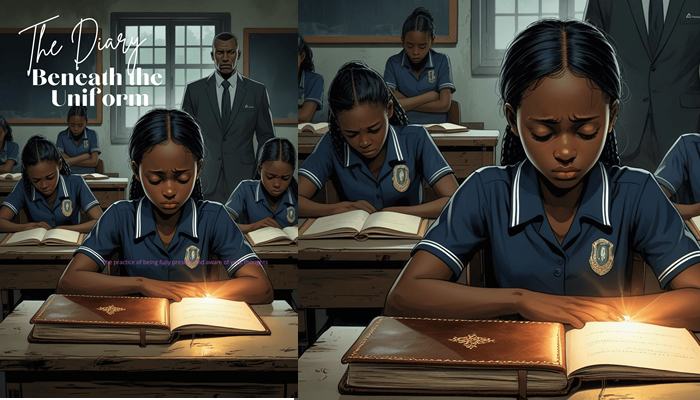
Amarachi Williams walked through the school gates like a ghost in uniform. Black hair pulled tight into a bun, neat cornrows showing underneath. She wore the navy-blue pinafore like a second skin – ironed, creaseless, spotless. Her shoes shone like mirrors. But her eyes – those eyes – were tired. Not the kind of tired that sleep fixes, but the exhaustion of a soul carrying something too heavy.
“Morning, Amarachi,” the gate security guard, Baba Kunle, greeted with his usual grin.
She nodded faintly, clutching her bag tighter. He was one of the few adults in the school who noticed her silence – but even he had learned to mind his business. “Rich people pikin get e own wahala,” he once muttered to a colleague.
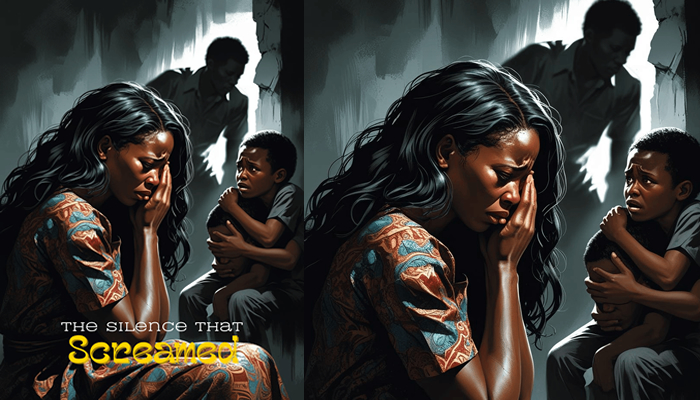
At 14, Amarachi had the kind of beauty that made strangers pause—wide brown eyes, cocoa-dark skin, and a fragile elegance. She was the only child of Chief and Mrs. Williams, oil money royalty. Their faces graced society pages, their cars lined up like trophies in their Banana Island home. They loved their daughter, of course. Just not with time. Not with presence. Not with the kind of love that noticed when your child stopped smiling.
Mr. Rotimi Daramola stood at the front of the SS1 Literature class, rolling up his sleeves as he launched into Things Fall Apart.
His voice, rich and confident, filled the room like music. “Achebe didn’t just write a story. He rewrote how we see Africa. Can anyone tell me what Nwoye’s struggle symbolizes?”
Hands shot up. Giggles. Praise. A few shy glances from girls. He smiled modestly, eyes warm, posture relaxed – charisma sculpted to perfection. The students called him Uncle Rotimi. Some parents called him “the best thing that happened to Bramble Heights.”
But Amarachi sat at the back, eyes fixed on her textbook, hands trembling slightly.
Uncle Rotimi was the kind of man who made people feel safe. That was his gift. That was his weapon.
During break, Amarachi sat under the mango tree behind the staff block – the only place that offered quiet.
Her best friend, Adaora, plopped down beside her. “You good?”
“I’m fine.”
“Liar. You’ve been moody since Friday.” Adaora picked at her meat pie. “You dey PMS?”
Amarachi forced a laugh. “Maybe.”
“I know how to cure bad mood. Let’s go to Chicken Republic after school. My driver go wait.”
Amarachi hesitated. “I… I have music practice.”
“Again? Na wa oh. Uncle Rotimi is squeezing you dry for that inter-school poetry thing.”
Amarachi’s stomach flipped.
She nodded slowly. “Yeah. He said I need extra rehearsals.”
Adaora sighed and leaned back. “You dey always form model student. Me I go eat jollof rice and enjoy my life.”
The bell rang.
“Later babe,” Adaora said, bouncing away.
Amarachi sat still.
Her hands dug into her bag. At the bottom, tucked beneath textbooks and a water bottle, was her diary – soft leather cover, secured with a tiny gold lock.
She hadn’t written since Friday. She didn’t have the strength. But her mind screamed every day. And in that little book, she could whisper what she couldn’t say out loud.
At 3:45 p.m., the school was nearly empty. Most students had gone home. A few lagged behind for clubs or extra classes.
Mr. Rotimi’s office door clicked shut.
Amarachi sat in the cold chair across from his desk, textbook on her lap, trying not to shake.
“You memorized the stanza?” he asked, his voice as gentle as always.
She nodded.
“Let’s hear it.”
Her voice was steady but dull as she recited a poem she once loved. He walked around her slowly, hands behind his back, correcting her tone, her breath, her posture. Then his hand rested on her shoulder.
“Relax,” he said, voice dropping.
She flinched.
That familiar scent – aftershave and something rotten underneath – invaded her nostrils.
When he leaned in to adjust her collar, her body froze.
“Good girl,” he whispered.
That night, in the silence of her room, Amarachi unlocked her closet.
She pulled out the diary, sat cross-legged on the rug, and flipped to a fresh page.
Monday, March 11, 2024
He touched me again. This time for longer. He said I looked like someone who liked it. He said nobody would believe me anyway. I think he’s right. I’m not sure what hurts more – what he does or that I have nowhere to run. I can’t tell Mummy. She’s too busy. Daddy doesn’t even see me anymore. They’ll just say I’m being dramatic. Maybe I am. But even drama queens don’t deserve this, right?
She paused.
Then added,
I hate how he smiles like nothing happened. I hate how everyone loves him. I hate how invisible I’ve become.
She locked the diary. Put it back. Closed the closet.
Lay down. And cried without a sound.
Chapter Two: The Silence Between Us
Thursday, March 14, 2024
“I spoke once. With my eyes. With my hands. With my silence. I thought someone would see. Maybe Mummy. Maybe a teacher. Maybe Adaora. But no one looked close enough. Maybe they were afraid. Or maybe I just stopped existing.”
– Excerpt from Amarachi’s diary
It rained heavily that morning, the kind of Lagos downpour that flooded streets and drowned time. Traffic crawled, horns blared, and students arrived in soaked uniforms and wrinkled tempers.
Amarachi stepped out of her family’s black Prado Jeep, umbrella in hand, escorted by the driver.
“Ma, make I hold your bag?” the driver, Sunday, offered gently.
She shook her head. “No, thank you.”
The security man at the gate scanned her ID and waved her in. Behind her, two girls slipped through the puddles barefoot, squealing and laughing. Amarachi watched them for a moment, wondering what it felt like to laugh and mean it.
The rain blurred the glass windows of the staffroom. Inside, Miss Obi, the English teacher, stared at Amarachi’s most recent essay. A beautiful piece on loss, structured in the style of Chimamanda’s prose but with undertones far darker than anything a child should be writing.
“She wrote: ‘The silence in my house screams louder than thunder.’ What does that mean for a girl her age?” she murmured.
“Children these days are deep,” said Mr. Bassey, the Chemistry teacher, sipping hot Lipton from a Bramble Heights mug.
“No. This feels personal.” Miss Obi frowned. “She’s one of my brightest. But something’s off. I’ve noticed it all term. She hardly laughs. Her poems are… violent. And she winces when people touch her shoulder.”
Mr. Bassey shrugged. “You worry too much. She’s just quiet. Or maybe she’s depressed. All these rich kids dey carry wahala wey no concern anybody.”
Miss Obi stared at the page again.
“My mouth is stitched with shame, but my hands write the things I fear to say.”
She tapped her pen thoughtfully.
Mr. Daramola walked into the assembly hall fifteen minutes later, umbrella folded, suit damp but graceful. The applause from students rippled as he passed by. He was more than a teacher – he was a star. A legend in the classroom, a favorite at PTA meetings, the coordinator of the Inter-State Literary Festival, and the founder of the school’s Creative Minds Club.
“Uncle Rotimi!” one girl whispered with glee as he passed.
He waved, smiled.
He saw Amarachi at the edge of the hall. She dropped her eyes quickly.
He smirked.
During the break, Amarachi sat on the staircase beside the music room, picking at her sandwich. Her fingers shook again. She hadn’t written in the diary since Monday. The words in her head were a chaos of feelings she couldn’t name.
She heard footsteps.
She tensed.
But it was only Adaora.
“Why you hide here?” Adaora asked, mouth full of Gala.
“I just needed some quiet.”
Adaora sat beside her, unwrapping a bottle of Sprite. “I hear say dem go pick students for the Lagos Poetry Slam next week. You dey write?”
“I don’t think I want to,” Amarachi said.
“Na lie. You? The queen of deep writing? The girl who writes better than Wole Soyinka? You must go o.”
Amarachi chuckled faintly.
Adaora noticed. “Ehen. You finally laugh. Be like say you wan return to life.”
Amarachi looked at her. Part of her wanted to say it. Just whisper: “Something’s wrong. Please help me.”
But instead, she said, “I’m tired. I haven’t been sleeping well.”
Adaora nodded. “Sorry, babe. You wan gist?”
Amarachi smiled softly. “Maybe later.”
“Cool. My mum say make I cut my hair. Imagine. Because of breakage. Can you imagine me bald? My ancestors go cry.”
Amarachi giggled. For a brief second, she felt normal. Safe.
That night, her parents were home – for once.
Her mother, dressed in a blue Ankara kaftan with gold studs, typed furiously on her laptop while speaking in French to a boutique supplier.
Her father was in the lounge, glued to Arise News, muttering about the falling naira.
Amarachi walked in slowly, diary pressed to her chest, breath shallow.
“Mummy?” she said quietly.
“Hmm?” her mother responded without looking up.
“Mummy, I… I want to talk.”
“In a minute, baby. Let me finish this message. It’s urgent.”
She stood there for several seconds.
Her mother didn’t look up.
Her father didn’t hear.
She turned and walked away.
That night, her diary trembled with pain.
Thursday, March 14, 2024
I tried to talk. She didn’t hear me. I know she didn’t mean to ignore me. She’s just… busy. Like always. But I needed her today. I needed someone. Maybe if I scream, they’ll hear. But I’m tired of screaming in silence.
She paused.
I want to disappear. Maybe then they’ll look for me. Maybe then they’ll read this.
She tore the page from the diary, folded it, and slipped it into her sock drawer. Just in case.
Two days later, during literature class, Uchenna, a quiet boy from her set, refused to answer a question from Mr. Daramola.
His eyes were red.
When Uncle Rotimi walked near him, he flinched.
Miss Obi saw it.
Later that day, she called Uchenna to the staff lounge.
He refused to speak.
“Are you okay?” she asked gently.
He nodded but his fingers shook.
“If something’s wrong, you can tell me. I’m here.”
He shook his head. “I’m fine, ma.”
“You can trust me, Uchenna.”
Silence.
Then a whisper: “They won’t believe me.”
She leaned closer. “Believe you about what?”
He stood up and ran out of the room.
Miss Obi sat back, eyes wide.
That evening, Amarachi wrote furiously.
Saturday, March 16, 2024
I saw Uchenna today. His eyes looked like mine. I think he knows. I think he’s one of us. Maybe we are a tribe. Of broken children. Of haunted silence. I wanted to hug him and say, “I see you.” But I couldn’t. Because I’m scared. Just like him.
Uncle Rotimi has taken too many of us. And no one stops him. Maybe they don’t care. Maybe they benefit from pretending not to see.
Maybe if I’m gone, someone will open their eyes.
Chapter Three: The School of Shadows
Monday, March 18, 2024
“The school shines like glass from the outside. But inside, it’s a cage. The kind where predators roam free and prey wear uniforms. We walk these halls pretending we’re safe. But safety is a lie here.”
— Excerpt from Amarachi’s diary
It started with Esther Orji.
One Monday morning, her seat sat empty. The girl with the purple braids and loud laugh – gone. No warning. No announcement. Just silence. When Amarachi asked Adaora where Esther was, Adaora shrugged.
“She transferred,” she said. “Just like that.”
Amarachi frowned. “Why?”
“She didn’t say. But I heard her mum had an argument with the principal.”
“About what?”
Adaora leaned in. “No one knows. But something weird happened last week. Esther was crying during recess, and when I asked her, she said it was ‘Uncle Rotimi’s fault.’ Then she changed the story and said it was because of her mum.”
Amarachi froze. “Did you tell anyone?”
“I just thought she was overreacting. You know Esther.”
Amarachi looked away, heart pounding.
She knew.
She knew that look in Esther’s eyes.
Because she had worn it too.
In the principal’s office, Mrs. Veronica Adebayo sat behind a mahogany desk that had been in her family longer than her marriage. She was in her late fifties, face stern, voice clipped, always wearing a brooch of the Bramble Heights logo.
Miss Obi stood across from her, arms folded tightly.
“I’ve raised concerns about two students now—Amarachi and Uchenna. Something is clearly wrong. Their body language, their essays, their behavior -”
Mrs. Adebayo raised a hand. “Miss Obi, this is a school, not a psychiatric ward. Teenagers act strange all the time.”
“But this is beyond mood swings. I believe… I believe someone is hurting them.”
A silence stretched between them.
Mrs. Adebayo leaned back. “Are you accusing someone?”
“I don’t have evidence. But I’m saying we should investigate – ”
“And damage the name of this institution over suspicion?” she snapped. “We are talking about Bramble Heights College. A school with a ninety-eight percent WAEC distinction rate. With alumni in Harvard and Oxford.”
“I’m talking about children being abused!”
The principal stood. “Watch your tone.”
Miss Obi’s jaw clenched. “I’m not going to ignore this.”
Mrs. Adebayo’s voice dropped. “Then you better find proof. Because if you start a fire you can’t control, you’ll be the one who burns.”
That week, Mr. Daramola was more cautious.
His sessions with Amarachi were shorter, his touches less frequent, but the pressure more psychological.
“Do you think your friends would still talk to you if they knew what you let me do?” he whispered one afternoon.
She flinched.
“You’re special, Amarachi. Not everyone can carry secrets this well.”
He handed her a new book – “The Bell Jar” by Sylvia Plath.
“Read it. It’s about a girl who understands what you’re going through.”
Her fingers shook as she took it.
Later, she would hide the book behind her bedframe. Just the sight of it made her stomach twist.
By Friday, Uchenna stopped coming to school.
His parents claimed he was sick.
Miss Obi tried to call, but his mother didn’t answer.
The boy had vanished like a whisper.
At home, Amarachi grew more distant. Her mother noticed, vaguely.
“Are you okay?” she asked one evening.
“I’m fine,” Amarachi replied.
“You’ve lost weight.”
“I’m eating.”
“Well, eat more. You’re getting too skinny.”
Her mother went back to scrolling her Instagram, pausing only to reply to comments about her latest fashion drop.
Her father was out of the country. Again.
Amarachi walked back to her room like a ghost.
That night, she wrote in the diary with a kind of anger she hadn’t felt before.
Friday, March 22, 2024
Esther is gone. Uchenna has disappeared. Miss Obi is trying. But even she’s scared. They all are. The school doesn’t care. I’m not even sure my parents would notice if I stopped coming home. Maybe I already have.
Mr. Rotimi asked if I wanted people to know. As if I wanted this. As if I haven’t begged in silence. Screamed through my poetry. Cried through my grades. He thinks I’ll stay quiet forever. Maybe I will. But not because I’m afraid. Because it doesn’t matter anymore.
Nothing matters anymore.
She closed the diary.
But this time, she didn’t put it in the closet.
She left it on the floor by her bed.
Just in case.
Chapter Four: The Closet
Tuesday, March 26, 2024
“The closet used to be just a place to keep my shoes. Now it’s the only part of the world that hears me. I hide the truth in it, page after page. Maybe one day, it will open its mouth and scream what I couldn’t say out loud.”
– Excerpt from Amarachi’s diary
The sun rose gently over Lekki that Tuesday, its orange rays spilling across rooftops and street corners like secrets. But inside Amarachi’s room, the light barely touched her skin.
She had stopped opening the windows.
Stopped letting air in.
Stopped letting hope in.
The only movement came from her hand, gliding across her diary, ink bleeding confessions that only the closet knew.
In school, the day passed like fog. Teachers spoke, chalk scraped boards, students laughed – but Amarachi didn’t hear any of it. She was locked inside her own head.
She sat in Mr. Daramola’s office again after school. But this time, she wasn’t trembling.
She was numb.
His hand brushed her hair. “You’re so obedient these days,” he murmured, running his finger down the side of her neck. “You’ve accepted your role.”
She stared at the bookshelf across the room. She thought about all the other girls. And Uchenna. And Esther. And herself. A chorus of silenced voices hiding behind neat uniforms and Sunday-best appearances.
“Can I go now?” she said quietly.
He blinked.
That was new.
A flicker of something passed in his eyes – hesitation.
“Not yet.”
She stood anyway.
“I have to go.”
And she walked out.
Back home, the house was empty.
As always.
Her mother had traveled to Paris for a luxury expo. Her father was still in Ghana for business.
The housekeeper, Mama Bisi, greeted her at the door. “You go eat now?”
“I’m not hungry.”
“You sure? I make egusi.”
“I said I’m fine.”
She walked straight to her room, locked the door, pulled out her phone, and opened Google.
“How many sleeping pills does it take to die?”
Her screen flooded with results.
She bookmarked one article.
Later that night, she brought the diary out again. But this time, she didn’t write in it.
She read it.
From the beginning.
Every page.
Every memory.
Every cry she had buried in ink.
And when she was done, she wrote just one line:
If anyone is reading this, I’m already gone.
Then she walked to the closet, reached for the shoe rack, and pulled out a small jewelry box.
She placed the diary inside.
Locked the box.
Shoved it deep into the corner behind her travel bags.
The next day, Amarachi barely spoke.
Not to Adaora.
Not to Miss Obi.
Not even to Mr. Daramola, who eyed her from across the assembly hall with growing unease.
During recess, she walked past a group of girls laughing at TikToks.
She didn’t stop.
At the staircase where she and Adaora used to eat snacks, she paused.
She took a deep breath.
And for a moment, she almost turned back.
Almost.
That evening, she texted her mother:
“I love you. I know you’re busy. But thank you for everything. I just wish we talked more.”
No reply.
She texted her father:
“Goodnight, Daddy. I’m sorry I wasn’t the perfect daughter. But I love you.”
No reply.
They were probably both asleep in business-class lounges somewhere above the Atlantic.
She picked up the pills from her drawer. The same ones her mum used to take for migraines. She had been collecting them, one by one, for weeks.
She took a bath.
Changed into her favorite nightgown.
Turned off the lights.
And swallowed the silence.
Wednesday, March 27, 2024 – 6:42 a.m.
Mama Bisi knocked once.
“Amarachi, time to wake up o!”
No answer.
She knocked again. “You don’t wan go school today?”
Still nothing.
She opened the door.
What she saw made her scream.
Chapter Five: Death by Peace
Wednesday, March 27, 2024
“I didn’t want to die. I just wanted the pain to stop. But pain doesn’t take a break. It doesn’t knock before entering. It wraps around your neck like hands you can’t push away. I waited for someone to save me. But no one came. So I saved myself the only way I could.”
— Excerpt from Amarachi’s diary (final entry)
6:45 a.m.
The screaming from upstairs sent the compound into a spiral.
Mama Bisi, barefoot and shaking, bolted down the stairs to call the estate guards. Within minutes, neighbors were gathering outside, trying to peek through the tall gates of the Williams’ mansion.
The estate doctor arrived at 7:12 a.m..
The ambulance from St. Raphael Memorial came at 7:32 a.m..
By 7:40 a.m., Amarachi Williams was declared dead.
Respiratory failure. Suspected overdose.
Her lifeless body lay still in the satin sheets of her pink-and-gold room, untouched by time, peaceful in a way she never felt while alive.
On the bedside table was a crumpled sheet of paper, barely legible:
“I’m tired. I tried to hold on. I tried to be strong. But I was drowning. I just wanted it to stop.”
No name. No diary. No sign of what had truly broken her.
Only silence.
The news hit Bramble Heights like a grenade.
The principal, Mrs. Adebayo, stood before the assembly with her voice wrapped in false composure.
“It is with great sadness that we announce the passing of one of our brightest students, Amarachi Williams. She was intelligent, graceful, and deeply loved. The school will observe a moment of silence in her honor.”
The students bowed their heads.
Some cried.
Some whispered.
Mr. Daramola stood with a hand on his chest, pretending to grieve. But inside, he felt the air thinning. Something wasn’t right.
He had felt her pulling away.
He had felt her stare at him with eyes that no longer feared him.
He hadn’t expected her to break.
He definitely didn’t expect what would come next.
The parents flew in that night.
Chief Williams arrived first – private jet, entourage, chaos. His face, usually so calm and arrogant in board meetings, was now hollow and tear-stained.
Mrs. Williams came straight from Paris, still wearing designer heels and a head wrap tied in a rush.
They walked into Amarachi’s room like strangers in their own daughter’s world.
And they broke.
Her mother collapsed on the bed, clutching the empty pillow like a lifeline. “My baby! My baby! God, no! Please! Amarachi! Please wake up!”
Her father stood by the closet door, staring at her shoes – still neatly arranged, untouched.
“I didn’t even know her shoe size,” he whispered.
Three days later.
As the house staff packed Amarachi’s belongings for her burial, Mama Bisi opened the closet and began removing her school items.
When she pulled out the purple box hidden behind the bags, it dropped to the floor with a thud.
She paused.
Bent down.
Opened it.
And found the diary.
Sunday, March 31, 2024
4:15 p.m.
Mrs. Williams sat in her room, arms folded, staring into space when Mama Bisi knocked.
“Ma, I found something,” she whispered.
She handed her the diary.
It took a few seconds for the mother to realize what it was.
She turned the pages.
The first entry made her stop breathing.
“He touched me again.”
Then another.
“I tried to tell you, Mummy, but you were on your laptop.”
Then another.
“I wish you had seen me before I disappeared.”
She read page after page.
Words laced with pain.
Screams written in silence.
She screamed.
She screamed so loud that the glass of the perfume bottle on her dresser shattered as it crashed to the floor.
That evening, the Williams called a lawyer, a family doctor, and the Lagos State Domestic and Sexual Violence Agency (DSVA).
By dawn the next morning, the case had exploded.
Monday, April 1, 2024
10:15 a.m.
An exclusive story hit FIJ Nigeria:
“EXCLUSIVE: Leaked Diary of Bramble Heights Student Reveals Teacher’s Sexual Abuse Before Her Suicide.”
Screenshots of diary entries went viral.
Quotes trended on X (formerly Twitter):
“I screamed in poems. But nobody read between the lines.”
“He touched me. Then told me to smile.”
“My silence is not consent. It’s survival.”
Hashtags began to trend:
#JusticeForAmarachi
#ExposeRotimiDaramola
#ShutDownBrambleHeights
#DiaryOfTheDead
Parents pulled their kids from the school.
TV stations ran the story for three days.
Radio anchors called it “the tragedy that shattered privilege.”
Civil society organizations marched to Alausa with placards: “Silence Protects Predators.”
Mr. Daramola was arrested by 6:38 p.m.
He didn’t resist.
He only asked one question: “Who opened the diary?”
Chapter Six: The Diary Speaks
Monday, April 1, 2024
“They thought burying me would end the story. But my words refused to stay silent. I might be gone, but I am still speaking. And this time, the world is listening.”
– Excerpt from Amarachi’s diary (published by FIJ Nigeria)
The press conference was crowded.
The Williams family sat side by side—grief etched in every line of their faces. Chief Williams, once a proud oil executive, was a shadow of the man that graced magazine covers. His wife held a printed copy of the diary, pages now dog-eared and stained with tears.
A DSVA representative took the mic.
“We are heartbroken by the loss of Amarachi Williams – a brilliant, artistic, and sensitive girl whose cries for help were ignored by those meant to protect her. Her diary has exposed not just a predator, but a system built on silence.”
A murmur ran through the room.
Journalists from Channels, TV Continental, Arise News, and The Cable scribbled notes furiously.
Mrs. Williams leaned forward, her voice cracking:
“We didn’t know. We failed her. But we will not let her die in vain. No parent should ever read the things I read in that diary. No child should suffer in silence.”
She held up the book.
“This diary is Amarachi’s voice. And now, it’s speaking for every child who was too afraid to speak.”
By the next morning, the story had become a national reckoning.
Radio phone-in shows rang nonstop with callers sharing experiences from schools across Nigeria.
Twitter/X Nigeria erupted into fury.
“Uncle Rotimi was in my school too in 2014. I always had a bad feeling about him.”
“My cousin changed schools because of a male teacher who used to follow her after prep. Nobody listened.”
“Teachers aren’t always safe. Schools aren’t always sacred. Amarachi is proof.”
Then came the testimonials.
One by one, anonymous former students of Bramble Heights began emailing DSVA.
“I’m 22 now. But I remember what he did to me when I was 15.”
“I told a school counselor. She told me to ‘stop accusing innocent men.’”
“I dropped out because of him.”
Uchenna’s mother finally came forward.
Through sobs, she confessed that her son had told her “a teacher was doing things to him,” but she thought it was “just boarding house stories.”
“He’s been in therapy since March,” she whispered. “But now… now we know.”
Inside the prison cell, Mr. Daramola sat on a metal bench, face hollow.
He had been charged under the Criminal Law of Lagos State (2011) – specifically Section 137: defilement of a child, punishable by life imprisonment.
As the officers read out the charges, he barely blinked.
“What happened to you?” one officer asked him quietly.
“I was loved too much,” he replied darkly. “They believed in me. That’s how I won.”
Back at the school, the principal, Mrs. Adebayo, tried to contain the chaos.
But it was too late.
Parents were demanding her resignation.
Alumni groups were distancing themselves from the institution.
Sponsors pulled out of the upcoming national literary competition.
The Ministry of Education launched a full-scale audit of private school safety standards.
In secret, she packed her things.
That same week, she fled the country.
Miss Obi was the first to return to Amarachi’s grave.
She knelt by the tombstone, now covered in purple and blue flowers.
“I’m sorry I didn’t see sooner,” she whispered. “But I promise you… I’ll fight for them now.”
She brought a copy of the diary and read aloud from it to the wind.
April 7, 2024
In an emotional editorial published in The Guardian Nigeria, the headline read:
“The Diary That Shook Nigeria: Amarachi’s Story and What It Means For Us All”
Chapter Seven: The Girls Who Remember
Wednesday, April 10, 2024
“They used to say we were imagining things. That we were dramatic. That we were bitter or confused. But now the truth wears a name. Her name is Amarachi. And she wrote our silence into history.”
— From the Voices of the Survivors Network
By the time the headlines faded, the world had already changed.
What began as a suicide in a wealthy home became a national awakening.
Across Nigeria, from Lekki to Lokoja, Yaba to Yola, girls began to speak.
Some in whispers.
Some in screams.
All in truth.
In a hall in Ikeja, a group of 27 girls sat in a circle. Most were between 13 and 18. Some wore hijabs. Others wore Afros, braids, or low cuts. All of them had one thing in common:
They had stories.
The session was organized by the newly formed “Voices of the Survivors”, a support group launched in Amarachi’s name. It was the first of its kind: created by girls, for girls – led by trained counselors, teachers, and social workers from the DSVA.
At the center of the circle was a copy of Amarachi’s diary, now reprinted in pamphlets, her handwriting digitally preserved.
One girl, 16-year-old Khadija, read a line aloud:
“Maybe if I disappear, they’ll finally see me.”
Khadija’s voice cracked.
“I used to write the same thing in my notebook. I didn’t know someone else felt it too.”
Another girl, Ezinne, added, “I thought I was the only one who hated literature class… because of what the teacher used to do.”
One by one, the room became a choir of stories.
And Amarachi’s name echoed in every one.
In Abuja, the Federal Ministry of Education launched a new initiative:
S.T.A.R. – Safe Teachers And Reporting
For the first time in history, background checks became mandatory for all teaching staff in federal and private secondary schools.
Anonymous reporting hotlines were set up.
The sex offenders register – previously buried under bureaucracy – was reopened and digitized.
And at the center of it all: Amarachi’s story.
In Lekki, Amarachi’s parents transformed their grief into action.
They established the Amarachi Foundation for Girls’ Protection, pledging ₦500 million toward advocacy, therapy, scholarships for abuse survivors, and nationwide school campaigns.
They stood in front of press cameras – no longer as socialites, but as parents seeking redemption.
“I was blind,” Chief Williams said, voice trembling. “I had money, I had power, but I couldn’t protect my only child. So I will protect others now. That is my vow.”
Mr. Daramola’s trial began on May 2, 2024.
The courtroom overflowed with media, activists, and silent survivors.
When the prosecutor read out excerpts from Amarachi’s diary as evidence, people wept openly.
The judge – Justice Falola – delivered a damning speech before the case even closed.
“If schools become prisons for children, then teachers who violate them must face the full wrath of the law. This court will make an example.”
Outside the courthouse, murals of Amarachi began appearing across Lagos.
Painted by local artists, one read:
“She wrote what we couldn’t say.”
Another, near a public secondary school gate:
“No more silence. Not in her name.”
On April 24, the National Assembly passed a motion titled:
“The Amarachi Motion: For the Protection of Nigerian Schoolchildren.”
The bill proposed:
- Nationwide surveillance policy in classrooms
- Permanent expulsion of any educator found guilty of sexual misconduct
- Trauma-informed training for school counselors
- Monthly check-ins in schools by child protection officers
- Teaching consent and bodily autonomy in secondary school curricula
Back at Bramble Heights, the school was empty.
Its gates remained sealed.
Lawsuits piled up.
The school’s license was suspended indefinitely. All that remained was the echo of songs sung at assemblies, laughter in corridors, and a closet in Room 3C that had held the truth for too long
Chapter Seven: The Girls Who Remember
Wednesday, April 10, 2024
“They used to say we were imagining things. That we were dramatic. That we were bitter or confused. But now the truth wears a name. Her name is Amarachi. And she wrote our silence into history.”
– From the Voices of the Survivors Network
By the time the headlines faded, the world had already changed.
What began as a suicide in a wealthy home became a national awakening.
Across Nigeria, from Lekki to Lokoja, Yaba to Yola, girls began to speak.
Some in whispers.
Some in screams.
All in truth.
In a hall in Ikeja, a group of 27 girls sat in a circle. Most were between 13 and 18. Some wore hijabs. Others wore Afros, braids, or low cuts. All of them had one thing in common:
They had stories.
The session was organized by the newly formed “Voices of the Survivors”, a support group launched in Amarachi’s name. It was the first of its kind: created by girls, for girls – led by trained counselors, teachers, and social workers from the DSVA.
At the center of the circle was a copy of Amarachi’s diary, now reprinted in pamphlets, her handwriting digitally preserved.
One girl, 16-year-old Khadija, read a line aloud:
“Maybe if I disappear, they’ll finally see me.”
Khadija’s voice cracked.
“I used to write the same thing in my notebook. I didn’t know someone else felt it too.”
Another girl, Ezinne, added, “I thought I was the only one who hated literature class… because of what the teacher used to do.”
One by one, the room became a choir of stories.
And Amarachi’s name echoed in every one.
In Abuja, the Federal Ministry of Education launched a new initiative:
S.T.A.R. – Safe Teachers And Reporting
For the first time in history, background checks became mandatory for all teaching staff in federal and private secondary schools.
Anonymous reporting hotlines were set up.
The sex offenders register – previously buried under bureaucracy – was reopened and digitized.
And at the center of it all: Amarachi’s story.
In Lekki, Amarachi’s parents transformed their grief into action.
They established the Amarachi Foundation for Girls’ Protection, pledging ₦500 million toward advocacy, therapy, scholarships for abuse survivors, and nationwide school campaigns.
They stood in front of press cameras – no longer as socialites, but as parents seeking redemption.
“I was blind,” Chief Williams said, voice trembling. “I had money, I had power, but I couldn’t protect my only child. So I will protect others now. That is my vow.”
Mr. Daramola’s trial began on May 2, 2024.
The courtroom overflowed with media, activists, and silent survivors.
When the prosecutor read out excerpts from Amarachi’s diary as evidence, people wept openly.
The judge – Justice Falola – delivered a damning speech before the case even closed.
“If schools become prisons for children, then teachers who violate them must face the full wrath of the law. This court will make an example.”
Outside the courthouse, murals of Amarachi began appearing across Lagos.
Painted by local artists, one read:
“She wrote what we couldn’t say.”
Another, near a public secondary school gate:
“No more silence. Not in her name.”
On April 24, the National Assembly passed a motion titled:
“The Amarachi Motion: For the Protection of Nigerian Schoolchildren.”
The bill proposed:
- Nationwide surveillance policy in classrooms
- Permanent expulsion of any educator found guilty of sexual misconduct
- Trauma-informed training for school counselors
- Monthly check-ins in schools by child protection officers
- Teaching consent and bodily autonomy in secondary school curricula
Back at Bramble Heights, the school was empty.
Its gates remained sealed.
Lawsuits piled up.
The school’s license was suspended indefinitely.
All that remained was the echo of songs sung at assemblies, laughter in corridors, and a closet in Room 3C that had held the truth for too long.
Chapter Eight: The Light in Her Name
Tuesday, May 14, 2024
“Maybe one day, someone will find these pages. Maybe they will cry. Maybe they will scream. But if they remember me—and listen—then I haven’t truly died. I’ve only become a voice louder than silence.”
– Final page, Amarachi’s diary
It was a bright Tuesday afternoon in Freedom Park, Lagos Island, and the skies looked nothing like grief.
A marble stage stood decorated in soft lavender and gold – the colors of Amarachi’s room, her school uniform, and the ribbons she used to tie her cornrows. Her photo was projected behind the podium: smiling, book in hand, eyes bright with the promise of everything she never got to live.
The crowd was vast:
Survivors, teachers, students, lawmakers, mothers, fathers, and strangers who never knew her – but now could never forget her.
The Amarachi Memorial Lecture had begun.
Her diary – now adapted into a book titled “The Diary Beneath the Uniform” – had become a symbol. Not of death. But of awakening.
Adaora, now seated with Amarachi’s parents, held a bouquet of wildflowers. She hadn’t said much since the funeral. But today, she came with a copy of the diary, bookmarked with yellow tabs.
“She was my best friend,” she said quietly when approached by the press. “She tried to tell us. We just didn’t hear her loud enough.”
Chief Williams walked slowly to the podium.
He took a deep breath.
“I was raised to believe that silence meant strength. But silence also kills,” he said, voice low. “We built walls around our lives so high, even our daughter couldn’t reach us. I would give all my billions to go back. But now, we can only move forward. In her name.”
He paused. Looked up.
“And we will.”
Mrs. Williams read aloud from a special letter she had written:
“My dearest daughter,
I failed you. I let the noise of the world drown out your voice.
But now I hear it, every day. In the stories of other girls. In the tears of mothers.
And in your words – your brave, broken, beautiful words.
I will carry you with me, Amarachi.
Always.”
The audience rose for a moment of silence. But this silence was different.
Not one of neglect.
But one of respect.
Later, a small group moved to a quiet corner of the park, where a memorial garden had been planted.
A bench with her name engraved.
A tree with lavender ribbons tied to its branches.
And beneath it, a plaque:
“She wrote through her pain so others could find their peace.
Amarachi Williams (2010–2024).
Your voice lives on.”
At sunset, Miss Obi stood before a small crowd of students and read the final diary entry Amarachi had ever written—the one found folded behind her dresser.
“To anyone reading this:
Don’t forget me.
But more importantly – don’t forget the others.
They are walking among you now.
Silent.
Afraid.
Waiting to be heard.”
As the wind rustled the ribbons in the trees, a little girl stepped forward with her mother and placed a pencil at the base of the plaque.
It was a small, sharpened pencil. But it said everything.
A voice for those who are yet to write.
Epilogue
July 2025
One year later, The Diary Beneath the Uniform was added to the SS2 Literature Curriculum in 14 states across Nigeria.
Thousands of students now read Amarachi’s words – not as fiction, but as truth.
Schools now hang posters in their hallways that read:
“If you see something, say something.
If you feel unsafe, speak.
Silence is not a school rule.”
Disclaimer
This is a work of fiction. The Diary Beneath the Uniform is a fictional story inspired by real social issues affecting children and young people, particularly in schools. While the events, characters, and institutions portrayed in this novella may resemble real-life individuals or places, they are entirely the product of the author’s imagination and not based on any actual person, school, or organization.
This story addresses sensitive themes including child sexual abuse, suicide, and institutional negligence. It is intended to raise awareness and provoke critical conversations around these urgent issues. Reader discretion is advised.
If you or someone you know is experiencing abuse or emotional distress, please seek professional help or contact local support services.