Written by Olorunloba Adeniyi
Chapter One – It Is Life That Is Teaching Me)
If I ever write a letter to my younger self, I’ll start with this:
Toun, don’t ignore your instincts. That ache in your chest when something feels off? That’s not weakness. That’s wisdom whispering.
But back then, I didn’t know. I mistook red flags for passion. I mistook fear for excitement. And I mistook Tolu’s attention for love.
I met Tolu in 2012, at a mutual friend’s naming ceremony in Akoka. He was tall, dark, and dressed in a crisp white native with minimal embroidery. Nothing flashy – just the right amount of confidence to catch my eye. He smiled at me across the compound while I struggled with my gele in the bathroom mirror. A few minutes later, he sent a small boy with a note scribbled on a napkin.
“My name is Tolu. You look too beautiful to be standing alone. Please don’t disappear before I find the courage to walk up to you.”
I laughed.
That was how it started. Innocently. Sweetly.
He called me the next day. Then every day after. In those early months, his attention felt like sunlight – warm and constant. He would pick me up from my teaching job at St. Mary’s and take me to the suya spot near Bariga just to watch me eat.
“You eat like you’re always hungry,” he’d tease.
“Because I am,” I’d respond with a mouthful, laughing.
Tolu made me laugh then. And I, a pastor’s daughter, was smitten by the idea that this seemingly worldly man found me interesting.
By the sixth month, he asked to meet my parents.
“Ẹ̀gbọ́n mi, he’s very serious o,” Sade, my sister, told me. “A man that meets your father is ready to settle.”
And in our family, once a man meets Pastor Adegboyega, marriage was all but sealed. My father asked him the usual questions – “Do you have a job?” “Where do you worship?” “What are your intentions for my daughter?” – and Tolu answered them with the smooth confidence of a man who had rehearsed.
I should have paid more attention to how he never met my eyes when he spoke.
We married the following year. A proper Yoruba wedding – blessing by both families, church ceremony, and an owambe reception in Ibadan that lasted till dusk. My gown shimmered with gold stones. Tolu wore a matching agbada with a maroon fila. Everyone said we looked like royalty.
“Omo pastor ti r’oko!” my mum danced, throwing white powder over me. “Toun baby, you have arrived o!”
I smiled. But even as the music blared and friends sprayed naira notes over us, a tiny part of me wondered why I felt so hollow.
Our first year together was good. Really good, in fact. We moved into a two-bedroom flat in Surulere. I decorated it with throw pillows and artificial roses. I got pregnant quickly, and Tolu was over the moon. He would rub my belly every night, murmuring, “Oluwafunmi, Daddy loves you already.”
He pampered me. Brought food home. Called me from work.
Sometimes, he’d sit beside me and press his lips to my belly and say,
“Toun mi, I’ll protect you and our daughter with my life.”
And I believed him.
But something shifted after Funmi was born. It started subtly – little comments that felt like jokes at first.
“This your stomach no go go down?”
“You’ve changed o. Is this how all women lose their fine shape after marriage?”
Then came the silent treatments. The long stretches of silence when I didn’t know what I’d done wrong. One time, I served him slightly burnt rice. He didn’t touch the food. Just stood up, went to the kitchen, poured the entire pot into the dustbin, and returned to sit quietly with the TV on. When I asked, “Tolu, kilode?” he didn’t reply.
He didn’t talk to me for three days.
The first slap came in our second year. I had returned home late from my mother’s place in Ibadan, where I’d taken Funmi for the weekend. Tolu had called to say he had an emergency trip to Abuja. He said not to bother coming back till Sunday night. But when I got home that evening, I found him in the sitting room, drinking Origin, the bottle half-empty.
“So you think you can come and go as you please, abi?”
“Ah, Tolu, you said you were going to Abuja now -”
“And so? I changed my mind. Must I report to you?”
I tried to explain, to calm him, but he shoved me first. Then slapped me across the face. The sound echoed in the room, and for a brief second, it felt like the air had been sucked out of my lungs.
I didn’t cry. I didn’t scream. I just stared at him.
And he stared back – cold. Distant.
“Let this be the last time you act like a whore in my house.”
That night, I slept in Funmi’s room, cradling her to my chest as I whispered Mo sorry, ọmọ mi. I’m sorry.
The next morning, he bought me meat pie from Sweet Sensation and said, “I was drunk. I didn’t mean it.”
I accepted the food. And the lie.
It became a cycle.
Each time he hit me, the next day came with a gift – shawarma, a new dress, airtime credit. He’d say,
“Toun, I just get angry sometimes. You know I love you, abi?”
And I’d nod.
Because what would I say? That my “good husband” was turning into a monster? That my family’s pride – “omo pastor ti r’oko” – was cracking?
I stayed. For Funmi. For the image. For fear. I stayed.
By the time I had Dare, the slaps had evolved into beatings.
He once used a belt. Another time, a stool. When I tried to run, he locked the door and beat me until I bled from my nose. And still, I stayed.
I told no one. Not even my sister. I learned to wear makeup that covered scars. I smiled in public. In church, I stood beside him, our children between us, as we held hands during family thanksgiving.
One Sunday, Pastor Fagbohun said,
“There is nothing prayer cannot fix in a home. Wives, submit. Husbands, love.”
I squeezed Tolu’s hand. He didn’t squeeze back.
That evening, he beat me because I let Dare pee on his work shirt.
“You can’t even train your son properly,” he hissed.
“Ṣé ọmọ niyin yìí ni?” I snapped before I could stop myself.
That earned me two punches.
As I wiped the blood from my mouth, I looked at the mirror. My reflection stared back like a stranger. My lips were swollen. My right eye was already darkening. And for the first time, I whispered to my reflection:
“I will leave.”
But I didn’t.
Chapter Two – The One Who First Gets Angry Shouldn’t Be the First to Go Silent
There are things people don’t tell you about domestic abuse.
They don’t tell you that the pain doesn’t always start with a blow. Sometimes, it starts with silence.
You wake up one day, and the man who once kissed your forehead now barely looks at you.
You cook his favorite meal and he says nothing.
You wear the dress he once said made you look like a queen and he frowns like you’re a witch.
You ask, “Tolu, what’s wrong?” and he says,
“Leave me joor. Must everything be about you?”
Then, days later, when you dare to breathe without permission, he erupts.
And because he’s been quiet for so long, you question your own sanity.
You start to think maybe you are the problem.
That was the space I lived in.
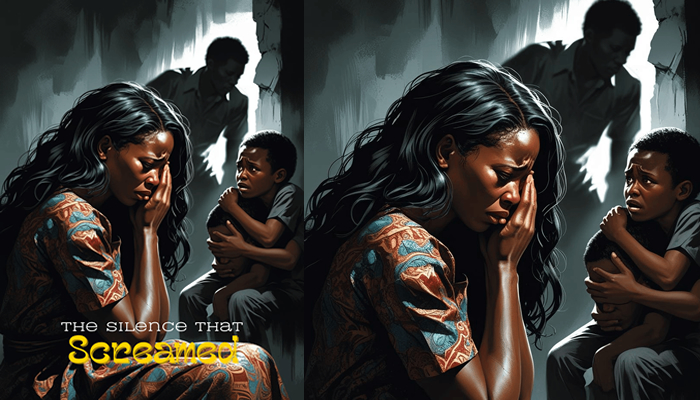
The second time he beat me, I was three months postpartum. I had barely healed from childbirth. Dare was still breastfeeding, and I was bleeding from the stress of sleepless nights.
That day, I forgot to iron his shirt. One shirt.
He came home and saw it rumpled on the chair and flared up like kerosene on hot coals.
“So what do you even do in this house?”
“Ah Tolu, you didn’t tell me you were going to wear that one. I thought -”
“You thought? You don’t think! You’re just here eating and breastfeeding!”
Before I could defend myself, he grabbed my arm, twisted it behind my back and shoved me against the wall.
Dare was crying in the cot. Funmi was screaming from her room.
Me? I was silent. Not from strength – no. From shame.
“Ẹni tí ó kọ́kọ́ bínú, kó má kọ́kọ́ dákẹ́.”
That Yoruba proverb haunted me. But Tolu, the one who always got angry, was also the one who always shut me up.
Later that night, he cried. Real tears. Held my broken arm, kissed the swollen part and said:
“It’s the stress, Toun. Work is hard. You’re not making it easier.”
I was in too much pain to speak. I nodded. He fed me paracetamol and rubbed Robb on my shoulder like a nurse tending a patient.
And when he asked to lie beside me, I let him. Even in my pain.
Because somehow, I still believed I could fix him. That this was a phase. That God doesn’t make mistakes.
My sister Sade visited a week later. She noticed I wasn’t moving my left arm properly.
“What happened to your shoulder?”
I gave her the lie I’d been rehearsing:
“I slipped on water in the kitchen. That my small green rug, ehn, it’s dangerous.”
She didn’t believe me.
“Toun, kilode? You’re not the kind of person that falls anyhow. Are you okay?”
I smiled. “I’m fine.”
That lie had become my skin. I wore it so long, I started to believe it.
But I wasn’t the only one breaking. Funmi was too.
One night, I went to her room and found her pretending to breastfeed her teddy bear. She rocked it gently and whispered:
“Don’t cry. Mummy is here. Daddy won’t beat us again. Shhh…”
My heart broke.
Another day, her teacher at Christ Grace called me after school.
“Mrs. Adebayo, is everything alright at home? Funmi flinches when the male staff talk to her. She also drew a picture of a woman crying and a man holding a belt.”
I lied again.
“She must’ve watched something on TV. I’ll talk to her.”
But that night, I sat on the toilet seat and cried. I cried until my chest hurt. I wanted to leave—but to where?
Who would believe me?
Tolu was a respected man. He paid tithe. Led prayer in church. He was the one they called to drive the church bus when the driver didn’t show. Everyone loved him.
Even my parents.
I eventually told my mother, in small pieces.
We were in her kitchen in Ibadan, peeling beans for moin moin. The generator hummed, and the TV in the living room was playing a Yoruba movie. My hands were shaking.
“Mummy, Tolu is… he’s not always kind to me.”
She paused and gave me a side glance.
“Did you offend him?”
“No… I mean, maybe I talk too much. Or maybe I forgot something – ”
She sighed and dropped the knife.
“Toun, did he hit you?”
I swallowed. I couldn’t say it. But she saw it in my eyes.
She picked the beans off her lap, stood, and said the one thing I hoped she wouldn’t:
“Pray harder. All men get angry. Your father too used to shout. It’s not every battle you fight with your mouth. Some, you win on your knees.”
I nodded.
But something in me died.
Church wasn’t any better.
I once summoned the courage to speak to the pastor’s wife after midweek service. She was kind, older, and always preaching about women as “keepers of the home.”
“Mummy Pastor,” I said, “what if your husband is… angry all the time?”
She raised a brow. “Has Tolu lost his job?”
“No.”
“Then respect him. Men like that. If you challenge him, he’ll lose his temper. Keep your home with prayer.”
Again, I nodded. Again, I went home with silence.
One day, I told Tolu I was thinking of getting a part-time job. A neighbor had connected me to a small school that needed a French teacher for their nursery section.
He didn’t even look up from his phone.
“Did I ask you to start looking for work?”
“No, but -”
“Are we hungry? Is rent unpaid? Why do you want to start gallivanting around?”
“Tolu, I’m just tired of staying home. I want to -”
The slap came like thunder.
He stood over me and hissed:
“Toun, you’re becoming useless. You want to go out so that men can toast you abi? You think I don’t know your type?”
And with that, he tore the job flyer in front of me.
Days bled into months.
Funmi began to wet the bed. Dare barely spoke. I stopped answering phone calls. I missed my sister’s baby shower. I avoided family events. I had no friends. I wasn’t living – I was hiding.
People began to whisper.
“Toun has changed.”
“She looks lean.”
“She doesn’t dress well anymore.”
But no one asked why.
Even my neighbors, who must’ve heard our fights, said nothing. In Lagos, everybody minds their business—until the police arrive and the corpse is on the floor.
One night, after a particularly brutal beating, I stood in the bathroom mirror.
Blood was running down my chin. My nightgown was torn. My ribs hurt.
I looked at myself and whispered:
“You will leave. One day, you will leave.”
Then I smiled.
A strange smile.
The kind a woman wears when her spirit has died but her body is still breathing.
Chapter Two – The One Who First Gets Angry Shouldn’t Be the First to Go Silent
There are things people don’t tell you about domestic abuse.
They don’t tell you that the pain doesn’t always start with a blow. Sometimes, it starts with silence.
You wake up one day, and the man who once kissed your forehead now barely looks at you.
You cook his favorite meal and he says nothing.
You wear the dress he once said made you look like a queen and he frowns like you’re a witch.
You ask, “Tolu, what’s wrong?” and he says,
“Leave me joor. Must everything be about you?”
Then, days later, when you dare to breathe without permission, he erupts.
And because he’s been quiet for so long, you question your own sanity.
You start to think maybe you are the problem.
That was the space I lived in.
The second time he beat me, I was three months postpartum. I had barely healed from childbirth. Dare was still breastfeeding, and I was bleeding from the stress of sleepless nights.
That day, I forgot to iron his shirt. One shirt.
He came home and saw it rumpled on the chair and flared up like kerosene on hot coals.
“So what do you even do in this house?”
“Ah Tolu, you didn’t tell me you were going to wear that one. I thought – ”
“You thought? You don’t think! You’re just here eating and breastfeeding!”
Before I could defend myself, he grabbed my arm, twisted it behind my back and shoved me against the wall.
Dare was crying in the cot. Funmi was screaming from her room.
Me? I was silent. Not from strength – no. From shame.
“Ẹni tí ó kọ́kọ́ bínú, kó má kọ́kọ́ dákẹ́.”
That Yoruba proverb haunted me. But Tolu, the one who always got angry, was also the one who always shut me up.
Later that night, he cried. Real tears. Held my broken arm, kissed the swollen part and said:
“It’s the stress, Toun. Work is hard. You’re not making it easier.”
I was in too much pain to speak. I nodded. He fed me paracetamol and rubbed Robb on my shoulder like a nurse tending a patient.
And when he asked to lie beside me, I let him. Even in my pain.
Because somehow, I still believed I could fix him. That this was a phase. That God doesn’t make mistakes.
My sister Sade visited a week later. She noticed I wasn’t moving my left arm properly.
“What happened to your shoulder?”
I gave her the lie I’d been rehearsing:
“I slipped on water in the kitchen. That my small green rug, ehn, it’s dangerous.”
She didn’t believe me.
“Toun, kilode? You’re not the kind of person that falls anyhow. Are you okay?”
I smiled. “I’m fine.”
That lie had become my skin. I wore it so long, I started to believe it.
But I wasn’t the only one breaking. Funmi was too.
One night, I went to her room and found her pretending to breastfeed her teddy bear. She rocked it gently and whispered:
“Don’t cry. Mummy is here. Daddy won’t beat us again. Shhh…”
My heart broke.
Another day, her teacher at Christ Grace called me after school.
“Mrs. Adebayo, is everything alright at home? Funmi flinches when the male staff talk to her. She also drew a picture of a woman crying and a man holding a belt.”
I lied again.
“She must’ve watched something on TV. I’ll talk to her.”
But that night, I sat on the toilet seat and cried. I cried until my chest hurt. I wanted to leave—but to where?
Who would believe me?
Tolu was a respected man. He paid tithe. Led prayer in church. He was the one they called to drive the church bus when the driver didn’t show. Everyone loved him.
Even my parents.
I eventually told my mother, in small pieces.
We were in her kitchen in Ibadan, peeling beans for moin moin. The generator hummed, and the TV in the living room was playing a Yoruba movie. My hands were shaking.
“Mummy, Tolu is… he’s not always kind to me.”
She paused and gave me a side glance.
“Did you offend him?”
“No… I mean, maybe I talk too much. Or maybe I forgot something—”
She sighed and dropped the knife.
“Toun, did he hit you?”
I swallowed. I couldn’t say it. But she saw it in my eyes.
She picked the beans off her lap, stood, and said the one thing I hoped she wouldn’t:
“Pray harder. All men get angry. Your father too used to shout. It’s not every battle you fight with your mouth. Some, you win on your knees.”
I nodded.
But something in me died.
Church wasn’t any better.
I once summoned the courage to speak to the pastor’s wife after midweek service. She was kind, older, and always preaching about women as “keepers of the home.”
“Mummy Pastor,” I said, “what if your husband is… angry all the time?”
She raised a brow. “Has Tolu lost his job?”
“No.”
“Then respect him. Men like that. If you challenge him, he’ll lose his temper. Keep your home with prayer.”
Again, I nodded. Again, I went home with silence.
One day, I told Tolu I was thinking of getting a part-time job. A neighbor had connected me to a small school that needed a French teacher for their nursery section.
He didn’t even look up from his phone.
“Did I ask you to start looking for work?”
“No, but -”
“Are we hungry? Is rent unpaid? Why do you want to start gallivanting around?”
“Tolu, I’m just tired of staying home. I want to -”
The slap came like thunder.
He stood over me and hissed:
“Toun, you’re becoming useless. You want to go out so that men can toast you abi? You think I don’t know your type?”
And with that, he tore the job flyer in front of me.
Days bled into months.
Funmi began to wet the bed. Dare barely spoke. I stopped answering phone calls. I missed my sister’s baby shower. I avoided family events. I had no friends. I wasn’t living – I was hiding.
People began to whisper.
“Toun has changed.”
“She looks lean.”
“She doesn’t dress well anymore.”
But no one asked why.
Even my neighbors, who must’ve heard our fights, said nothing. In Lagos, everybody minds their business—until the police arrive and the corpse is on the floor.
One night, after a particularly brutal beating, I stood in the bathroom mirror.
Blood was running down my chin. My nightgown was torn. My ribs hurt.
I looked at myself and whispered:
“You will leave. One day, you will leave.”
Then I smiled.
A strange smile.
The kind a woman wears when her spirit has died but her body is still breathing.
Chapter Three – Bitter Thoughts Don’t Show on the Face
When people look at women like me, they see two eyes, a mouth, and a body still breathing.
What they don’t see is that I died a long time ago.
Not with a knife.
Not with poison.
But with words.
And silence.
And the way Tolu would hit me, then kiss my wounds like he was doing me a favour.
I don’t know when the thoughts started. The dark ones.
The ones that told me he will kill you one day, and they will say it was your fault.
The ones that whispered, if you don’t fight back, you’ll die in this house like a rat poisoned behind a cupboard – forgotten, smelly, useless.
I remember one night, I stood over him while he slept.
It was 2:17 AM. The light was out. The ceiling fan was still.
He was snoring. The same mouth that had called me a prostitute hours earlier was now open, relaxed.
I stood there holding Dare’s school hammer – the plastic one he used for toy workbenches.
I pressed the handle. The soft head made no sound.
I wondered, what if this was metal? What if I just –
But I didn’t.
I dropped the hammer and went to the kitchen to cry in the darkness.
The next morning, I made ogi and akara.
Tolu ate without speaking. Funmi sat beside me with her head down. Dare played with his spoon like it was a car. The air was tense, like thunder before rain.
Then Tolu asked:
“When is school resuming?”
I replied, “Monday.”
He nodded.
That was the longest conversation we’d had in three days.
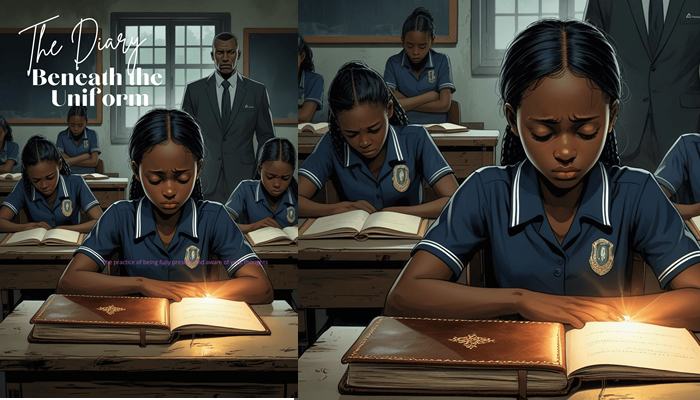
That week, I began to keep a diary. I hid it behind the freezer. It was the only place Tolu never checked. I wrote in it every night after the children slept.
Excerpts from Toun’s Diary:
July 6th – My left breast is sore. I think he hit it too hard last night. I can’t wear my bra. I’ll tell the school I’m sick. Dare asked me if Daddy was going to prison. I told him no. I don’t know why I lied.
July 9th – I dreamed I was flying. Flying away with Funmi and Dare tied to my back. I woke up and cried because I didn’t want to land.
July 14th – Tolu said if I ever talk back again, he’ll disfigure my face. He said no man will look at me again. I told him, “Nobody looks at me now anyway.” He punched my mouth. My lips are like yam.
July 18th – I searched online for how to leave an abusive marriage in Nigeria. All the articles said: “Pray.” “Report to church.” “Try and change him.” None said: “Run.”
But something inside me had changed.
The bitter thoughts didn’t show on my face. But they brewed.
I began to plan my escape in silence. Small steps. Secret steps.
I opened a hidden piggy bank inside one of Dare’s old cereal tins. Each time Tolu gave me change for groceries, I kept N500.
I opened a savings account using Sade’s address. She didn’t know. Nobody knew.
I told the neighbor’s daughter to help me scan my certificates and email them to myself. I said it was for “church records.”
She smiled and said, “Aunty Toun, you dey very gentle sha.”
I almost laughed.
One Sunday, I did something I hadn’t done in three years.
I wore makeup – not to hide bruises, but to feel like a woman again.
I wore lipstick. Not brown. Red. Deep red.
I tied a purple gele. It was loud. It was defiant.
Tolu stared at me from the car and said,
“You’re dressing like an Ashewo now?”
I smiled. “You married me like this. If I’m a prostitute, you’re my first client.”
He slapped me right there in the church compound.
The usher saw us. But she looked away.
That night, I prayed.
I didn’t pray for him to change. I stopped doing that months ago.
I prayed for strength.
“Olúwa, mo ti rẹ̀,” I whispered. “I’m tired. If You’re not going to help me escape, please give me courage to survive this madness.”
I didn’t expect an answer. But sometimes, silence is the answer.
Funmi came to me one night with a small scratch on her leg.
“Mummy, see. Daddy pushed me when I was trying to hug him.”
That was the day I snapped.
“He what?”
“He said I was disturbing him. He said I should go away.”
I took her leg, wiped it gently, and looked into her teary eyes.
“Baby, I want to ask you a question,” I said.
“Yes, Mummy.”
“Do you like how Daddy treats Mummy?”
She hesitated.
“Sometimes… he’s nice. But sometimes, I wish we could run away.”
I cried that night more than I’d ever cried.
Not because of the pain. But because my daughter, my sweet seven-year-old daughter, already knew what it meant to dream of escape.
The Final Straw
The day it all broke was a Tuesday. Ordinary in every way. Hot weather. NEPA took light. The gen refused to start. I was hand-washing the kids’ uniforms. Tolu returned home early.
He said he forgot something. Then he smelled fish.
“So you cooked fish again?” he growled.
“Yes. It was on sale. We haven’t eaten fish in weeks.”
“But I said I don’t want fish in my food!”
“Tolu, it’s not even for you – ”
That was it.
He kicked the basin of water at me. Slapped my ear. Pushed me. My back hit the sink. My head slammed the tiles.
I passed out.
When I opened my eyes, Funmi and Dare were beside me, crying. He was gone.
I couldn’t hear clearly. My head was spinning.
I looked at Funmi and said,
“Get me your school hammer.”
She looked confused, but she ran to her room.
I was no longer thinking. I was floating.
The bitter thoughts had overflowed.
I held the hammer. Plastic. Light. Useless.
I dropped it and crawled to the kitchen. The pestle. The heavy one for pounding yam.
I stared at it for a long time.
Then I laughed.
“No. Not yet.”
That night, Tolu returned and acted like nothing had happened.
I served him his food. I kissed Dare goodnight. I tucked Funmi in.
And when I lay in bed beside the man who had broken every part of me—mind, body, and soul—I smiled.
Because I had made up my mind.
Chapter Four
I used to think I was invisible. That my pain had no audience.
I would cry in silence, bleed behind smiles, and mask my fear with smiles at church.
But what I didn’t know was that my daughter – my own flesh – was watching me all along.
And children, as fragile as they are, remember.
The day it happened didn’t feel different at first. The sun rose like always. The street dogs barked at nothing. Our neighbor’s boy, Kehinde, was bouncing his ball against the gate again, shouting “Goal!”
I remember waking up to Funmi’s small hands on my face.
“Mummy, you were crying in your sleep.”
I sat up, dazed.
I had been crying.
In my dream, I saw myself in white, sitting inside a courtroom, alone, while people pointed fingers and screamed in voices I didn’t recognize.
When I turned to look at who was speaking, I saw my father.
Then my mother.
Then Tolu, lying in a coffin, smirking.
I shook it off.
I made breakfast. Eko and akara.
Tolu didn’t eat it.
He walked past the table and hissed.
“You think food can fix you? Useless woman.”
I didn’t respond. Not because I didn’t have words. But because I had reached a strange place – beyond fear, beyond sadness, beyond even anger. A quiet place.
Like a volcano just before it erupts.
He left for work. I knew he’d return by 8PM.
I bathed the kids, helped them with homework, and packed their bags.
Then I did something strange.
I wrote a note.
“If you find this… I’m sorry. I didn’t mean to become this woman. I just wanted peace.”
I folded it and kept it in Funmi’s school shoe.
Then I called my sister.
“Sade…”
“Toun? What happened?”
“Please take care of the children if anything happens.”
“Ha! Toun, you’re scaring me. What’s going on?”
“Just promise me.”
She started crying. “Don’t do anything stupid. Please, Toun. Let me come – ”
I ended the call.
By 6PM, I fed the children. Gave them a warm bath. Dressed them in clean pajamas.
I told them stories from the Bible – David and Goliath, Noah and the Ark.
Funmi asked me,
“Mummy, why doesn’t Daddy like you?”
I didn’t answer. Instead, I held her and said,
“One day, everything will make sense.”
She slept with her arm around my waist.
Dare slept sucking his thumb, as always.
8:11PM.
Tolu returned. I was in the kitchen.
He didn’t greet me. As expected.
“Is there food?”
“Yes. Rice and stew.”
“And why didn’t you fry plantain?”
“There was no ripe one.”
He hissed, walked to the sink, checked the fridge.
“You’re useless, Toun. Even common dodo you cannot plan for. What exactly do you bring to this marriage?”
I turned to face him.
“Me? I bring peace. You bring war.”
He laughed. Mocking.
“You think you’re smart now? Because of those stupid books you used to read, abi?”
“I used to be smart. Until I married you.”
He raised his hand.
I didn’t flinch.
He stopped. Confused.
“Why aren’t you afraid?”
“Because I’m done being afraid.”
And that was the truth.
He turned to walk away. That was when I saw it.
The pestle.
The same one I had stared at a week before.
I picked it.
I don’t know what entered me.
But I walked after him. Calm. Steady.
He turned and shouted,
“Put that thing down!”
I didn’t.
“Toun! You’ve gone mad!”
I raised it.
“You made me mad.”
I brought it down.
Once.
Twice.
Three times.
I didn’t stop until he stopped moving.
There was blood everywhere.
The floor. The table. My hands. My wrapper.
He looked at me with shock. Not fear – shock.
Like he never thought I’d be capable of doing it.
Then his eyes rolled back.
The silence afterward was loud.
I dropped the pestle.
Walked into the bathroom.
Vomited.
My hands were shaking. My ears were ringing.
I opened the door and saw Funmi standing in the corridor.
Her eyes were wide. Her hands clutched her teddy bear.
“Mummy… did you kill Daddy?”
I dropped to the floor. My body finally collapsed.
“I’m sorry. I’m so sorry.”
She didn’t run. She didn’t scream.
She walked over and sat beside me.
“You always said God protects good people. Maybe He just protected you.”
The Police
I called them myself.
When they came, I didn’t struggle.
I told them everything.
One officer asked,
“Why didn’t you leave?”
I laughed.
“Because people like you would have told me to stay.”
He shut up after that.
They took me away in a van. My neighbors came out. Some stared. Some shook their heads.
Aunty Ronke, the woman who sold pap opposite my house, whispered,
“I knew it. That man never allowed her breathe.”
Sade was already at the station before we arrived. Crying. Hugging me through the bars.
“I’ll take care of them,” she said. “Funmi and Dare. They’ll be okay.”
The news spread like wildfire.
Church members. Neighbors. Family.
Everyone had an opinion.
“She snapped.”
“Why didn’t she just leave?”
“But he was such a nice man na…”
“There are two sides to every story.”
But there’s only one side to mine:
I survived.
For ten years, I took the blows.
For ten years, I covered bruises and made excuses.
And in one moment of madness, I chose myself.
Chapter Five – The Lessons of Life Are Never Finished, But We Learn Them Daily
The first night in the cell, I didn’t sleep.
I sat on the cold cement floor with my back against the wall, staring into the dark.
The cell smelled of dust, sweat, and bitter silence. The other women – two of them – watched me cautiously, but said nothing.
There were no children crying.
No footsteps.
No shouting.
No Tolu.
For the first time in years, I was alone with myself.
And I wasn’t sure I liked the company.
The interrogation had been long and exhausting.
The police asked me the same questions again and again.
“Madam, did you kill him?”
“Yes.”
“Did you plan it?”
“No.”
“Why didn’t you run when you had the chance?”
“Because I didn’t want to die running.”
My statement was recorded. My picture was taken. I held the black placard with my full name:
ADEBAYO, OLUWATOYIN ESTHER
They said I’d be remanded pending trial. That I was being charged with manslaughter, not murder. That my cooperation helped.
I nodded through everything. I had no energy to fight. I wasn’t even angry anymore.
I was empty.
Sade came to see me three days later.
She hugged me through the bars again, this time with more strength.
Her eyes were swollen. Her headscarf was tied carelessly.
She looked like she hadn’t slept either.
“Funmi has been quiet,” she said. “But she’s strong. Dare… he’s just confused. He keeps asking when you’ll come back.”
I swallowed hard. My throat burned.
“Tell them I love them,” I whispered.
“I will. Every day. I promise.”
Then she handed me a small envelope. Inside were three photos.
The first—Funmi, smiling at a birthday party, wearing a yellow dress.
The second—Dare asleep on the couch, holding his bear.
The third—a drawing Funmi had made. Stick figures of three people holding hands.
Above it, she had written:
“Mummy, Dare and Me. We are still a family.”
I broke.
Right there in that small, dusty room, I sobbed into my palms until my shoulders shook.
Kirikiri
After the hearing at the Magistrate Court in Ikeja, I was transferred to Kirikiri Correctional Centre.
The prison van was hot. We were six women. Shackled. Quiet.
The guards didn’t speak to us. They didn’t need to. The cuffs did the talking.
When the gates opened, I saw it – the towering walls, the barbed wires, the watchtowers.
But strangely, I wasn’t afraid.
I’d lived in a prison for ten years already.
This one just had official uniforms.
The first few days were overwhelming.
The prison matron, Mama Alake, was in her early fifties, tough-faced, with tired eyes. She spoke like thunder.
“No forming celebrity here o! If you think you’ll come and cry all day, you go chop punishment tire!”
She assigned me to Block D with other non-violent inmates. I was given a cell with three women—one a petty thief, one accused of fraud, and one waiting for deportation. Their stories were loud, messy, tragic.
But when I told them mine… they fell silent.
The youngest one, Patience, who had been jailed for shoplifting weaves, said:
“Aunty Toun… he deserved it. They too dey beat us for house. Na only say we no get mind like you.”
I didn’t respond.
Because in truth, I wasn’t proud of what I’d done.
I was relieved.
But not proud.
Life Inside
We woke by 5:00AM.
Devotion by 5:30.
Cleaning duty till 7.
Breakfast – rice or beans with small bread.
Then silence.
There’s a rhythm in prison.
You either join it, or it drowns you.
I read a lot. There was a small library. I devoured books. Mostly spiritual ones.
I kept a journal too – an old notebook Patience gave me. I called it “The Freedom Book”.
In it, I wrote to my children. Every day.
“Dear Funmi, today I folded laundry for 78 women. My fingers hurt. I miss you.”
“Dear Dare, I dreamt of your laughter. I hope it’s still loud. Please don’t forget my voice.”
Sometimes, I wrote letters I couldn’t send:
To Tolu:
“You broke me. And I let you.
But I forgive you – not for you, but for me.
Because hate is too heavy for a soul still trying to breathe.”
Court Days
My trial began after two months.
The courtroom was cold. Wide. Indifferent.
The prosecutor was sharp. Young. Male.
“Your Honor, we agree that the accused suffered abuse. But nothing justifies murder.”
My lawyer, a woman named Morounkeji, was calm and fireproof. She had taken the case pro bono. Said something about “setting a precedent for battered women.”
“Your Honor, my client is not a murderer. She is a woman who was ignored by family, failed by the church, and beaten by the man she trusted.”
I didn’t speak much. I just sat and watched.
A social worker read Funmi’s letter to the court.
The courtroom went still.
“My mummy is not a bad person. She is my hero. She saved us.”
Some of the female court staff wept.
The judge, an older Yoruba woman with deep lines around her mouth, stared at me for a long time before saying:
“You shouldn’t have had to choose between your life and his.”
Then she sentenced me to seven years.
For manslaughter.
I would be out in four with good behavior.
I cried that night. But not from sadness.
From release.
It was over.
Healing Begins
Inside prison, I started helping with literacy classes. Taught two girls how to read in Yoruba.
I began teaching some women basic French. One of the wardens started calling me “Aunty Teacher.”
They said I had a calming spirit.
They didn’t know it had come from pain.
Funmi and Dare visited every month.
Sade would bring them on visiting days.
Each time I saw them, I would memorize their new heights, their new smiles, their stories.
They didn’t look broken anymore.
They were healing.
And so was I.
Reckoning
One night, I sat outside under the prison’s only mango tree, and I heard a new inmate screaming in a nearby cell.
She kept shouting, “Help me! He’ll kill me! Somebody please!”
No one answered. Everyone had heard it before.
But I closed my eyes and whispered,
“Ẹ̀kọ́ ayé kì í pe…”
The lessons of life are never finished.
But I am learning mine, every day.
Chapter Six – Destiny Does Not Rest on the Head of the Unworthy
They say prison is the end of the road.
But for me, it was the beginning of something I never imagined:
Peace.
Not joy. Not yet.
But peace – the kind that isn’t loud, but sits gently in your spirit like the coolness of evening breeze after harmattan heat.
I’d been in Kirikiri for three years.
Three long years of sunrise and bars.
Of counting beans during kitchen duty.
Of waiting in line for rationed bathing water.
Of waking up to the same grey ceiling, same rusted fan, same muffled sounds of other women groaning in their sleep.
But in those years, I found something.
A part of me I had long buried.
Her name was Clara.
She came in with blood still on her shirt, her wrists bruised.
She was just twenty-one. Pregnant. Accused of stabbing her boyfriend during a fight.
At night, she would sit by the cell wall, legs drawn up, and cry.
“Aunty Toun, I didn’t mean to kill him o. He say I’m useless. He pushed me again. I snapped.”
I would watch her. Her eyes. Her trembling hands.
It was like watching myself from five years ago.
One day, I touched her hand and said,
“Ó dájú pé àyànmọ̀ kì í bọ́ lórí aláìmọ̀. If you’re still here, alive… maybe it’s because God isn’t done with you.”
She wept.
“You think He still loves people like us?”
“I know He does.”
That night, I gave her my mat. I didn’t sleep well. My back hurt. But I didn’t mind.
Because for the first time in a long while, I felt needed. Not by my children. Not by a man. But by another broken soul.
Word began to spread.
In Block D, they started calling me Mummy Quiet.
Whenever someone came in bruised or panicked, the guards would say,
“Take her to Toun. She sabi how to calm dem.”
I didn’t plan to become anybody’s savior.
But somehow, listening became my gift.
One woman named Yetunde said,
“The way you talk, e be like say Bible dey your chest.”
I laughed.
“Bible no dey chest o. Na pain dey there.”
We both laughed. Real laughter. Loud and full.
Funmi was ten now. Dare had started writing me letters.
His handwriting was shaky, his spelling playful:
“Momy, I mist you. Anty Sade say I look like Daddy but I say I look like you becos you are strong. I pray to God you come back soon.”
That letter broke me.
But it also made me whole.
The Chaplain
There was a woman in the prison chapel, a Reverend Sister named Cecilia.
She was soft-spoken, older, but her eyes – those eyes – looked like they had seen war and chosen peace anyway.
She approached me one Sunday after service.
“Toun, I read your case file.”
I tensed.
“You are not a monster.”
I blinked.
“I know,” I said. “I was a wife.”
She nodded slowly, then added,
“You were a fighter.”
From that day, she mentored me.
Taught me how to counsel without judging.
How to pray again without begging.
A New Calling
By my fourth year, I had begun to lead a small support group inside the prison.
We met under the mango tree on Wednesday afternoons.
No fancy structure. No rules. Just stories.
Women cried. Women laughed.
And slowly, we began to heal together.
We called ourselves “Awon Aya Olugbala” – Wives of the Redeemer.
Some were there for theft. Some for fraud. Some, like me, for survival.
But under that tree, we weren’t prisoners.
We were women who had refused to die in silence.
One evening, Sister Cecilia told me something that shook me.
“When you leave this place, you must not disappear into shame.”
I frowned. “Shame is all I have left, Sister.”
She smiled gently.
“No. You have voice. You have story. And your story will teach other women not to wait until the pestle becomes their only option.”
That night, I couldn’t sleep.
I kept repeating it to myself:
“My story will teach. My story will teach.”
The Unexpected Letter
One Saturday, I received a letter through the prison post.
It was sealed. Handwritten. No return address.
I opened it slowly.
It read:
Toun,
You don’t know me. But I saw your story in the newspapers last year. I was also married to a man who nearly broke me.
You were braver than I could be. I still live with my monster. But because of your story, I’ve made plans. You reminded me that silence is not holiness.
God bless you for surviving.
– A Woman You Saved.
I held that letter to my chest for a long time.
For once, I allowed myself to cry tears that didn’t come from pain.
Release Date
The day of my release finally came – exactly four years and three months after I was locked away.
The warden handed me my old clothes. They no longer fit.
My bones had shifted. My soul had expanded.
Sade was waiting outside with the children.
Funmi was now as tall as my shoulder.
Dare’s teeth had changed. He looked like his father- but kinder. Gentler.
I ran into their arms and we held each other for a long time.
Nobody said a word.
Because what do you say when life gives you back your breath?
As we drove home, Funmi held my hand and whispered,
“Mummy, we are free now.”
I looked out the window at the Lagos sky.
It was cloudy, but I knew the sun would break through soon.
Because somehow, I had survived the storm.
Chapter Six – Destiny Does Not Rest on the Head of the Unworthy
They say prison is the end of the road.
But for me, it was the beginning of something I never imagined:
Peace.
Not joy. Not yet.
But peace—the kind that isn’t loud, but sits gently in your spirit like the coolness of evening breeze after harmattan heat.
I’d been in Kirikiri for three years.
Three long years of sunrise and bars.
Of counting beans during kitchen duty.
Of waiting in line for rationed bathing water.
Of waking up to the same grey ceiling, same rusted fan, same muffled sounds of other women groaning in their sleep.
But in those years, I found something.
A part of me I had long buried.
Her name was Clara.
She came in with blood still on her shirt, her wrists bruised.
She was just twenty-one. Pregnant. Accused of stabbing her boyfriend during a fight.
At night, she would sit by the cell wall, legs drawn up, and cry.
“Aunty Toun, I didn’t mean to kill him o. He say I’m useless. He pushed me again. I snapped.”
I would watch her. Her eyes. Her trembling hands.
It was like watching myself from five years ago.
One day, I touched her hand and said,
“Ó dájú pé àyànmọ̀ kì í bọ́ lórí aláìmọ̀. If you’re still here, alive… maybe it’s because God isn’t done with you.”
She wept.
“You think He still loves people like us?”
“I know He does.”
That night, I gave her my mat. I didn’t sleep well. My back hurt. But I didn’t mind.
Because for the first time in a long while, I felt needed. Not by my children. Not by a man. But by another broken soul.
Word began to spread.
In Block D, they started calling me Mummy Quiet.
Whenever someone came in bruised or panicked, the guards would say,
“Take her to Toun. She sabi how to calm dem.”
I didn’t plan to become anybody’s savior.
But somehow, listening became my gift.
One woman named Yetunde said,
“The way you talk, e be like say Bible dey your chest.”
I laughed.
“Bible no dey chest o. Na pain dey there.”
We both laughed. Real laughter. Loud and full.
Funmi was ten now. Dare had started writing me letters.
His handwriting was shaky, his spelling playful:
“Momy, I mist you. Anty Sade say I look like Daddy but I say I look like you becos you are strong. I pray to God you come back soon.”
That letter broke me.
But it also made me whole.
The Chaplain
There was a woman in the prison chapel, a Reverend Sister named Cecilia.
She was soft-spoken, older, but her eyes – those eyes -looked like they had seen war and chosen peace anyway.
She approached me one Sunday after service.
“Toun, I read your case file.”
I tensed.
“You are not a monster.”
I blinked.
“I know,” I said. “I was a wife.”
She nodded slowly, then added,
“You were a fighter.”
From that day, she mentored me.
Taught me how to counsel without judging.
How to pray again without begging.
A New Calling
By my fourth year, I had begun to lead a small support group inside the prison.
We met under the mango tree on Wednesday afternoons.
No fancy structure. No rules. Just stories.
Women cried. Women laughed.
And slowly, we began to heal together.
We called ourselves “Awon Aya Olugbala” – Wives of the Redeemer.
Some were there for theft. Some for fraud. Some, like me, for survival.
But under that tree, we weren’t prisoners.
We were women who had refused to die in silence.
One evening, Sister Cecilia told me something that shook me.
“When you leave this place, you must not disappear into shame.”
I frowned. “Shame is all I have left, Sister.”
She smiled gently.
“No. You have voice. You have story. And your story will teach other women not to wait until the pestle becomes their only option.”
That night, I couldn’t sleep.
I kept repeating it to myself:
“My story will teach. My story will teach.”
The Unexpected Letter
One Saturday, I received a letter through the prison post.
It was sealed. Handwritten. No return address.
I opened it slowly.
It read:
Toun,
You don’t know me. But I saw your story in the newspapers last year. I was also married to a man who nearly broke me.
You were braver than I could be. I still live with my monster. But because of your story, I’ve made plans. You reminded me that silence is not holiness.
God bless you for surviving.
– A Woman You Saved.
I held that letter to my chest for a long time.
For once, I allowed myself to cry tears that didn’t come from pain.
Release Date
The day of my release finally came – exactly four years and three months after I was locked away.
The warden handed me my old clothes. They no longer fit.
My bones had shifted. My soul had expanded.
Sade was waiting outside with the children.
Funmi was now as tall as my shoulder.
Dare’s teeth had changed. He looked like his father – but kinder. Gentler.
I ran into their arms and we held each other for a long time.
Nobody said a word.
Because what do you say when life gives you back your breath?
As we drove home, Funmi held my hand and whispered,
“Mummy, we are free now.”
I looked out the window at the Lagos sky.
It was cloudy, but I knew the sun would break through soon.
Because somehow, I had survived the storm.
Chapter Seven – When the Rain Stops, the House Will Be Dry
I thought coming home would feel like a celebration.
But it felt more like walking into the ruins of a house after a flood – recognizable, but changed.
The same compound.
The same street.
But I wasn’t the same woman.
Sade had moved with the kids into a small flat in Agege.
She’d left her job at the supermarket to start a tailoring business from home, and somehow, she managed to keep Funmi and Dare clothed, fed, and in school.
“I just did what a sister should do,” she said, brushing it off.
But I knew better.
Sade had carried burdens that were never hers.
She had been the roof when my world caved in.
The first night I came home, I sat on the bed with Funmi sleeping beside me.
Dare was curled up at my feet, snoring softly.
I stared at the ceiling fan turning slowly and whispered,
“Thank You, Lord. I am here.”
No pestle.
No bruises.
No shouting voice breaking my spirit.
Just breath.
Just peace.
But healing is not always loud.
The first time I went to the market, I heard two women whisper behind me.
“That’s the woman who killed her husband now.”
“Ehn? She looks so normal…”
I didn’t look back.
But I felt the sting.
The market taught me that forgiveness from society is not as automatic as forgiveness from God.
Church was harder.
Some welcomed me with weak smiles. Others kept their distance.
One deaconess hugged me, then whispered into my ear,
“You’re strong. I see now what I didn’t see then. May God continue to cover you.”
That one hug gave me more comfort than all the hours I had spent in Sunday School back when my soul was dying in silence.
A New Life
I didn’t try to return to teaching. Not yet.
Instead, I started volunteering at a local women’s support center in Mushin.
I cleaned chairs. Sorted donated clothes. Answered calls.
One day, they asked me to share my story at a training for social workers.
I hesitated.
But I stood up and said:
“I am not a murderer.
I am a woman who begged for help, and no one listened.
I am a mother who watched her children learn fear before they could spell it.
I am a sister who forgives a world that failed her.”
There was silence in the room.
Then a woman stood and clapped.
Then another.
Then everyone.
The support center offered me a part-time job as a peer counselor.
They said, “We don’t need degrees. We need survivors.”
I accepted.
My first client was a twenty-two-year-old girl named Teni.
Her husband had broken her front tooth and told her nobody would love a woman with a crooked smile.
She looked at me and asked,
“Will it ever stop hurting?”
I held her hand.
“Yes. But not because he changes.
It stops when you stop believing his voice is more important than yours.”
She broke down.
I wiped her tears like someone once did for me.
The Interview
A year later, I was invited by a local radio station to share my story.
I wore a plain Ankara dress. No makeup. Just my voice.
The host asked,
“What do you want women in violent homes to hear today?”
I said:
“I want them to know they are not alone.
And I want society to stop asking, ‘Why didn’t she leave?’
Start asking, ‘Why did he feel safe enough to keep hitting her?’”
Epilogue – Five Years Later
Today, I sit in a small rented office.
There’s a banner outside that reads:
“Ẹ̀dá Tó Sùn Sílè – A Support Centre for Women Reclaiming Their Lives”
Funmi is now fifteen.
She writes poems. Deep ones.
She says she wants to study psychology.
Dare is twelve. Loves football.
Still sucks his thumb when he’s tired.
Still curls up beside me sometimes.
Me?
I still carry scars.
But not on my body.
In my memory.
In my story.
In my voice.
And I use that voice, every day, to help another woman choose herself before it’s too late.
Because when the rain stops…
The house, though shaken, will be dry again.
THE END.
Disclaimer
This is a work of fiction. Names, characters, events, and incidents are either products of the author’s imagination or used in a fictitious manner. Any resemblance to actual persons, living or dead, or real-life events is purely coincidental.
This story contains themes of domestic violence, trauma, and emotional abuse, which may be distressing to some readers. It is intended to shed light on the realities many survivors face and to encourage awareness, empathy, and conversations around gender-based violence.
If you or someone you know is experiencing abuse, please seek help from trusted organizations, professionals, or support centers in your area.