
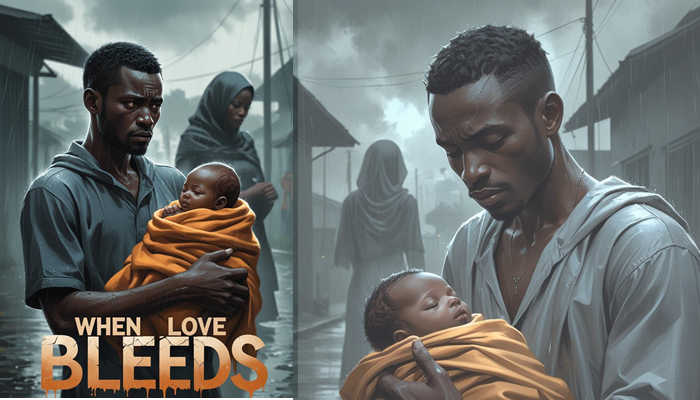
CHAPTER ONE
The Man Who Closed the Door
Tunde didn’t believe in fate.
He believed in failure. In first heartbreaks. In watching someone you love choose someone richer, smoother, more dangerous.
And that was enough.
He stood at the edge of the chalkboard in Excel Coaching Centre, wiping half-done JAMB practice questions with a worn duster. The students in SS3 English stared at him like they wanted to ask a question – but no one dared.
Not because he was mean.
But because Mr. Tunde Owolabi walked like a man carrying a suitcase full of grief. And everyone, even teenagers, could feel it.
“Write this one down,” he said, voice deep, quiet.
“‘The boy who refused to study suffered the same fate as the one who refused to be born.’ Essay prompt. Argumentative. Minimum 450 words.”
The students scribbled.
A soft drizzle tapped against the windows. One girl at the back row – bold, beautiful, with the poise of someone who had never known poverty – raised her hand.
“Sir?”
“Yes, Amaka?”
“Can we say the two boys were victims of neglect by society?”
Tunde paused. Looked at her.
Something in her voice – calm, probing, layered.
“That’s a strong angle,” he said. “Good.”
The bell rang shortly after. Students filed out. Amaka lingered.
“Sir… can I ask something?” she said, clutching her notebook.
“If it’s about grades, ask your conscience.”
She smiled. Her teeth were small and even.
“No, it’s not that.”
He looked up. She was standing close. Confident, yet curious. Like someone reaching for a locked door without a key.
“My uncle’s looking for a home tutor for my younger brother,” she said. “He’s in SS1. Struggles with comprehension.”
“Why me?”
“Because… you look like you don’t play with nonsense.”
Tunde chuckled.
“You mean I look like a strict uncle from Abeokuta.”
“No,” she smiled. “You look like someone who doesn’t trust easily. But teaches well.”
He stared at her for a moment.
The rain had stopped. But something new had started.
“Where do you people stay?”
“Satellite Town.”
“That’s far.”
“He pays well.”
He hesitated.
Then nodded.
“Let me know the schedule.”
“I’ll bring the details tomorrow.”
“Alright.”
She turned to go, then paused.
“Sir?”
“Hmm?”
“People who don’t trust easily… often used to love deeply.”
He said nothing.
But long after she left, Tunde stood staring at the chalkboard.
And something – just something – began to shift inside him.
CHAPTER TWO
Marble Floors and First Cracks
It was a Saturday when Tunde first entered Satellite Town.
The place smelled of two things: new paint and old money.
He walked past uniformed security guards at the estate gate, clutching his backpack like it held secrets. The house was painted cream and burgundy, standing tall with tiled roofing and two parked SUVs in the driveway. He thought, Na here person dey live?
The gate was opened by a maid in a wrapper and slippers.
“Oga Tunde?”
“Yes ma.”
“Come inside. Madam Amaka say make you enter parlour.”
He stepped into the living room and immediately felt underdressed.
Polished floors. White leather couches. Art that didn’t come from Lagos traffic. And a chandelier that sparkled like something angels might swing from during praise and worship.
He stood awkwardly until Amaka descended the stairs, dressed in a peach top and jeans, barefoot, her braids tied in a scarf.
“Wow,” she smiled. “You came early.”
“I don’t joke with my hustle.”
“Good. Junior’s waiting.”
She led him to the study.
Junior Amechi, about 14, sat like a prisoner on death row, arms folded, eyes full of suspicion.
“Good morning,” Tunde greeted.
“Morning, sir,” he muttered.
“You don’t like English?”
“I don’t like school.”
Tunde chuckled.
“Perfect. That makes both of us.”
Amaka laughed from the door.
“You two will get along just fine.”
The first lesson was slow.
Junior was smart, just lazy. Tunde switched gears – told stories, dropped slang, made English sound like street talk. Junior cracked a smile for the first time.
“Oga Tee,” he said suddenly. “You dey try small sha.”
“Na so. You go sabi pass your crush.”
Junior rolled his eyes.
“I no get crush.”
“Then who you dey press phone for during class?”
The boy laughed.
After the lesson, Amaka offered him lunch. Jollof rice with dry catfish and a cold malt.
He hesitated but didn’t say no.
They sat on the back patio under a purple umbrella. Birds chirped. The estate was quiet — the kind of quiet that came with boreholes and NEPA immunity.
“You teach like someone who once failed.”
Tunde raised an eyebrow.
“What does that mean?”
“I mean you understand struggle. You don’t teach like it’s theory. You teach like you survived something.”
He looked down at his spoon.
“Because I did.”
“Want to talk about it?”
“No.”
She smiled.
“Okay. One day, sha.”
He sipped his malt, watching her face in the sunlight.
“You’re not what I expected,” he said.
“And what did you expect?”
“One of those spoiled, entitled rich girls. The ones that speak through their nose and insult their house help.”
“And now?”
“Now I think… you’re trouble.”
“Correct,” she grinned. “But good trouble.”
He stood to leave.
“Same time next week?”
“Same time.”
As he turned, she added,
“Tunde?”
“Yes?”
“If you ever need someone to talk to… I’m not far.”
He didn’t answer.
But his heart had already heard it.
CHAPTER THREE
Chalk Dust and Butterflies
The third week came with Lagos rain.
Not the kind that whispered, but the one that roared – tearing through roofs and flooding bad roads like it had a personal grudge.
But Tunde still made it to Satellite Town.
Shoes soaked, trousers splashed, umbrella nearly useless. He looked like a soldier coming home from a long, wet war.
The maid opened the gate and burst into laughter.
“Oga teacher! Rain show you shege today o!”
“Na love for grammar carry me come like this,” he replied, stepping in.
Inside, Junior was absent — football practice, Amaka said. But she still invited him in. Gave him a towel. Made hot Lipton and bread with sardines. The smell alone made his stomach hug his spine in gratitude.
They sat in the kitchen. Just the two of them. The walls painted cream. The hum of the fridge. The distant sound of rain licking the windows.
“You look tired,” she said.
“I teach JAMB candidates. I fight demons daily.”
“You’re funny, you know.”
He gave her a small smile.
“You keep saying that. Nobody else agrees with you.”
“That’s because they’re not looking closely.”
She reached out and picked a leaf from his wet hair.
“Rain dey teach you humility.”
They laughed. Then silence.
Not the awkward kind. The kind that asks for permission.
“Tunde…” she said, fingers tracing the mug. “Why are you always so guarded?”
He looked at her, eyes narrowing just slightly.
“Because life doesn’t give second chances. I’ve made mistakes I can’t fix. So now, I don’t gamble with what I can’t afford to lose.”
“And what can’t you afford to lose?”
He didn’t answer. He couldn’t.
But she was watching him closely.
“You think all women are the same?”
“Not all,” he said. “But most. They love until it becomes hard. Then they walk away. And leave you to bleed alone.”
Amaka inhaled.
“Whoever did that to you… I’m not her.”
“But how do I know that?”
“You don’t,” she said, boldly. “That’s why it’s called faith.”
“Faith betrayed me once.”
“Then maybe,” she said gently, “this is your resurrection.”
A pause.
Their eyes locked.
Something passed between them – invisible but undeniable.
Then, her voice softened.
“You smell like rain and chalk dust.”
“And you… you smell like wahala.”
She leaned forward slightly.
“Then maybe, you need a little wahala in your life.”
Later that night, as Tunde lay on his mattress in Okokomaiko, baby mosquitoes buzzing near the torn window net, he stared at the ceiling fan and whispered to himself:
“She dey enter my head. God, abeg. Not again.”
But deep inside, the wall was already cracking.
And love – slow, quiet, patient – had begun its entrance.
CHAPTER FOUR
Fire, Pepper Soup, and Secrets
By the time the third month rolled in, Excel Coaching Centre became something else.
Tunde and Amaka weren’t hiding anything – at least, not intentionally. But love has a smell. A vibration. A way of changing the air when two people sit too close, laugh too long, or exchange glances like they were passing coded messages.
And Lagos people? They know how to smell gist before it fully cooks.
The whispers started.
“You see the way Amaka dey look Mr. Tunde?”
“I hear say na him dey go their house every weekend.”
“Hmm. Yoruba men. Very dangerous when quiet.”
The students noticed too. SS2 girls began giggling anytime they saw them together.
Even the principal, Mr. Olaniyi, cleared his throat awkwardly during staff meeting one day:
“Let’s remember boundaries with our students… and their families.”
Tunde didn’t flinch. But inside, the weight was growing.
It was Segun who finally cornered him.
Segun – full-time hype man, part-time landlord of good advice, full-time expert in romantic complications.
They met at his apartment in Aguda. A Friday night. Rain threatening again. The scent of pepper soup and cheap whiskey filling the air.
“Tee!” Segun shouted as he opened the door. “Lover boy of the century! You dey shine o!”
“Abeg,” Tunde sighed, dropping his bag. “I just want to drink and forget how broke I am.”
“But you no broke emotionally again, abi?”
Tunde shot him a look.
“Na Amaka matter?”
“Omo, it dey show for your face like NEPA pole. You no dey hide am well.”
They both laughed.
Segun poured two cups of whiskey.
“See, I like her sha. But guy… you know say this love dey carry load. That babe come from money, from culture. You? You from poverty and… puddles.”
“You forget chalk dust.”
“Exactly. And girls like that? Dem fit love you die, but if family no gree… yawa gas.”
Tunde was quiet for a while.
“But what if this one is different?”
Segun sipped.
“Then hold her well. But prepare. Because love wey dey climb fence go jam dog one day.”
The next weekend, after another quiet lesson with Junior and a brief chat with Amaka, she walked Tunde to the gate.
“My brother asked about you,” she said suddenly.
“The rich merchant?”
“Yes. Amechi. He’s… traditional.”
“Define traditional.”
“As in… Igbo first, Catholic second, and tribal third.”
“And where does Yoruba enter that list?”
She smiled.
“Somewhere between ‘over my dead body’ and ‘hell no.’”
Tunde exhaled.
“Good. At least I know my chances.”
“Don’t be scared.”
“I’m not scared of him,” he said. “I’m scared of what we could lose if he turns this into war.”
She looked at him seriously.
“Tunde, if I have to choose… I’ll choose you.”
He wanted to kiss her.
But not at the gate. Not with security watching.
So he just nodded.
“Then let’s see where this madness takes us.”
That night, as he sat alone eating cold garri, he whispered,
“This girl go finish me. But God… if she’s mine, hold us tight.”
Because even love, sometimes, needed divine backup.
CHAPTER FIVE
Lines Crossed
It was Segun’s idea.
“Just chill with her. Somewhere private. No wahala. No pressure,” he said, chewing suya like it was gospel.
“My house go free that day. I dey go Ikorodu for wedding. You fit use am. Just key dey back of window.”
Tunde hesitated.
“It’s not like that, Segun.”
“Guy, forget. Nobody say make you do anything. Just vibe. Rain dey fall. Make love no waste.”
That Saturday, the air felt heavy.
Amaka had texted earlier:
“Let’s just be together today. No lesson. No crowd. Just peace.”
Tunde didn’t think twice. He cleaned up. Ironed his one good shirt. And by evening, they were inside Segun’s one-bedroom apartment – small, neat, smelling faintly of air freshener and old boys’ perfume.
The generator buzzed outside. Rain tapped gently on the zinc roof.
Inside, it was still.
Just Tunde. Amaka. A bowl of popcorn. One Bluetooth speaker playing old Celine Dion songs.
They talked. About everything.
Her dream of owning a fashion brand.
His plan to one day open a school for low-income kids.
Her fear of losing her identity to family traditions.
His fear of being loved only to be abandoned again.
There were silences.
Then laughter.
Then… that kind of quiet where even the walls hold their breath.
Amaka looked at him.
“You’re not like any man I’ve met.”
“That’s because most men you’ve met were still boys.”
She smiled.
“And you? Are you sure you’re not broken?”
“I am,” he said honestly. “But somehow, with you… the pieces make sense.”
She touched his hand.
“So what happens now?”
He leaned closer.
“We stop thinking.”
Then he kissed her.
Soft. Careful. Like asking for permission with his lips.
She didn’t resist.
She deepened it.
The rest – the touching, the trembling, the surrender – came not with lust, but with longing. Two broken people reaching for healing through each other’s bodies.
Tunde had never done this before. Not fully. Not like this.
But tonight, he crossed that line.
And it didn’t feel sinful. It felt like coming home.
Later, as they lay tangled in silence, Amaka whispered:
“I know you’ll run.”
He turned to her.
“Why would I run?”
“Because this… changes things.”
“Yes,” he said. “But I’m not running. I’ve done that before. This time, I’m staying.”
She kissed his chest.
“Then don’t let the world tear us apart.”
Outside, the rain had stopped.
But inside, a new kind of storm had begun – the kind that started in the heart… and could end in war.
CHAPTER SIX
The Brother with Fire in His Eyes
Monday at Excel Coaching Centre was hotter than usual – the kind of heat that soaked your back before 10 a.m. Even the walls of the school sweated. Tunde entered his class with his usual quiet stride, but he could feel it — the stares.
Eyes. Whispers. Shifts.
“Dem say Mr. Tunde dey knack Amaka.”
“Na lie! Serious?”
“Wetin else carry am go Satellite Town every Saturday?”
The students didn’t say it out loud – but teenagers know how to throw eyes sharper than bullets. Teachers too. Especially Miss Fisayo, the Biology teacher who always liked Tunde just a little too much.
That day, after school, she cornered him near the water dispenser.
“So… you and your student’s sister, abi?” she said, sipping slowly.
“Excuse me?”
“Don’t worry. It’s none of my business. Just… be careful. Not all families like to share their gold.”
Tunde didn’t reply. He just walked past her.
But he felt it in his bones: something was coming.
Three Days Later – Satellite Town
It happened fast.
Tunde came for Junior’s usual lesson, like clockwork. But when the maid opened the door this time, her face had changed.
“Ah… Oga, you didn’t hear?”
“Hear what?”
“Uncle Amechi is around.”
Tunde’s stomach tightened.
Before he could ask more, he heard a voice from the living room. Loud. Commanding. Tinted with Onitsha authority.
“Is that the teacher?”
Then came Amechi.
Tall. Dark. Clean-shaven, but carrying the kind of beard that grows inside the heart – the kind Yoruba men recognize as this one no like play.
He stepped out, eyes narrowed, traditional cap tilted slightly.
“Good afternoon, sir,” Tunde said, calmly.
“You are Tunde, the tutor?”
“Yes, sir.”
Amechi looked him over – head to toe.
“Hmm. Yoruba.”
Not a question. A declaration.
“And you come to my house. Teach my younger brother. Spend time with my sister.”
Tunde kept quiet.
“Tell me. When did it become okay for a man to harvest where he did not sow?”
“With due respect, sir, I’ve been doing my job -”
“Shut up!”
His voice cracked like thunder.
Even the maid disappeared into the kitchen like breeze carried her.
“You think you can sleep with my sister because you teach her brother common comprehension?”
“Sir, we love each other.”
Amechi laughed – loud and mocking.
“Love? That foreign nonsense? You want to marry my sister, eh?”
“Yes.”
“Tufiakwa!” he spat. “Over my dead body!”
He stepped closer.
“Let me warn you, Yoruba boy. This is not Nollywood. This is Igbo land in Lagos. And my sister… is not for the likes of you.”
Then he turned to the maid.
“Tell Amaka she no longer goes to that school. And he no longer steps foot in this compound.”
That night, back in Okokomaiko, Tunde sat with his phone in hand.
No text from Amaka.
No call.
Just silence.
He stared into the dark and muttered,
“So this is it?”
But in his chest, he already knew…
This love would not die quietly.
CHAPTER SEVEN
Two Lines and a Whisper
It was two weeks since Amechi’s ban.
Tunde hadn’t heard from Amaka. He tried calling twice – both calls ended after one ring. He texted:
“Hope you’re safe. I’ll wait.”
No reply.
He spent his days teaching, dragging himself through classes, and his nights staring at the baby photo of her on his phone – one she sent after their second lesson with the caption: “Even as a child, I no dey hear word.”
Then, on a Thursday evening, as rain threatened again, a knock came at his door.
Three soft taps.
He opened it.
There she was.
Soaked. No umbrella. Braids damp. Eyes red like she’d been holding back a flood for hours.
“You just stood there?” he said.
“I wasn’t sure if you still wanted me.”
Tunde stepped back.
She entered like breath returning to lungs.
No words at first. Just an embrace that spoke ten thousand silences. Her arms around his neck. His hand resting on her back. The smell of her – wet rain, soap, and heartbreak.
“I missed you,” she whispered.
“I missed myself,” he replied.
She smiled through tears.
“We’re not allowed to see each other anymore.”
“So we’ll break the rules.”
“My brother’s watching everything now.”
“Let him. He’s not watching your heart.”
Over the next few weeks, they became careful lovers.
They met secretly — in side streets, borrowed classrooms, abandoned parking lots. She always wore a scarf. He always looked over his shoulder.
But every meeting felt sacred.
Like stolen sunshine.
Until one day, Amaka came to his house again. This time, her hands were shaking.
“I did a test,” she said.
“What kind of test?”
“Pregnancy.”
Time froze.
Tunde sat down slowly, like his knees forgot how to hold weight.
“And…?” he whispered.
She pulled something out of her bag – a white strip with two faint red lines.
Positive.
She was pregnant.
They sat in silence for minutes.
“Are you sure?” he asked.
“I took two more. I’m five weeks.”
He ran his hands over his head. The fan above squeaked like it wanted to speak too.
“This isn’t how I planned this,” he muttered.
“Neither did I,” she replied.
“What are we going to do?”
“That depends,” she said. “Are you ready to be a father?”
He looked at her belly, still flat – but already rewriting their futures.
“I’m not ready. But I won’t run.”
That night, as she fell asleep beside him, her head on his chest, Tunde stared at the ceiling.
Rain began to fall again.
Soft.
Steady.
Like the sound of God breathing over broken plans.
“God,” he whispered, “I’m about to lose everything or gain everything. But whatever happens… help me stay.”
Because this time, love wasn’t the only thing at stake.
CHAPTER EIGHT
Exile of the Heart
The message came through a neighbor.
Not a call.
Not a text.
Just a hushed voice at Tunde’s gate:
“Oga, your babe don dey Satellite Town police post. Dem say her brother chase am commot house.”
Tunde dropped everything.
At the police station, he found Amaka sitting on a bench. No makeup. Eyes swollen. Hair loose like it had been yanked.
“Jesus,” he muttered, rushing to her. “Who did this to you?”
“My brother.”
“Why? You told him?”
She nodded.
“I couldn’t lie anymore. I told him I was pregnant. He lost it.”
Before he could ask more, a black Mercedes pulled into the compound.
Amechi.
He stepped out, wearing a flowing white senator outfit. But his face was fire. Eyes dark with ancestral thunder.
He walked up to them.
“So, you followed this foolish Yoruba boy, and now you return to disgrace your family?” he snapped at Amaka.
“He didn’t disgrace me, Amechi. I made a choice.”
“Nwanyi muta ite ofe mmiri mmiri, di ya amuta ipi uta!”
(If a woman learns to make watery soup, her husband will learn to eat with his fingers!)
“You bring shame and then speak of choice? Your father is not even cold in the grave!”
“I love him!” she cried.
“Anaghi agba mbo eji eje ogu!”
(You don’t prepare for war with bare hands!)
He pointed at Tunde.
“This one – this chalk-wielding pauper – you call love? Ndi Yoruba! They charm with soft words and leave you when belly rise!”
Tunde stepped forward.
“With all due respect, sir-”
“Shut up your dirty mouth before I shut it for you!”
Amechi turned back to Amaka.
“From today, you are no longer part of our household. Take your bastard and go.”
Amaka broke.
Tears ran freely now.
“But I’m your sister.”
“Nwunye onye ka ibe ya bu oji!”
(A woman who disrespects her people becomes a stranger.)
“Leave this place before I cause something spiritual!”
That night, Tunde carried Amaka and a single Ghana-must-go bag into his one-room apartment in Okokomaiko.
The mattress was on the floor.
The ceiling fan worked only when NEPA remembered their job.
The only cupboard had one spoon, two plates, and an iron pot.
But it was theirs now.
Just the two of them.
And the growing seed inside her.
She sat quietly, wrapped in a wrapper, staring into nothing.
“I’m sorry,” he whispered.
“I lost everything today,” she said. “My family. My name.”
He held her hand.
“But you didn’t lose me.”
“You’re all I have left.”
Outside, a generator hummed. Inside, the room smelled of pepper soup and candle wax.
And a new life waited quietly inside her womb – reminding them that though love had cost them everything…
It had also given them something nothing else could.
CHAPTER NINE
When Love Bleeds
The months flew like scattered leaves.
Amaka’s belly grew.
So did the whispers in the neighborhood. So did the pressure on Tunde’s already paper-thin salary. But he held on — taught at the coaching school by day, took side gigs tutoring spoilt rich kids in the evenings, and stayed up nursing Amaka’s swollen feet at night.
Sometimes, when there was no food, he’d laugh and say,
“Let’s fast for the nation today.”
And Amaka would giggle, tired but glowing.
“You’re mad, Tunde.”
“But you still love me like that.”
She’d nod, touch her belly and whisper,
“We both do.”
One night, the pain came early.
It was a Friday. Tunde had just returned from a tutoring job in Surulere, his shirt soaked in sweat and danfo perfume. He found Amaka bent over, groaning.
“Ife’s coming,” she whispered.
They had already named her – Ifeoluwa if it was a girl. “Love of God.”
He rushed her to a nearby maternity center.
But the nurses shook their heads.
“This one no be ordinary delivery. She go need CS.”
Tunde blinked.
“How much?”
“Two-fifty.”
He had 30k in his account.
He called Segun. He called three colleagues. Nobody answered.
The nurse stared.
“You go let her push like this? You want to kill her?”
He ran outside, dropped to his knees behind the building, and cried.
“God, please. Take anything. My time. My strength. But don’t take her.”
They eventually helped — not because he had the money, but because he signed a paper pledging to repay.
The surgery started at 11:17pm.
Tunde paced outside, fingernails bleeding from chewing. The lights inside flickered. The generator groaned. The sky cracked open with thunder.
Then the door opened.
A nurse stepped out with a bundle.
A baby.
“It’s a girl.”
“And Amaka?”
The nurse looked down.
“We lost her.”
The world paused.
He didn’t hear thunder anymore. Or nurses. Or the baby’s cry.
All he could hear was the sound of his soul… tearing.
He didn’t remember how he got home.
Only that he was holding a child he didn’t know how to raise, and that his bed – once too small for two – now felt like a desert.
The next morning, Amechi came.
Dressed in black, with two other family members.
He entered like judgment day.
Tunde stood at the doorway, baby in arms, eyes hollow.
“So it has happened,” Amechi said, his voice dark.
“My sister has gone.”
He looked around the room, lips curling in disdain.
“This is the palace you brought her to?”
Tunde said nothing.
“You will marry her. Dead or not. You will do every rite. You will go to our village. You will kneel. You will wash. You will bow before her grave. Or we take this child.”
Tunde clutched the baby tighter.
“You have no right – ”
“Onye ajuru anaghi aju onwe ya!”
(The one who is rejected does not reject himself!)
“You rejected our family. You took her. Now you must do what is right.”
“I loved her,” Tunde whispered.
“Ifunanya na-ebu ụzọ, mana omenala ka e ji esi nri.”
(Love may come first, but tradition is what cooks the soup.)
Tunde looked at Ife.
She opened her eyes.
She had Amaka’s nose.
He nodded slowly.
“I’ll go.”
CHAPTER TEN
The Price of Goodbye
Enugu.
Dusty roads. Red earth. Quiet compounds where grief sits like an elder under a tree, saying nothing but seen by all.
Tunde arrived in a borrowed shirt and borrowed dignity.
Amaka’s body had already been laid to rest – buried beside her mother in Umuokwu village, wrapped in white lace and tears. But her people were waiting for the man who made her a mother – and a widow.
He was taken to the compound by Amechi’s cousin, Obinna, who said nothing throughout the journey, only chewing bitter kola like it owed him money.
As soon as Tunde stepped down from the car, the insults began.
“This is him?”
“This is the Yoruba man that wasted our daughter?”
“He even has beard. That’s how they hide wickedness.”
A woman – one of Amaka’s aunties – stepped forward, weeping openly.
“Amaka! Nwa m! So this is how your love story ended? With a teacher that has only dust and tears to offer?”
Tunde said nothing.
Because what could he say?
The rituals began that evening.
He was given a white wrapper to wear. Made to sit on the ground under a mango tree with an old stool in front of him. A cock was tied nearby, pecking the dust like it didn’t know it would soon be part of tradition.
Amechi stood before him.
“You will do the rites like a man. Or you will leave this place as a coward and forget that you ever fathered our blood.”
“Mmadu amu anaghi ama ya ugwu.”
(A man’s shame is not tattooed on his forehead, but the land knows.)
They brought kolanut. He touched it. They brought hot gin. He drank it. They told him to kneel, then prostrate, then speak the names of Amaka’s ancestors.
He repeated what they told him.
Tears rolled down his cheeks. Not from pain. Not even from humiliation.
But from the weight.
The heaviness of burying a woman through ceremony when what he wanted was just one more morning – her voice, her laughter, her stubbornness.
On the third day, they gave him a long stick.
He was told to use it to symbolically beat the dust away from her grave, and promise to raise her daughter well.
He stood by the grave, red sand still fresh, flowers already wilting. He whispered:
“Ife will know you. Every day. In every story. In every struggle. I will love her like I loved you. Fiercely. Quietly. Until I stop breathing.”
Then he hit the earth with the stick.
Once.
Twice.
A third time.
“Rest, Amaka.”
That night, he collapsed with fever. Sweat soaked the mattress they laid for him. For three days, he hovered between nightmares and memory. The village healer poured herbs on his chest. Someone called his name over and over again:
“Tunde. Nna, wake up o.”
When he finally opened his eyes, he was too weak to move.
But one thing was clear in his soul:
He was no longer the man who came into this village.
He was something else now.
Something stripped. Something sharpened.
A week later, he returned to Lagos.
Not with pride.
But with Ife, sleeping quietly against his chest.
And a promise.
“Love? I’m done.”
He looked down at his daughter.
“But for you, Ifeoluwa… I will become the kind of man your mother would have fought for.”
CHAPTER ELEVEN
Ashes and Beginnings
The compound in Okokomaiko hadn’t changed.
Same rusty zinc roof. Same broken soak-away. Same neighbor that sang Fuji by 6 a.m. like it was gospel.
But Tunde had changed.
He came back thinner, quieter, and sickly. His eyes had a kind of tired that no sleep could fix. Yet every morning, by 6:30 a.m., he was up – bathing Ife with one hand while flipping lesson notes with the other.
“Na only you dey do all these things?” Mama Ngozi, the elderly neighbor, once asked him.
“Na only me she leave,” he replied.
Tunde started teaching again, but the fire was gone.
He didn’t smile as much. Didn’t laugh at Segun’s stupid jokes. He just moved… like someone dragging a body behind his shadow.
Segun came one day with a bottle of gin and a bucket of nkwobi.
“Guy. Try talk small na. You dey move like ghost.”
“Ghosts don’t have rent to pay,” Tunde said, feeding Ife mashed potatoes.
“True. But even ghosts dey rest small.”
“I’ll rest when Ife goes to university.”
Segun looked at him for a long time.
“You know you can love again?”
Tunde paused.
“Love? I buried it in Enugu.”
But life is a patient trickster.
Because it was during a JAMB mock class that the unexpected happened.
She walked in, late, apologizing softly. She had been sent by an NGO offering volunteer English support for low-income students.
“Sorry, sir,” she said, her voice firm but warm. “Didn’t mean to interrupt.”
Tunde looked up from the whiteboard and froze.
Not because she was Amaka.
But because she wasn’t.
Yet… something in her reminded him of life again.
She wore glasses.
Carried three books.
Her name was Zainab.
Muslim. Hausa. A single mother of a boy.
They worked together for three weeks – reviewing lesson plans, laughing in-between topics, sometimes waiting after class to discuss failing students.
Then, one rainy evening, Zainab waited behind.
She looked at him – not the way others did, not with pity or pressure – but with something lighter. Something kind.
“You’re not broken, you know,” she said.
“You’re just… still bleeding.”
Tunde didn’t respond.
He couldn’t.
But he knew this feeling.
He was terrified of it.
That night, as he rocked Ife to sleep, he whispered:
“Amaka… someone smiled at me today. And for the first time in a long time, I didn’t run.”
Then he kissed his daughter’s forehead.
“Maybe love doesn’t die. Maybe it just… waits.”
CHAPTER TWELVE
Echoes of the Dead
The following week, Zainab invited Tunde and Ife over for lunch.
Rice, fried plantain, and peppered chicken.
It was the first time Tunde had entered a woman’s home since Amaka died. He noticed everything – the scent of vanilla candles, the Qur’an on the shelf, the framed picture of Zainab and her son smiling like they didn’t know the world could wound.
“You can breathe here, you know,” Zainab said as she poured him zobo.
“I’m trying,” he replied.
As they ate, her son, Kabir, played with Ife on the floor.
Two little humans laughing in a language made of giggles and tiny hands.
Tunde smiled. Then frowned. Then smiled again.
He was fighting himself.
“This isn’t betrayal,” Zainab said gently, reading him.
“You’re not forgetting her. You’re just remembering that you’re alive.”
He looked down at his plate.
“I don’t know how to live without guilt.”
“Then don’t remove it. Carry it. But let it walk beside joy.”
A few days later, while grading papers at home, there was a knock.
He opened the door.
And froze.
It was Obinna – Amaka’s cousin.
Behind him stood Amaka’s mother.
Her wrapper was tied tight, her eyes swollen from salt and time.
“Good evening,” she said.
“Good evening, ma.”
She stepped in slowly, her eyes landing on Ife, now crawling near the table.
“So this is the child.”
Tunde bent down and lifted Ife gently.
“Yes, ma. Ifeoluwa.”
“That’s not her name.”
Tunde blinked.
“Excuse me?”
She walked closer, touched the baby’s cheek.
“My daughter wrote a letter… the week before she died. Obinna found it. She had chosen the name Chimamanda — ‘My God will not fail me’.”
Tunde sat down, heart racing.
“She wrote a letter?”
Obinna handed him a small folded sheet.
It was Amaka’s handwriting.
He opened it. Hands shaking.
“My Tunde, if you’re reading this, it means I didn’t make it. Please forgive me for leaving you with a burden and not a blessing. But know this – she is not just a reminder of me. She is the continuation of your story. Raise her well. Teach her to speak boldly, love fiercely, and never settle for half a life. Her name… is Chimamanda.”
Tears fell before he could hold them back.
Her words wrapped around his chest like arms from the other side.
Amaka had known.
She had known she wouldn’t survive.
Her mother stood over him and said softly:
“Ọchịchị na-efucha, mana okwu ọma na-anọ.”
(Power fades, but good words remain.)
“You gave her joy in her last days. That is enough.”
Then she did something Tunde didn’t expect.
She hugged him.
For a long time.
That night, he lay in bed, staring at the ceiling fan.
Ife – no, Chimamanda – was asleep beside him.
He whispered:
“Your mother was gold. Now… you are my reason.”
Then he turned to the darkness and said,
“Thank you, Amaka. For loving me. For choosing me. For leaving a light.”
EPILOGUE
And Still, He Rose
Seven years later.
The sun shone gently over the rooftop of Bright Minds Academy, a small but rising school in Badagry – owned and run by none other than Mr. Tunde Afolayan, former coaching teacher, widower, and father of one.
The school had started with a single whiteboard, a cracked desk, and a prayer. Now it had six classrooms, twelve staff, and fifty-five students.
But Tunde’s proudest moment happened every morning at 7:45 a.m., when a tall, bright-eyed girl walked into his office, dropped her bag, and said:
“Daddy, I want to be the Head Girl next year.”
“You’ll have to work for it, Miss Chimamanda Afolayan.”
“I know,” she grinned. “Just like Mummy worked for your heart.”
Tunde would always smile.
And feel everything – grief, joy, memory, blessing – rise in his chest like a wave that refused to drown him.
Chimamanda had grown into a force.
Curious. Intelligent. Fierce like her mother.
She wrote poems. Played football. Defended her classmates. And every now and then, she’d walk into her father’s room and ask:
“Did you love my mummy?”
“Deeply.”
“Do you still?”
“Every day. In you.”
Zainab still came around.
Sometimes with Kabir, sometimes alone.
She and Tunde never rushed anything. But love – quiet, tender, rebuilt on ashes – had found its rhythm again.
Segun still teased.
“Ah, this one don turn headmaster o. From heartbreak to high table!”
“Life no balance,” Tunde would laugh. “But I thank God say I no break.”
On Chimamanda’s seventh birthday, Tunde took her to Enugu.
To Amaka’s grave.
The girl stood in silence for a while. Then knelt, placed a flower on the soil, and whispered:
“Mummy, I’m doing well. Thank you for choosing Daddy.”
Tunde wiped his eyes.
“I promised to raise her for both of us. I hope I’m doing okay.”
A wind blew.
Gentle. Almost like a reply.
As they drove back to Lagos, Chimamanda leaned against her father’s arm.
“Daddy?”
“Yes, Ada m?”
“Will you ever stop loving her?”
He smiled at the road ahead.
“Never. But love isn’t a jar. It doesn’t finish because you poured some out. It multiplies.”
She nodded, eyes slowly closing in sleep.
And Tunde?
He kept driving.
Through laughter. Through silence. Through the long road of fatherhood.
He had loved.
He had lost.
And still… he rose.